The Qualitative Analysis
General Thematic Analysis
Qualitative Thematic Analysis — Mobile Money Adoption and Financial Inclusion Among Nigerian Market Women
Strand: Qualitative — reflexive thematic analysis of the Central Bank of Nigeria (CBN) regulatory corpus Analyst: Dr. Doubra, Solaa Thematician Methodology: Braun & Clarke reflexive thematic analysis (Braun & Clarke, 2006; 2022) Research topic (exact, as specified): Mobile Money Adoption and Financial Inclusion Among Nigerian Market Women
1. Purpose and Methodological Orientation
This qualitative strand interrogates the regulatory and policy environment that enables and constrains mobile-money adoption and financial inclusion for Nigerian market women. Because the corpus is composed of official CBN instruments rather than interview transcripts, the "participants" in this analysis are documents, and the "voices" are the regulator's policy positions, definitions, thresholds and obligations. Reflexive thematic analysis was applied inductively: themes were generated from close reading of the corpus, codes were refined iteratively, and every theme is anchored in verbatim regulatory language.
A note on the mixed-methods design: the quantitative strand (Dr. Tega) analyses the Findex microdata using adult Nigerian women as the proxy for market women. The qualitative strand here carries the regulatory specificity — the rules, limits, channels and protections that shape whether and how a low-income woman trader in a Nigerian market can adopt and use mobile money. Where relevant, I flag one bridging observation from a descriptive check of the microdata, but the deep quantitative analysis belongs to the parallel strand.
2. Data: Files Analysed
Ten files were provided. Nine are CBN policy/regulatory documents (the qualitative corpus analysed here); one is the Findex microdata (the quantitative strand). All files were inspected and read in full.
| # | File | Type | Role in this strand |
|---|---|---|---|
| 1 | Findex Microdata 2025 updateNigeria.csv | CSV (microdata) | Quantitative strand (descriptive check only) |
| 2 | REGULATORY FRAMEWORK FOR MOBILE PAYMENTS SERVICES IN NIGERIA.pdf | Regulatory framework | Core corpus |
| 3 | CIRCULAR ON INTRODUCTION OF MARKET STRUCTURE REQUIREMENTS...pdf | Circular (2026) | Core corpus |
| 4 | guidelines on mobile money services in nigeria.pdf | Guidelines | Core corpus |
| 5 | Circular on Cash-out limits for Agent Banking Transactions.pdf | Circular (2024) | Core corpus |
| 6 | APPROVED REVIEWED GUIDELINES FOR LICENSING AND REGULATION OF PAYMENT SERVICE BANKS IN NIGERIA-27AUG2020.pdf | Guidelines (2020) | Core corpus |
| 7 | IP Circular.pdf | Circular (2026, scanned — OCR'd) | Core corpus |
| 8 | reviewed and approved guidelines on operations of electronic payment channels in nigeria 2020.pdf | Guidelines (2020) | Core corpus |
| 9 | CIRCULAR AND GUIDELINES FOR THE OPERATIONS OF AGENT BANKING IN NIGERIA OCTOBER 6 2025.pdf | Guidelines (2025) | Core corpus |
| 10 | PSMD_vision_2025_EDITED_FINAL.pdf | Strategy/Vision document | Core corpus |
Data-handling note. IP_Circular.pdf is
a two-page scanned image with no text layer; it was extracted via OCR
(Tesseract) and is cited verbatim from the OCR output. The remaining
PDFs were text-extracted with PyMuPDF. The combined qualitative corpus
is ~44,700 words across the nine documents.
Corpus composition
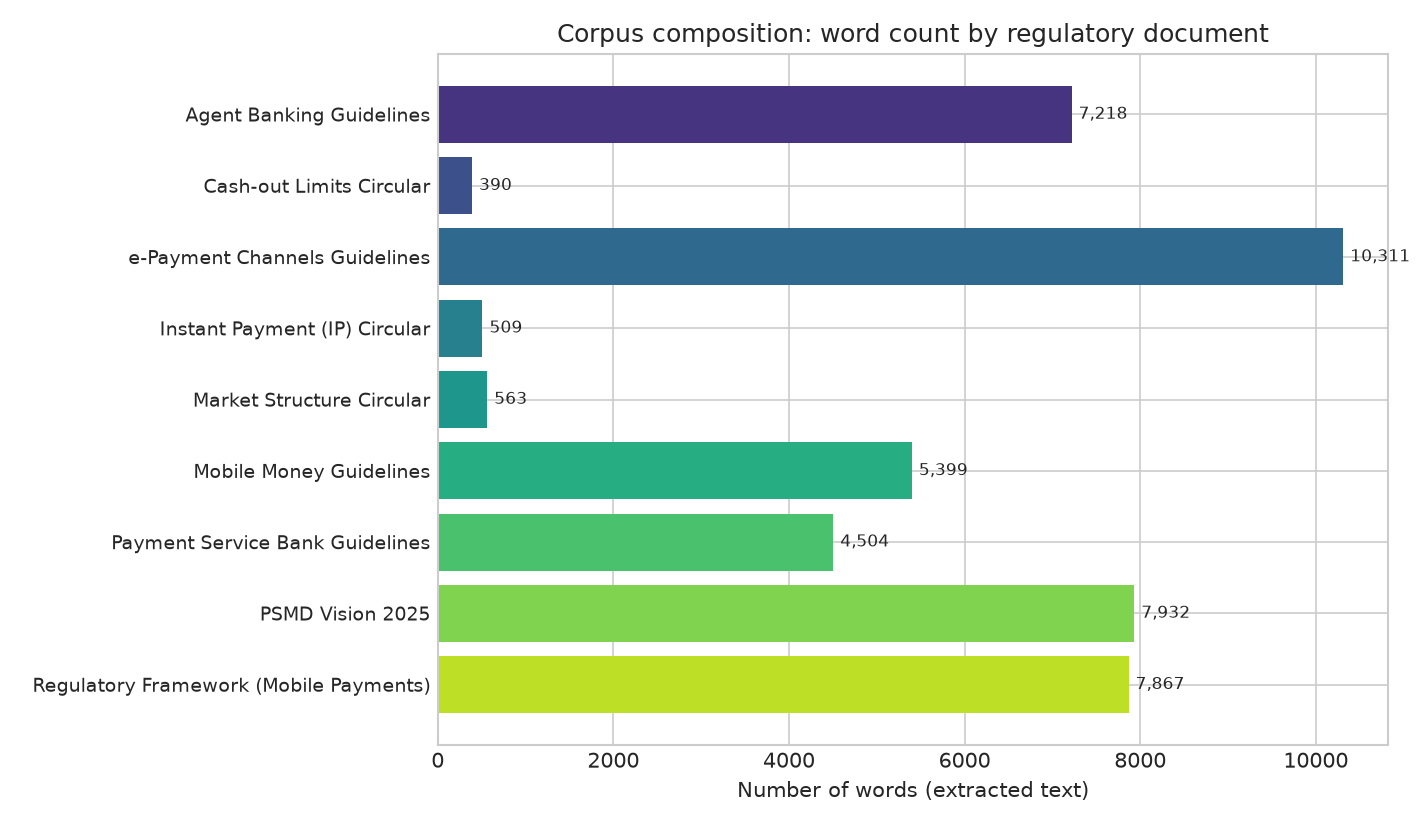
Figure 1: Corpus composition: word count by regulatory document
The corpus is dominated by the Agent Banking Guidelines (2025), the e-Payment Channels Guidelines (2020), the PSMD Vision 2025 strategy and the Mobile Payments Regulatory Framework — reflecting a regulatory gaze concentrated on infrastructure, channels and delivery networks rather than on named end-user segments.
3. Familiarisation and Corpus Character
Close reading produced three orienting observations that frame the entire analysis:
The corpus is aspirational and directive, not critical. Every document registers positive sentiment (see §5.3) and is written in the imperative register ("shall", "ensure", "must"). Financial inclusion is framed as an achievable policy goal; barriers are named but framed as solvable.
Market women are never named. A full-corpus search found zero occurrences of "women", "woman", "gender", "market women" or "traders"; the single "female" occurrence is the definitional phrase "a natural person, male or female" in the Agent Banking Guidelines. Market women are subsumed under generic categories — "the unbanked", "low income earners", "rural areas", "the lower end of the society", "financially excluded persons". This gender-blindness is itself a substantive finding (Theme 9).
The inclusion apparatus is mechanism-heavy and segment-light. The documents meticulously specify KYC tiers, transaction limits, agent due-diligence, settlement cycles and security standards, but devote little text to who the excluded are or how gender shapes exclusion.
4. Systematic Coding
Thirty-one codes were developed and refined across eight substantive themes plus one cross-cutting interpretive theme. The full codebook (definitions and verbatim exemplars) is persisted in the analysis appendix. The thematic structure is summarised below.
5. Thematic Findings
Theme 1 — Financial Inclusion as the Central Policy Logic
The corpus is unified by a single animating rationale: mobile payments and mobile money exist primarily to draw the unbanked into the financial system. The regulatory framework declares that the CBN identified "person to person payments (over the mobile phone infrastructure) as a practical strategy for financial inclusion of the un-banked" (Regulatory Framework for Mobile Payments Services). The Mobile Money Guidelines repeat the logic almost verbatim: "the identification of person to person payments as a practical strategy for financial inclusion, has made it imperative to adopt the mobile channel as a means of driving financial inclusion of the unbanked."
This logic is not gender-specific but is implicitly gendered in its target population. The Payment Service Bank (PSB) Guidelines state the objective as enhancing access "for low income earners and unbanked segments of the society" and envisage PSBs that "stimulate economic activities at the grassroots through the provision of financial services." The "grassroots", low-income, informal-economy space is precisely where Nigerian market women operate.
Critically, the regulator acknowledges its own shortfall. The PSB Guidelines concede that "the inclusion rate remains below expectation" despite "Microfinance banking, Agent Banking, Tiered Know-Your-Customer Requirements and Mobile Money Operation (MMO)." This admission is analytically important: it means the regulatory framework is a response to persistent exclusion, not a settled achievement — and the gap between policy intent and lived inclusion is the space where market women's adoption challenges reside.
Codes: Financial inclusion as policy rationale · Low-income and unbanked targeting · Grassroots economic stimulation · Inclusion shortfall acknowledged.
Theme 2 — Tiered KYC and Transaction Limits: Proportionate Entry, Bounded Capacity
The principal gateway mechanism for inclusion is the three-tiered KYC/CDD matrix. The framework is explicit that proportionality is the design intent: "A hierarchical approach towards the implementation of KYC/CDD is required to make a success of financial inclusion strategy of mobile banking." At the lowest tier, entry is deliberately frictionless — "customers under the Tier 1 account category shall require name and phone number as identification requirements."
But proportionality cuts both ways, and this is the most consequential tension for market women. The same matrix caps value at each tier: the unbanked (least-KYC) tier carries a "Maximum transaction limit of N3,000 and Daily limit of N30,000." For a market woman whose daily stock purchase, bulk-buying or supplier payment may run to tens or hundreds of thousands of naira, the least-KYC account is a gateway that cannot hold her commerce. Full functionality (up to N100,000 per transaction / N1,000,000 daily) is reserved for the fully-banked tier requiring full KYC.
Interpretation for market women: the tiered system succeeds at lowering the entry barrier but imposes a capacity ceiling that can push established traders to either (a) upgrade their documentation (a hurdle for the informally documented), or (b) transact outside formal channels — defeating the inclusion objective. The framework enables access but only partially enables use at the scale of an active trader.
Codes: Proportionate (tiered) KYC · Transaction limits by KYC tier · Simplified identity requirements.
Theme 3 — Agent Banking as the Last-Mile Inclusion Infrastructure
Agent banking is the corpus's central answer to how services reach the excluded. The 2025 Agent Banking Guidelines state the objective explicitly: "Enhance Agent banking as a delivery channel for offering financial services to drive financial inclusion." The Vision 2025 document explains why agents matter for exactly the population market women represent: "This is mitigated in part by using agent services to facilitate access by sections of the community that lack the knowledge or devices to access digital services."
Two sub-findings are especially significant for market women:
Market businesses are the designated agent pool. The guidelines permit non-individual agents drawn from "sale of confectionery and Fast-Moving Consumer Goods (FMCG), petrol stations, restaurants/bars, parks and recreation centres, fashion and beauty outlets." These are precisely the retail-trade sectors in which women traders are heavily represented. This means the regulatory design already imagines the market woman as a potential agent — an earnings opportunity — even while it never names her as such. The same guidelines also mandate agent training that includes "Diversity and inclusion concepts and application" and "Basic financial literacy for customers and Agents" — the closest the corpus comes to a gender/literacy-aware provision.
The agent is the human interface that substitutes for digital capability. Because many target users "lack the knowledge or devices", the agent absorbs the technical burden (device handling, transaction execution) on the customer's behalf — a de facto assisted-use model that is well suited to low-digital-literacy traders.
The trade-off: agent access is mediated, not autonomous. A market woman who relies on an agent remains dependent on the agent's liquidity, availability, fees and trustworthiness — themes developed next.
Codes: Agent banking as inclusion channel · Market businesses as eligible agents · Agents as bridge for those without devices/knowledge.
Theme 4 — Cash, Liquidity and the Cashless Tension
A persistent tension runs through the corpus between the cashless policy ambition and the cash-dependence of informal trade. The cash-out limits circular frames its interventions as part of "the Central Bank of Nigeria's ongoing efforts to advance a cash-less economy." Yet the same instruments impose hard ceilings on the very cash that market commerce runs on: "Issuers shall set a cash withdrawal limit (cash-out) per customer (regardless of channel) to N500,000.00 per week" (daily N100,000 per customer), while agents must "maintain a till not exceeding N100,000.00 at any time."
For market women, three implications follow:
- Cash-out ceilings (N100,000/day, N500,000/week) are generous relative to Tier-1 transaction limits but become binding for traders who transact in cash-heavy supply chains above that weekly value.
- Agent till limits (N100,000) cap how much cash any single service point can dispense at a time, so a trader needing large cash may be turned away or forced to split withdrawals across agents/days — a friction the cashless policy does not itself resolve.
- Timely settlement is a genuine pro-trader provision. The e-Payment Guidelines require "settlement for domestic POS transactions ... on T+1 basis" — next-day credit to the merchant account, which directly serves a market woman's working-capital cycle and should be read as a liquidity-protective measure.
Codes: Cashless policy objective · Cash-out limits · Agent till/float constraints · Timely merchant settlement.
Theme 5 — Consumer Protection and Trust-Building for First-Time and Vulnerable Users
Trust is treated as the linchpin of adoption. The Vision 2025 states: "Creating consumer confidence is of paramount importance, particularly when offering services to first-time users." The Mobile Money Guidelines go further than any other document in demanding design that accounts for low-income users: "Factor in the vulnerability of the lower end of the society in product and services design."
The trust-building apparatus has five observable components, all directly relevant to a first-time woman adopter:
- Consumer education — "adequate consumer education activities to ensure that consumers are sensitized on the services."
- Language accessibility — complaints channels must operate "in a language understood by customers" (an implicit acknowledgement of Nigeria's linguistic diversity and of low-literacy users).
- Binding complaint timelines — "Resolve customer complaints ... not later than 48 hours" (mobile money) and seven working days (agent banking).
- Receipts and transparency — agents must issue receipts and display charges.
- Escalation and an ombudsman — a multi-stakeholder Ombudsman office for unresolved disputes.
Interpretation: these provisions are adoption-enabling — they address the trust deficit that deters cautious, cash-accustomed, fraud-wary traders. However, they are generic protections: none is tailored to women's specific vulnerabilities (e.g., low literacy, shared/household phones, risk of PIN compromise by intermediaries). The "vulnerability of the lower end of society" is acknowledged but not disaggregated by gender.
Codes: Vulnerability of the lower end of society · Confidence of first-time users · Consumer education and awareness · Complaint resolution timelines · Language accessibility.
Theme 6 — The Digital Divide: Literacy, Affordability and Access
The corpus is strikingly candid about demand-side barriers, and these are the constraints most likely to govern a market woman's actual adoption. The Vision 2025 enumerates them: "The most cited barriers to digital inclusion are" — headed by "Cost of devices (handsets and POS)", "Cost of data (internet connectivity)", and "Education and digital literacy", followed by rural network coverage, licensing/taxation, regulation of USSD/SMS, lack of a central digital identity database, and "Inadequate fraud protection."
Two further admissions sharpen the picture:
- Authentication can exclude. "Many of the financially excluded are not digitally educated and 2FA can become a burden." Security requirements that are trivial for literate smartphone users become friction — or exclusion — for the target population.
- The channel mix is classed. USSD is celebrated as the inclusive, low-cost workhorse — "Nigeria has built a ubiquitous and robust payments service using USSD codes ... at a relatively low cost" — while QR/smartphone solutions carry an explicit caveat: "one envisaged limitation in the local market is the need for a mobile device that supports a QR code reader which implies acquiring a smartphone."
Interpretation: the regulator already knows the demand-side constraints that the academic literature on women's mobile-money adoption repeatedly identifies — cost, literacy, device access, network coverage. The policy gap is that these are named as observed barriers rather than targeted interventions for specific groups. For market women, the USSD-on-a-feature-phone path is the realistic adoption route; the QR/smartphone and 2FA-heavy path is structurally tilted toward more resourced users.
Codes: Cited digital-inclusion barriers · 2FA as burden for the digitally uneducated · USSD as low-cost inclusive channel · Smartphone-dependent divide.
Theme 7 — Security, Fraud and Digital Identity as Trust Infrastructure
Security is the third pillar (with inclusion and trust) of the regulatory architecture — and it is double-edged for market women. On one side, biometric identity and fraud controls underpin trust; on the other, they add authentication burden. Key codes:
- Biometric identity — "Nigeria has a world-class solution with Bank Verification Number (BVN)", with the Vision 2025 noting biometrics "could further enable access to sectors of the society that have less formal education."
- Enterprise fraud monitoring — the Instant Payment circular mandates "Enterprise Fraud Monitoring for both inflows and outflows to facilitate fraud detection and restriction of suspicious transactions."
- Device binding and liveliness checks — "Mandatory device binding: Mobile financial services applications (apps) shall only be enabled on one device at a time", plus N20,000 first-24-hour limits on newly activated apps.
Interpretation: these controls protect users but assume a minimum of digital competence and reliable device/internet access. For a market woman sharing a phone, frequently changing handsets, or using an agent's device, device binding and one-device-per-app rules can become operational obstacles — again, security optimised for individual smartphone ownership rather than for shared, low-cost, agent-mediated usage.
Codes: Fraud protection gap · Biometric digital identity (BVN/NIN) · Enterprise fraud monitoring · Device binding and liveliness controls.
Theme 8 — Interoperability, Competition and Market Governance
The final substantive theme is supply-side governance: rules that keep the payments ecosystem open, competitive and non-discriminatory. "Interoperability shall continue to be a core principle of payments system in Nigeria." Principals "shall be card-neutral entities and shall not promote or favour any specific card brand over another," and the 2026 Market Structure Circular introduces concentration limits, beneficial-ownership disclosure and "the localisation of payments transaction data within Nigeria" in order to "address concentration risk, promote a fair, competitive, and resilient payments ecosystem."
Interpretation: for market women these provisions are indirectly but materially relevant. Interoperability and card-neutrality mean a trader can be paid by any scheme's customer and use any agent terminal — removing a friction that would otherwise fragment her market. Anti-exclusivity and concentration limits are intended to preserve competition that can drive down the fees she pays. This theme is the least gender-salient but the most structurally important for keeping the last-mile channels (Theme 3) genuinely accessible.
Codes: Interoperability as core principle · Card neutrality and anti-exclusivity · Market concentration and transparency.
Theme 9 (Cross-cutting) — Gender-Blind Framing
The most consequential interpretive finding is what is absent. The corpus constructs the financial-inclusion subject in gender-neutral terms — "the unbanked", "low income earners", "the lower end of the society", "financially excluded persons" — and contains no explicit reference to women, gender, or market women. The single "female" token is the definitional "a natural person, male or female."
This matters because the research topic centres on market women specifically. The finding can be stated precisely: the regulatory environment is gender-blind, and therefore treats market women as an undifferentiated part of the low-income/unbanked mass. Any gender-specific barriers (lower digital literacy on average, time poverty, household financial decision-making, lower device ownership, lower documentation rates) are not named, measured, or targeted anywhere in the corpus. The closest the regulator comes is the agent-training requirement on "Diversity and inclusion concepts" and the broad "vulnerability of the lower end of the society" clause.
This is consistent with — and likely one driver of — the descriptive gender gap visible in the microdata (contextual check only; see §6): ~39.8% of women vs ~53.0% of men hold a mobile-money account. A gender-blind framework produces gender-differentiated outcomes when the underlying constraints are gendered.
Code: Gender-blind framing.
6. Supplementary NLP Analysis
6.1 Keyword prevalence
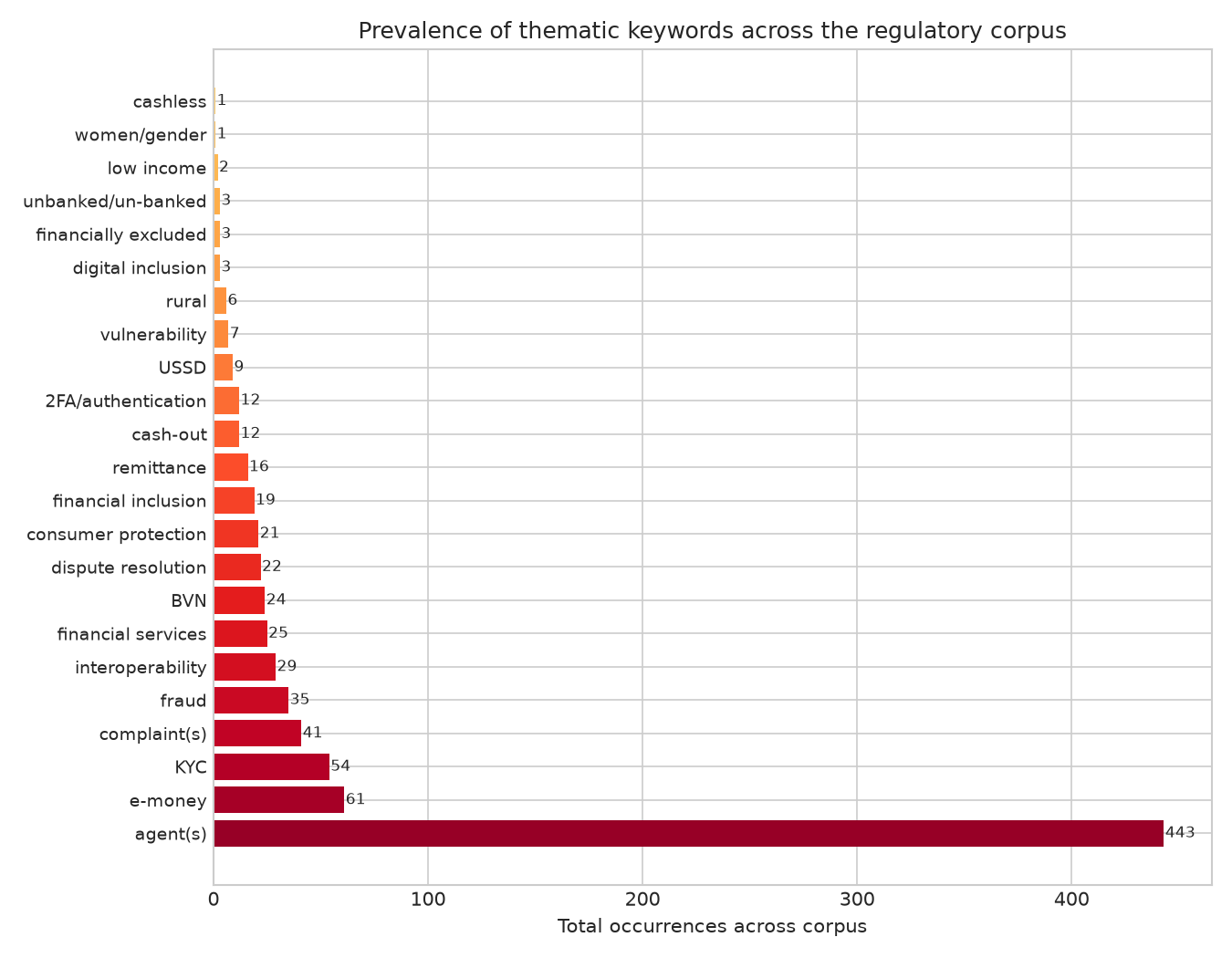
Figure 2: Prevalence of thematic keywords across the regulatory corpus
The most frequent thematic terms confirm the mechanism-heavy character of the corpus: "agent(s)" (≈443 occurrences) dwarfs everything else, followed by e-money, KYC, complaints, fraud, interoperability, financial services, BVN, dispute resolution, consumer protection and financial inclusion. The single-digit count for "women/gender" (1, definitional) is visible at the bottom — a stark visualisation of Theme 9.
6.2 Word cloud
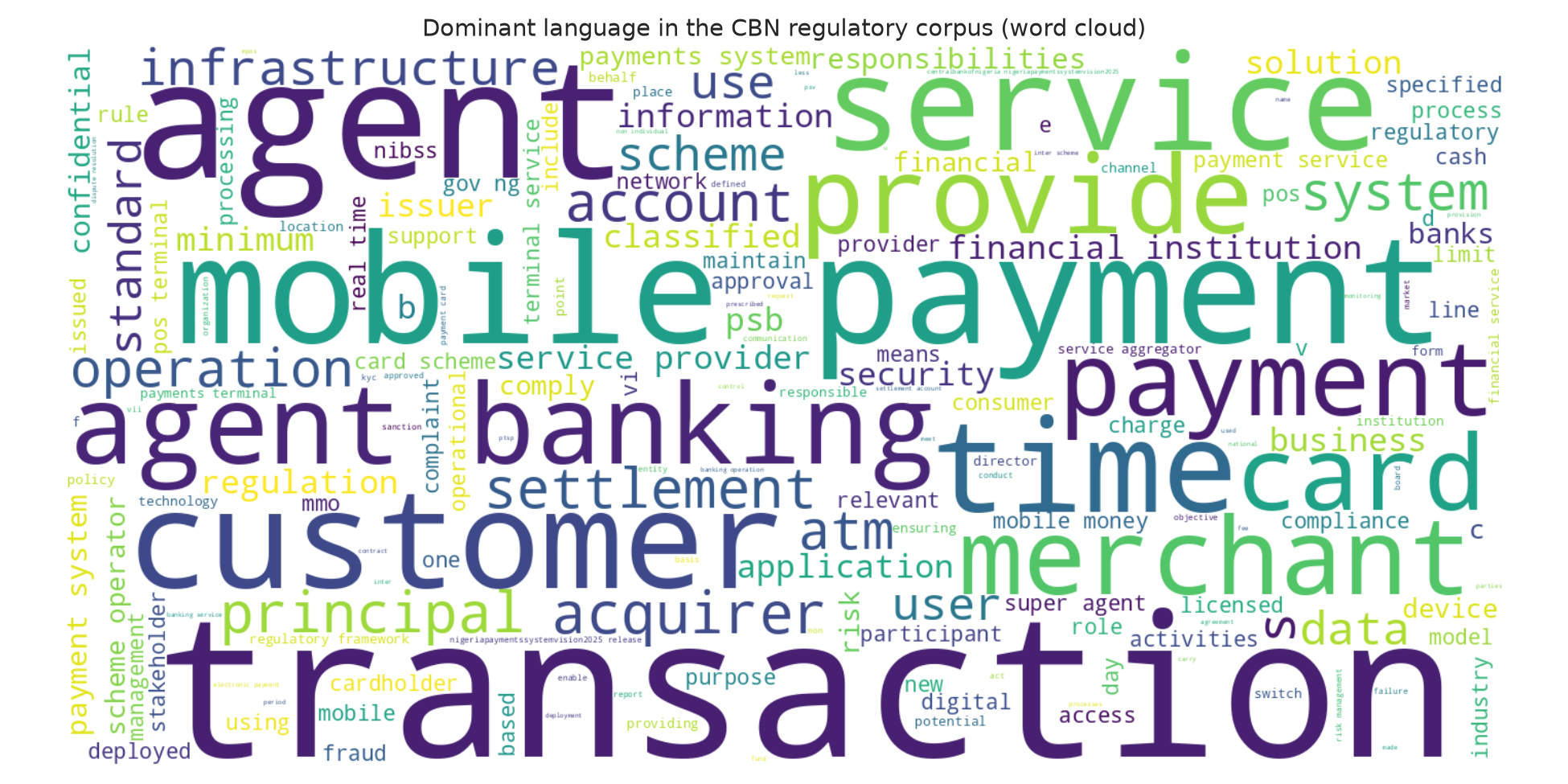
Figure 3: Dominant language in the CBN regulatory corpus (word cloud)
The dominant vocabulary — payments, settlement, agents, accounts, customers, funds, security, transaction, mobile, banks — reinforces that the corpus is written from the provider/regulator perspective, not the end-user's lived experience.
6.3 Sentiment
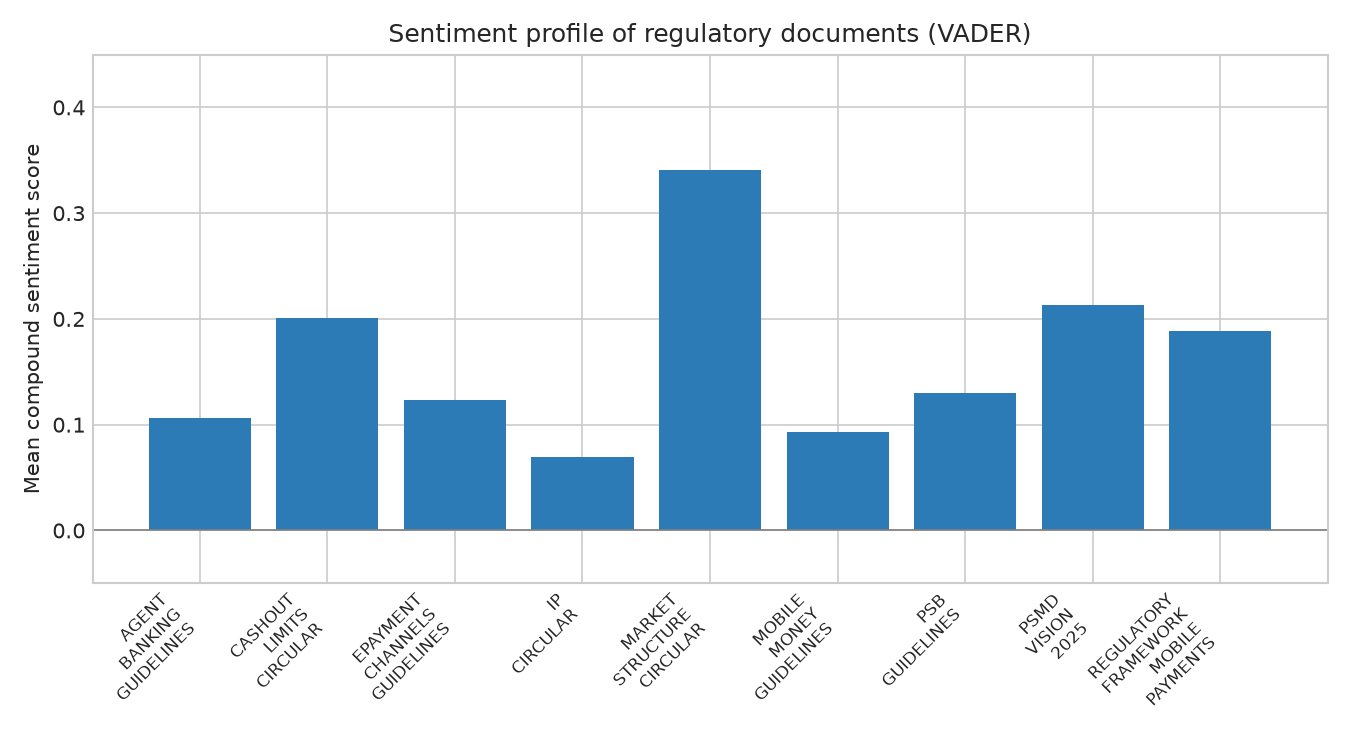
Figure 4: Sentiment profile of regulatory documents (VADER)
All nine documents register positive mean compound sentiment. This is not evidence of successful inclusion; it reflects the aspirational, imperative register of policy instruments ("shall ensure", "promote", "enhance"). The uniformly optimistic tone coexists with — and partly masks — the candid barrier list in Theme 6. The analytical point: the corpus asserts a positive trajectory while describing persistent constraints.
6.4 Thematic emphasis by document
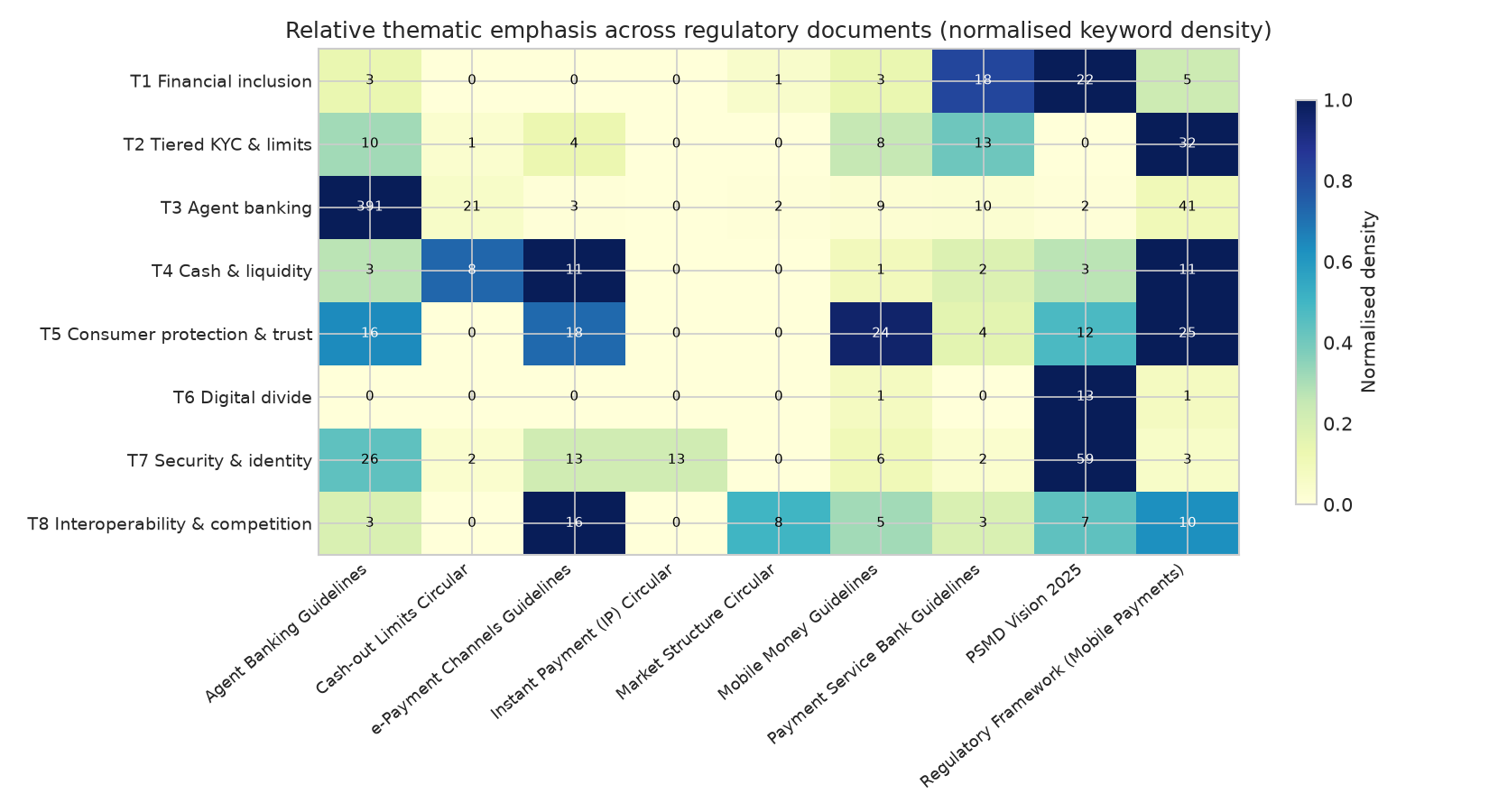
Figure 5: Relative thematic emphasis across regulatory documents (normalised keyword density)
The heatmap shows a clear division of labour across documents: Agent Banking Guidelines concentrate Theme 3 (agents) and Theme 7 (security); PSMD Vision 2025 concentrates Themes 1, 6 and 7 (inclusion framing, digital divide, security/identity); Mobile Money Guidelines and the Regulatory Framework concentrate Theme 5 (consumer protection) and Theme 2 (KYC); the Market Structure Circular and e-Payment Guidelines concentrate Theme 8 (interoperability/competition). No document concentrates gender — because no document addresses it.
6.5 Concept co-occurrence
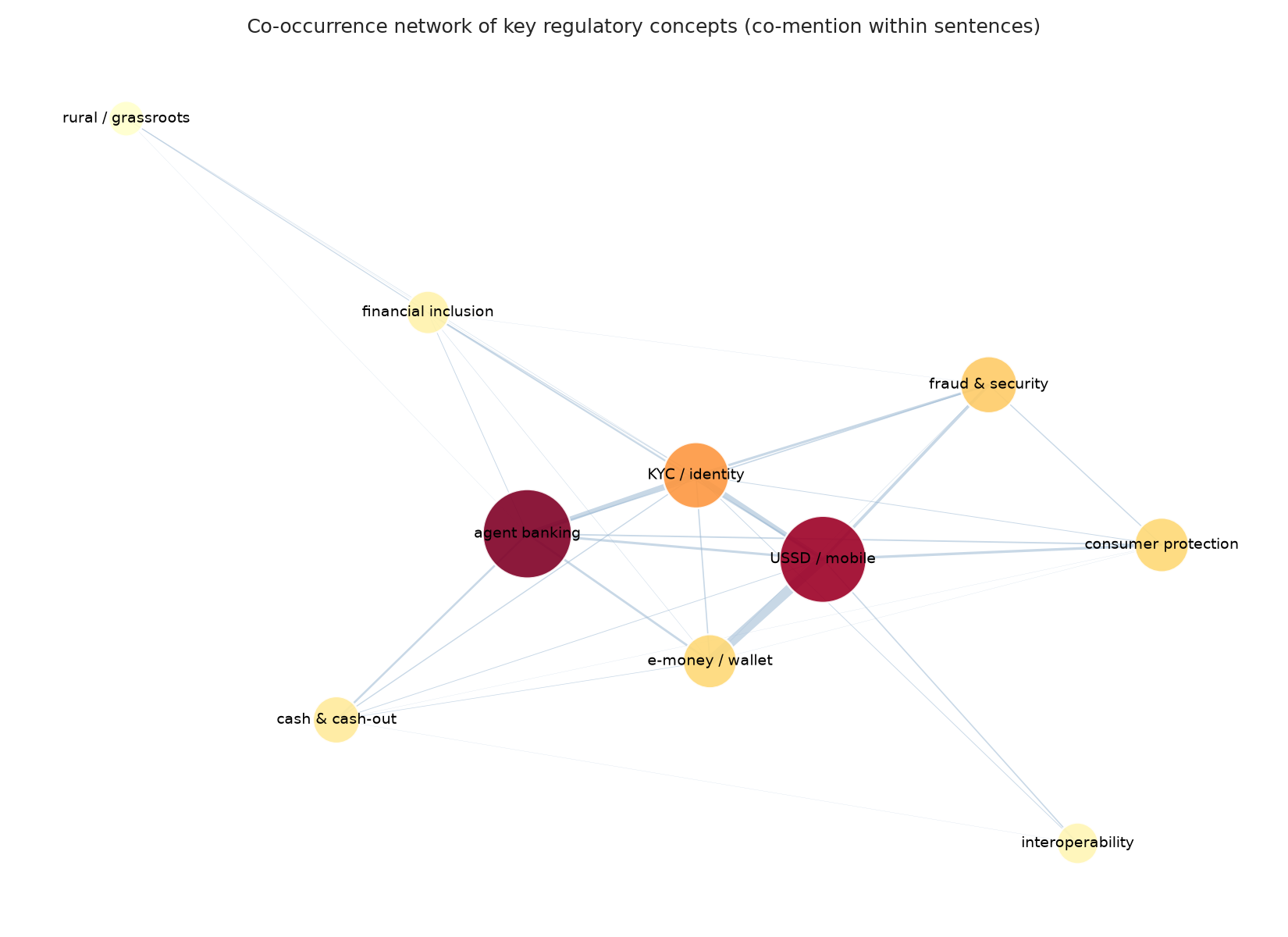
Figure 6: Co-occurrence network of key regulatory concepts
The strongest co-occurrence is USSD/mobile ↔︎ e-money/wallet — the technical core of mobile money. Agent banking is tightly bound to KYC/identity and cash/cash-out, while financial inclusion links most directly to rural/grassroots and USSD/mobile. This confirms the delivery model the regulator has assembled: USSD-based mobile money, distributed through KYC-managed, cash-handling agents, aimed at rural/grassroots inclusion.
7. Synthesis: What the Regulatory Environment Means for Market Women
Bringing the eight themes and the cross-cutting finding together, the qualitative strand supports the following conclusions:
The enabling environment is real but generic. Nigeria has built a coherent, interoperable, agent-distributed, tiered-KYC mobile-money architecture explicitly aimed at the unbanked and low-income. The plumbing for market women's inclusion exists.
The design logic is gender-blind, and outcomes are therefore gendered. No instrument names women or market women; no provision targets gender-specific barriers. Market women are treated as undifferentiated "unbanked/low-income" users, yet the constraints the corpus itself lists (cost, literacy, device access, authentication burden, cash ceilings) are known to bite women traders harder.
Inclusion is designed for entry, not for trade at scale. Tier-1 KYC opens accounts with a name and phone number, but the N3,000/N30,000 limits cannot carry an active trader's commerce; cash-out and till limits bound liquidity. The framework enables adoption more convincingly than it enables sustained, high-volume use by market women.
The agent is the pivotal figure for market women — as both customer and potential agent. The last-mile channel is the designated bridge for those without devices or digital skills, and the eligible-agent list (FMCG, confectionery, fashion/beauty) overlaps directly with women's retail sectors. This is the single most promising, and most under-exploited, lever for women-specific inclusion in the corpus.
Trust and fraud protections are adoption-enabling but competence-assuming. Complaint timelines, consumer education, language accessibility and biometric identity build trust; device-binding and 2FA can, by the regulator's own admission, burden the digitally uneducated.
8. Limitations
- Document-based data: the corpus records regulatory intent, not implementation or lived experience. Adoption outcomes must be triangulated with the quantitative strand and with primary/field data on actual market women.
- Proxy problem: the microdata lacks an occupation variable, so "market women" cannot be isolated quantitatively (per the agreed proxy of adult Nigerian women); the qualitative strand can only speak to the regulatory conditions affecting them.
- OCR artefact: the Instant Payment circular was OCR'd from a scan; its quotes are verbatim from the OCR output (noted where relevant).
- Extraction fidelity: one source (PSMD Vision 2025) was re-extracted to correct for two-column layout; term-frequency figures are illustrative keyword-density measures, not a substitute for the interpretive coding.
- Sentiment interpretation: VADER scores reflect policy register, not substantive evaluative content.
9. Conclusion
The CBN regulatory corpus reveals a sophisticated, mechanism-rich financial-inclusion apparatus whose central rationale is to bring the unbanked into formal finance through USSD-based mobile money, tiered KYC and agent networks. For the specific subject of this thesis — Nigerian market women — the corpus is simultaneously enabling and silent: it provides the last-mile infrastructure and trust protections that make adoption possible, yet it nowhere recognises women as a distinct constituency, and its transaction/authentication/cash ceilings are calibrated for entry rather than for the scale of informal commerce. The qualitative strand therefore concludes that the regulatory environment is a necessary but insufficient condition for market women's financial inclusion — it lowers the floor of access while leaving the gendered determinants of sustained use unaddressed.
Appendix — Codebook
The complete codebook (31 codes with definitions and verbatim exemplars, organised under the eight themes plus the cross-cutting gender-blindness finding) has been persisted durably and appears in the analysis appendix of the compiled document.
Analysis Code
import re
ip = open('/tmp/corpus_v2/IP_CIRCULAR.txt').read()
ipn = re.sub(r'\s+',' ', ip)
for probe in ["Enterprise Fraud Monitoring functionality", "All Fls shall implement", "All FIs shall implement"]:
    idx = ipn.find(probe)
    print(repr(probe), "->", "found" if idx>=0 else "not found", ("| ctx: "+repr(ipn[idx:idx+130])) if idx>=0 else "")
Figures & Charts
Corpus composition: word count by regulatory document: Horizontal
bar chart showing the extracted word count for each of the nine CBN
regulatory documents analysed, illustrating the relative weight of each
document in the qualitative corpus (Agent Banking Guidelines, e-Payment
Channels Guidelines, PSMD Vision 2025 and the Mobile Payments Regulatory
Framework are the largest).
Prevalence of thematic keywords across the regulatory corpus:
Horizontal bar chart ranking the most frequent thematic keywords across
the corpus (agent(s), e-money, KYC, complaints, fraud, interoperability,
financial services, BVN, dispute resolution, consumer protection,
financial inclusion, etc.). Highlights the dominance of agent-banking
and e-money language and the near-absence of gender terms.
Sentiment profile of regulatory documents (VADER): Bar chart of mean
VADER compound sentiment score per document. All documents are positive
in register, reflecting the aspirational, directive tone of policy
documents rather than critical or negative framing of
financial-inclusion challenges.
Dominant language in the CBN regulatory corpus (word cloud): Word
cloud of the most frequent non-stopword terms in the combined regulatory
corpus, visualizing the dominant policy vocabulary around agents,
payments, settlement, accounts, customers, funds, security and
inclusion.
Relative thematic emphasis across regulatory documents (normalised
keyword density): Heatmap of eight analytical themes (rows) by nine
documents (columns), showing normalised keyword density with raw counts
annotated. Shows agent banking dominating the Agent Banking Guidelines,
security/identity and digital divide concentrating in PSMD Vision 2025,
and consumer protection spread across mobile money, e-payment and
regulatory framework documents.
Co-occurrence network of key regulatory concepts: Network graph of
ten key regulatory concepts, with edges weighted by within-sentence
co-mention. Node size reflects sentence-level frequency. Shows
USSD/mobile and e-money/wallet as the densest link, with agent banking
tied to KYC/identity and cash/cash-out.
Appendix: Qualitative Codebook
The following codebook was developed by Dr. Doubra (the Qualitative Analyst) during this research session. It catalogues every code used in the thematic analysis, its definition, and verbatim excerpt(s) from the transcripts that exemplify it.
1. Financial inclusion as policy rationale
Definition: Mobile money/payments is framed primarily as a strategy to bring the unbanked into the formal financial system, with regulation cast as the enabling environment for that goal.
After identifying person to person payments (over the mobile phone infrastructure) as a practical strategy for financial inclusion of the un-banked, the Central Bank of Nigeria opted for the creation of an enabling regulatory environment the identification of person to person payments as a practical strategy for financial inclusion, has made it imperative to adopt the mobile channel as a means of driving financial inclusion of the unbanked
Parent code: T1 Financial Inclusion as the Central Policy Logic
2. Low-income and unbanked targeting
Definition: Explicit identification of low-income earners, unbanked segments and small businesses as the intended beneficiaries of digital financial services.
the need to enhance access to financial services for low income earners and unbanked segments of the society
Parent code: T1 Financial Inclusion as the Central Policy Logic
3. Grassroots economic stimulation
Definition: Digital financial services positioned as a lever to stimulate grassroots economic activity.
PSBs are expected to leverage on mobile and digital channels to enhance financial inclusion and stimulate economic activities at the grassroots through the provision of financial services
Parent code: T1 Financial Inclusion as the Central Policy Logic
4. Inclusion shortfall acknowledged
Definition: The regulator's own admission that financial-inclusion progress remains below the 2020 target despite successive initiatives.
the inclusion rate remains below expectation
Parent code: T1 Financial Inclusion as the Central Policy Logic
5. Proportionate (tiered) KYC
Definition: A hierarchical KYC/CDD approach deliberately designed to lower entry barriers for low-income and low-documentation users.
A hierarchical approach towards the implementation of KYC/CDD is required to make a success of financial inclusion strategy of mobile banking
Parent code: T2 Tiered KYC and Transaction Limits
6. Transaction limits by KYC tier
Definition: Monetary ceilings attached to each KYC tier that bound the value of mobile money transactions available to low-tier users.
Maximum transaction limit of N3,000 and Daily limit of N30,000
Parent code: T2 Tiered KYC and Transaction Limits
7. Simplified identity requirements
Definition: Minimum identification requirement (name and phone number) for lowest-tier accounts, easing enrolment for the informally documented.
customers under the Tier 1 account category shall require name and phone number as identification requirements
Parent code: T2 Tiered KYC and Transaction Limits
8. Agent banking as inclusion channel
Definition: Agent banking explicitly positioned as the delivery channel that drives financial inclusion to the underbanked and remote areas.
Enhance Agent banking as a delivery channel for offering financial services to drive financial inclusion
Parent code: T3 Agent Banking as Last-Mile Inclusion Infrastructure
9. Market businesses as eligible agents
Definition: Non-individual agents drawn from retail/FMCG/market-adjacent businesses, creating service points inside market ecosystems frequented by women traders.
sale of confectionery and Fast-Moving Consumer Goods (FMCG), petrol stations, restaurants/bars, parks and recreation centres, fashion and beauty outlets
Parent code: T3 Agent Banking as Last-Mile Inclusion Infrastructure
10. Agents as bridge for those without devices/knowledge
Definition: Agent services are framed as mitigating digital exclusion for people who lack devices, connectivity or digital knowledge.
This is mitigated in part by using agent services to facilitate access by sections of the community that lack the knowledge or devices to access digital services.
Parent code: T3 Agent Banking as Last-Mile Inclusion Infrastructure
11. Cashless policy objective
Definition: Reducing cash dominance and advancing a cash-less economy as a stated policy driver of mobile payments and agent banking.
In line with the Central Bank of Nigeria's ongoing efforts to advance a cash-less economy
Parent code: T4 Cash, Liquidity and the Cashless Tension
12. Cash-out limits
Definition: Regulatory ceilings on cash withdrawals that shape how much cash traders can access per day/week.
Issuers shall set a cash withdrawal limit (cash-out) per customer (regardless of channel) to N500,000.00 per week
Parent code: T4 Cash, Liquidity and the Cashless Tension
13. Agent till/float constraints
Definition: Limits on agent cash holdings that determine liquidity availability at the point of service.
maintain a till not exceeding N100,000.00 at any time
Parent code: T4 Cash, Liquidity and the Cashless Tension
14. Timely merchant settlement
Definition: Requirement for next-day (T+1) settlement to merchant accounts, supporting traders' liquidity needs.
The settlement for domestic POS transactions must be done to the merchant account on T+1 basis
Parent code: T4 Cash, Liquidity and the Cashless Tension
15. Vulnerability of the lower end of society
Definition: Requirement that product and service design account for the vulnerability of lower-income users.
Factor in the vulnerability of the lower end of the society in product and services design.
Parent code: T5 Consumer Protection and Trust-Building
16. Confidence of first-time users
Definition: Emphasis on building consumer confidence, especially for first-time adopters of digital financial services.
Creating consumer confidence is of paramount importance, particularly when offering services to first-time users.
Parent code: T5 Consumer Protection and Trust-Building
17. Consumer education and awareness
Definition: Mandated consumer education and sensitization activities to support safe adoption and use.
There should be adequate consumer education activities to ensure that consumers are sensitized on the services.
Parent code: T5 Consumer Protection and Trust-Building
18. Complaint resolution timelines
Definition: Binding, short timelines for resolving customer complaints as a trust-building mechanism.
Resolve customer complaints within a reasonable time and not later than 48 hours from the date of reporting or lodging the complaint with the MMO.
Parent code: T5 Consumer Protection and Trust-Building
19. Language accessibility
Definition: Communication channels must be available in a language customers understand, acknowledging linguistic diversity.
Ensure that a channel of communication is in place 24/7 to entertain enquiries and complaints in a language understood by customers.
Parent code: T5 Consumer Protection and Trust-Building
20. Cited digital-inclusion barriers
Definition: Regulator-identified barriers to digital inclusion: device cost, data cost, digital literacy and network coverage.
The most cited barriers to digital inclusion are Cost of devices (handsets and POS)
Parent code: T6 The Digital Divide: Literacy, Affordability and Access
21. 2FA as burden for the digitally uneducated
Definition: Recognition that authentication requirements can exclude or overburden the digitally uneducated.
Many of the financially excluded are not digitally educated and 2FA can become a burden
Parent code: T6 The Digital Divide: Literacy, Affordability and Access
22. USSD as low-cost inclusive channel
Definition: USSD recognised as a low-cost, ubiquitous channel that broadens access across simple handsets.
Nigeria has built a ubiquitous and robust payments service using USSD codes. This has proved to be extremely popular due to the capability of deploying the solution across mobile devices at a relatively low cost.
Parent code: T6 The Digital Divide: Literacy, Affordability and Access
23. Smartphone-dependent divide
Definition: QR and smartphone-based solutions risk excluding users who do not own smartphones.
one envisaged limitation in the local market is the need for a mobile device that supports a QR code reader which implies acquiring a smartphone
Parent code: T6 The Digital Divide: Literacy, Affordability and Access
24. Fraud protection gap
Definition: Inadequate fraud protection identified as one barrier to digital inclusion.
Inadequate fraud protection
Parent code: T7 Security, Fraud and Digital Identity
25. Biometric digital identity (BVN/NIN)
Definition: BVN/NIN biometric identity framed as the foundation of digital identity and fraud reduction.
Nigeria has a world-class solution with Bank Verification Number (BVN)
Parent code: T7 Security, Fraud and Digital Identity
26. Enterprise fraud monitoring
Definition: Mandated real-time fraud monitoring for instant payments to detect and restrict suspicious transactions.
Enterprise Fraud Monitoring functionality: All Fls shall implement and activate Enterprise Fraud Monitoring for both inflows and outflows to facilitate fraud detection and restriction of suspicious transactions.
Parent code: T7 Security, Fraud and Digital Identity
27. Device binding and liveliness controls
Definition: Security controls (device binding, liveliness checks, multi-factor authentication) applied to mobile apps and online account opening.
Mandatory device binding: Mobile financial services applications (apps) shall only be enabled on one device at a time, and customers cannot operate the apps concurrently on multiple devices.
Parent code: T7 Security, Fraud and Digital Identity
28. Interoperability as core principle
Definition: Interoperability across schemes, channels and networks upheld as a foundational design principle.
Interoperability shall continue to be a core principle of payments system in Nigeria.
Parent code: T8 Interoperability, Competition and Market Governance
29. Card neutrality and anti-exclusivity
Definition: Prohibitions on exclusivity and requirement of card-neutral, non-discriminatory service to protect users and merchants.
Principals shall be card-neutral entities and shall not promote or favour any specific card brand over another.
Parent code: T8 Interoperability, Competition and Market Governance
30. Market concentration and transparency
Definition: Measures addressing concentration risk, beneficial-ownership transparency and data localisation in the payments ecosystem.
address concentration risk, promote a fair, competitive, and resilient payments ecosystem ensure the localisation of payments transaction data within Nigeria
Parent code: T8 Interoperability, Competition and Market Governance
31. Gender-blind framing
Definition: The regulatory corpus contains no explicit reference to women, gender, or market women; female traders are subsumed under generic categories (unbanked, low-income, rural, vulnerable).
the need to enhance access to financial services for low income earners and unbanked segments of the society
Parent code: T9 Cross-cutting interpretive finding
References
Braun, V., & Clarke, V. (2006). Using thematic analysis in psychology. Qualitative Research in Psychology, 3(2), 77–101. https://doi.org/10.1191/1478088706qp063oa
Braun, V., & Clarke, V. (2022). Thematic Analysis: A Practical Guide. SAGE Publications. https://uk.sagepub.com/en-gb/eur/thematic-analysis/book248881