I'm Professor Solaa.
Bring me your research.
I run a research department built to help you investigate, analyze, and communicate serious research. You bring me the question. I know how the department works.
50 free credits on signup
You don't need to manage my department.
You shouldn't have to decide which specialist to call, what order the work should happen in, or whether the research is ready for the next stage. I handle that.
I know when literature needs to be established. I know when a research plan is required. I know when your data is ready for analysis. I know when the evidence is sufficient to begin writing. You talk to me. I coordinate the department.
Let me introduce you to my department.
You are the Principal Investigator. I am Professor Solaa, and I run the research department that works with you. Each of my colleagues has a defined responsibility, and I know when their work is needed.
YOU
Principal InvestigatorYou set the research direction, make the scholarly judgments, and decide what questions matter. You lead the research; I bring the department together around it.

Professor Solaa
Research DirectorYou don't have to decide who should work on what, what needs to happen next, or which work must wait. That's my job.
Dr. Nonso
Literature & EvidenceHe establishes the literature and evidence base your research needs.
Dr. Okiemute
Research PlanningShe turns the research question and evidence base into a coherent research plan.
Dr. Tega
Quantitative AnalysisHe works with your quantitative data and establishes what the numbers actually show.
Dr. Doubra
Qualitative & Thematic AnalysisShe examines qualitative and documentary evidence and develops defensible themes from it.
Dr. Adeyemi
Academic DiagramsHe turns research concepts, methods, and findings into academic diagrams and visual explanations.
Dr. Ofili
Researcher GuidanceHe helps you write the research yourself, with the evidence, structure, and guidance you need.
Dr. Aliya
Academic WritingShe helps turn established research into formal academic writing when you want drafting assistance.
I don't let the department skip steps.
Good research has dependencies. I won't ask a specialist to begin before the work that should inform it exists.
Research data → Quantitative analysis
When you give my analyst the data, he can begin without waiting for the rest of the department.
Qualitative corpus → Thematic analysis
Documentary or interview evidence takes its own path — coded and analysed on its own timeline.
I won't ask my planning specialist to build a research plan without the evidence needed to inform it. I won't ask my writing colleagues to build an argument before the research plan exists. At the same time, when you give my analysts the data they need, they can begin their work without waiting unnecessarily for another part of the department.
Let me show you how my department works.
A researcher brought this question to me: Mobile Money Adoption and Financial Inclusion Among Nigerian Market Women. Here's what my department produced — every artifact is clickable.
The Research Brief
Mobile Money Adoption and Financial Inclusion Among Nigerian Market Women
We defined the question, scope and research requirements together — the topic, research focus, rationale, timeframe, and document type locked in before any colleague is engaged. The gate every other artifact descends from.
The Literature Base
Verified sources for the study
Dr. Nonso established the relevant scholarly evidence: 191 verified sources discovered across the 500M+ corpus, organized into thematic clusters, key debates, and a gap analysis — mapped to the study's research questions.
The Research Plan
A mixed-methods Table of Contents
Dr. Okiemute turned the question and evidence into a structured research plan: a complete Table of Contents with per-section word budgets and methodology-matched structure — every heading grounded in the evidence.
The Quantitative Analysis
The Results — computed from Findex 2024 (open data)
Dr. Tega examined the supplied data — computed in a sandbox from the open-access Global Findex 2024 microdata (n = 1,000, weighted). Headline: women lead men on mobile-money ownership — 40.6% vs 25.0% — with the working-women proxy higher still. The results integrate Dr. Doubra's nine themes — one mixed-methods study. Dataset cited on the page so every number can be verified.
The Qualitative Analysis
Thematic coding of CBN mobile money policy documents
Dr. Doubra analyzed the documentary evidence: systematic thematic coding of CBN mobile-money and financial-inclusion policy documents — a codebook, theme map, and verbatim evidence trail for every theme.
The Writing Guide
The write-it-yourself path to the same study
Dr. Ofili showed the researcher how to turn the findings into a defensible academic work: second-person guidance for writing the same document yourself — what each chapter should argue, what to cite and where, and how to move between sections. Nothing drafted for you. Every reference real.
The Draft
The complete study — every chapter
Dr. Aliya brought the established research together into formal academic prose: the complete study — every chapter — synthesizing the sources, the numbers, and the themes into one coherent manuscript with an auto-compiled bibliography, all within the planned word budget.
I care about where your claims come from.
I don't want a beautiful answer that cannot survive scrutiny. I want to know: where did this claim come from? What evidence supports it? What does the data actually show? What does the evidence not allow us to conclude? That's why my department works with connected research artifacts rather than treating every answer as an isolated conversation.
Research changes. My department keeps up — analyses get rerun, evidence changes, plans evolve, and the artifacts stay connected so you continue from the latest state of the study.
I work for the researcher. I don't replace the researcher.
You decide what is worth investigating. You decide what questions matter. You inspect the evidence. You make the scholarly judgment. Sometimes you'll want my writing colleague to draft a section for you. Sometimes you'll want Dr. Ofili to give you the structure and evidence so that you can write it yourself. That's your choice.
You hold the pen. Dr. Ofili gives you the argument, the structure, and every citation instruction — each pointing to a verified source.
You direct. Dr. Aliya turns the established research into formal academic prose — every claim backed by the evidence base.
I will tell you when the evidence isn't enough.
In one of our studies, the available dataset did not contain an occupation variable. So although the research concerned market women, we could not honestly claim that the dataset directly identified them — the appropriate proxy had to be disclosed.
Saved the moment it's found
A source enters your bibliography only when it's returned by a verified academic database — the moment Dr. Nonso finds it. Nothing is ever typed from memory.
Screened at the source
Retracted papers and records without abstracts are filtered out before they can reach your work. What lands in your bibliography has already passed the check.
Rejected if it can't be traced
Before your document reaches you, every citation is matched against the verified library. Anything that isn't there is rejected automatically. Dr. Aliya's drafts — and Dr. Ofili's writing guides — can only cite what Dr. Nonso actually found.
The Entire Open Scholarly Record
Solaa indexes over 500 million verified scholarly works - journal articles, books, conference papers, dissertations, and preprints - sourced continuously from Crossref, PubMed, arXiv, DOAJ, institutional repositories, and thousands of other open-access sources.
500M+ Verified Works
Journal articles, books, conference papers, dissertations, and preprints. The entire open scholarly record, continuously indexed.
Single Unified API
One query surface. No fragmented database hopping. Solaa's agents search, filter, and retrieve with precision across the entire corpus.
Our Query Engine
Full analytics across the entire corpus and drill-downs. Runs on our infrastructure.
Twenty-Four Ways to Write
Every document type is a declarative specification: structured sections,
word count ranges, citation style, and writing tone. Not prompt-engineered. Defined.
2,600+ CSL citation styles supported.
APA, MLA, Chicago, IEEE, Harvard, Nature, and every journal format in between.
Don't take my word for it.
Researchers have already worked with my department. Here's what they have to say.
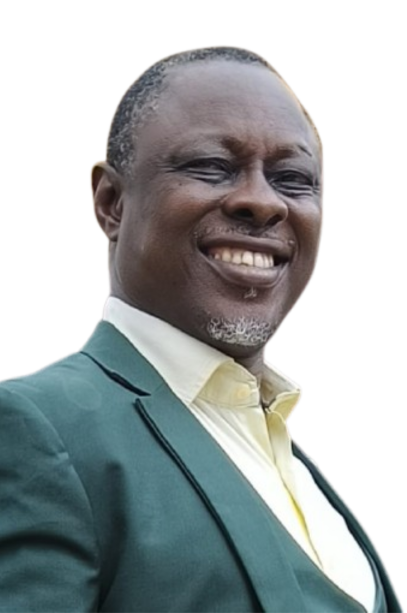
“I commissioned Solaa to turn my research on Urhobo sculpture and the Ivri corpus into a full lecture series. It came back with a plan — every lecture budgeted, every section grounded in sources I could verify. When the drafts arrived, I checked the references the way I check my own students’ work: they held up. Structure and rigor, together — that is what I used to do by hand.”
“As a PhD researcher in computer science, I need two things: code that actually runs, and references that actually exist. Solaa ran my analyses in a sandbox and produced figures from real computation — I could rerun them and get the same results. The literature base and methods citations resolved to real papers. It is the only AI tool I have used where I did not have to fact-check the references.”
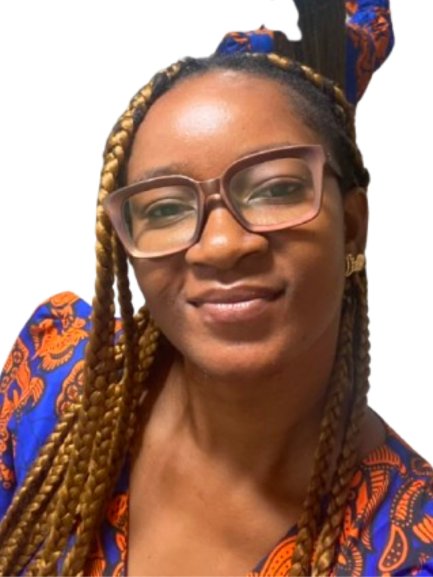
“My advocacy rests on evidence: when I speak about digital accessibility, every claim must trace to a real document. Solaa analysed the policy landscape — from the NCPWD’s work to e-governance accessibility — with every source verifiable. It strengthened my case studies the way a good research assistant would, but faster, and with an audit trail I could defend.”
You can ask any AI to help with research.
But research is more than asking an AI for an answer. You need literature. You need a plan. You need evidence. You need analysis. You need interpretation. You need writing. And you need to know how those pieces relate. That's why I built a department. You don't need to assemble the workflow yourself. Just bring me the research.
Give it instructions → assemble the workflow yourself.
Give me the research mandate → I run the department.
Solaa doesn't compete with any single tool. It replaces the fragmented workflow that forces you to switch between them. One research department. One conversation. The entire pipeline.
So, what are you researching?
Tell me the question you're trying to answer. I'll take it from there.
Privacy Policy · Your research is your intellectual property.