The Draft
Produced by Dr. Aliya — the complete study: every chapter, synthesizing Dr. Nonso’s sources, Dr. Tega’s numbers, and Dr. Doubra’s themes into one coherent manuscript with an auto-compiled APA bibliography.
Mobile Money Adoption and Financial Inclusion Among Nigerian Market Women
Table of Contents
- Abstract
- Chapter 1: Introduction
- Chapter 2: Literature Review
- Chapter 3: Research Methodology
- Chapter 4: Results
- Chapter 5: Discussion
- Chapter 6: Conclusion and Recommendations
List of Figures
- Figure 1: Conceptual framework linking demand-side, supply-side and regulatory determinants to adoption and inclusion outcomes
- Figure 2: Financial-inclusion indicators by gender (survey-weighted, %)
- Figure 3: Gender gap in account ownership: women minus men (percentage points)
- Figure 4: Mobile-money account ownership by age group and gender (survey-weighted, %)
- Figure 5: Socio-economic gradient of mobile-money adoption among Nigerian women
- Figure 6: Correlation matrix of financial-inclusion and demographic indicators
- Figure 7: Logistic regression of mobile-money account ownership: predictor odds ratios
- Figure 8: Self-reported barriers to account ownership by gender (unbanked adults, survey-weighted, %)
- Figure 9: Corpus composition: word count by regulatory document
- Figure 10: Thematic Map of the CBN Regulatory Corpus: Nine Qualitative Themes
- Figure 11: Prevalence of thematic keywords across the regulatory corpus
- Figure 12: Relative thematic emphasis across regulatory documents (normalised keyword density)
- Figure 13: Sentiment profile of regulatory documents (VADER)
- Figure 14: Dominant language in the CBN regulatory corpus (word cloud)
- Figure 15: Co-occurrence network of key regulatory concepts
Abstract
Purpose: This study examines whether mobile money adoption translates into financial inclusion for Nigerian market women, reconciling demand-side microdata with the supply-side regulatory environment. Design and Methods: A convergent mixed-methods design pairs the Global Findex 2024 Nigeria microdata (n = 1,000 adults) with a reflexive thematic analysis of nine Central Bank of Nigeria regulatory documents. Because the microdata lack an occupation variable, adult women and working women serve as the disclosed proxies for market women. Weighted prevalence, two-proportion z-tests, chi-square tests, and logistic regression analyse adoption; thematic analysis of the corpus recovers regulatory intent. Findings: Weighted mobile money adoption is 40.6% among women against 25.0% among men, and 43.6% among working women. Internet use (odds ratio 3.65) and financial-institution account ownership (odds ratio 4.89) are the dominant predictors, and the adjusted gender gap attenuates to marginal significance (p = 0.097), indicating a compositional rather than intrinsic effect. Barriers are gendered: women cite documentation (44.6%) and a family member's account (49.8%), while men cite lack of trust (71.1%). The corpus is gender-blind, never naming women, and its tiered limits and authentication rules are calibrated for entry rather than trade at scale. Integration yields the central claim: the regulatory environment is necessary but insufficient, lowering the floor of access while leaving sustained use gendered. Implications: Policy should mandate gender-disaggregated monitoring, prioritise connectivity, recalibrate KYC and cash ceilings for trade-scale use, and convert the agent-training diversity mandate into substantive gender-literacy practice. Theoretically, the study refines the access-versus-use framework into a gendered form. Keywords: mobile money; financial inclusion; market women; gender; Nigeria; agent banking; regulatory framework; mixed methods
Chapter 1: Introduction
Background of the Study
Mobile money has reordered the architecture of financial access across sub-Saharan Africa. The service allows users to store, send, and receive value through a mobile phone without holding a bank account, and its diffusion has outpaced nearly every prior financial innovation in the region. Ahmad, Green, and Jiang describe mobile money as the most consequential development in African financial inclusion in a decade, while cautioning that adoption remains uneven across countries and population segments (Ahmad et al., 2020). Across the continent, mobile money has been credited with extending payments, savings, and credit to populations long excluded from branch-based banking. Kenya's M-Pesa remains the canonical demonstration: launched in 2007, it expanded at a blistering pace and changed how households transfer, store, and spend money (Mbiti & Weil, 2011). Nigeria followed a different route. Instead of a single operator-led rollout, Africa's largest economy pursued a bank-led, regulator-driven strategy in which the Central Bank of Nigeria (CBN) layered mobile money licensing, tiered know-your-customer (KYC) rules, agent banking, and Payment Service Banks onto existing banking and telecommunications infrastructure (Wezel & Ree, 2023).
Financial inclusion anchors this project. Broadly conceived, financial inclusion denotes access to and use of formal financial services for payments, savings, credit, and risk management (Demirgüç-Kunt & Klapper, 2012). Measurement scholarship distinguishes account ownership from active use, because opening an account does not guarantee sustained engagement (Demirgüç‐Kunt & Klapper, 2013). Macroeconomic evidence associates inclusion with growth, poverty reduction, and stability, although the causal channels remain contested (Sahay et al., 2015). For households, inclusion can smooth consumption and accumulate precautionary savings; for traders, it promises working-capital management and cheaper, safer settlement. A comprehensive review frames these outcomes as ripple effects that extend from individual welfare to broader socio-economic development (Mishra et al., 2024).
The push toward digital finance is not new in Nigeria. The CBN's cashless policy, articulated more than a decade ago, sought to reduce the dominance of physical cash in payment and settlement (Nwankwo & Eze, 2012). Micro-econometric evidence from Nigerian household surveys shows that access to and use of bank services remain stratified by income, education, and location (Efobi et al., 2014). Digital transformation in Nigerian banking has since accelerated, and recent scholarship frames it as a route to economic prosperity (Lottu et al., 2023). The gender dimension of this transformation is uneven. The gender digital divide in developing countries reflects unequal access to devices, connectivity, and skills (Antonio & Tuffley, 2014), and post-pandemic analyses show that digital finance can widen rather than narrow gendered gaps where those preconditions are absent (Vasile et al., 2021). For women, the stakes are particularly high: global and regional studies document persistent gender gaps in account ownership and mobile money use, driven by lower phone ownership, weaker digital skills, and intra-household dependence on male relatives (Were et al., 2021).
Market women occupy a singular position in Nigeria's financial landscape. They dominate petty trade, food retail, and fast-moving consumer goods, operating at the boundary between informal and formal economies. The informal economy in which they work is large, cash-intensive, and weakly served by conventional bank branches (Porta & Shleifer, 2014). Studies of African informal economies show that women traders sustain dense commercial networks through trust, rotating savings, and social embeddedness, frequently outside formal institutions (Kinyanjui, 2013). Their trade is high-frequency and low-margin, which makes transaction costs, cash availability, and settlement speed decisive for daily viability. International labour scholarship likewise documents women's concentration in informal, unprotected, and low-capital work (Chant & Pedwell, 2008). Nigerian women entrepreneurs confront persistent credit, infrastructure, and socio-cultural constraints that formal finance has not resolved (Aladejebi, 2020). Gender thus places market women at the intersection of two documented disadvantages: the gender gap in digital financial services and the structural informality of their livelihoods.
Mobile money promises to reach precisely this constituency. Because the service requires only a phone and an agent, it reduces the costs of distance, documentation, and minimum balances that have historically excluded low-income women. Evidence from East and West Africa indicates that agent-led, tiered-KYC models can compress gender gaps in account holding (Hess et al., 2021). Adoption nonetheless depends on affordability, network coverage, digital literacy, and trust (Eshun & Kočenda, 2024; Mothobi & Kebotsamang, 2024). Systematic reviews confirm that income, education, and internet use remain the strongest individual-level predictors of inclusion across sub-Saharan Africa (Hornuf et al., 2024). This study examines whether mobile money adoption translates into financial inclusion for Nigerian market women, pairing national microdata with a documentary analysis of the CBN regulatory corpus.
Statement of the Problem
Nigerian market women remain substantially excluded from formal finance despite more than a decade of mobile money and agent banking policy. The difficulty is not merely absent accounts. National and cross-country evidence reveals persistent gaps between account opening and sustained use, with dormancy and cash-out dependence especially common among traders whose daily commerce demands liquidity (Barajas et al., 2020). For market women, the gap is compounded by the liquidity demands of petty trade, which tiered transaction limits and agent till ceilings may not accommodate. Critical scholarship warns that digital finance can reproduce inequality, generating a dark side of fraud, over-indebtedness, and exclusion of the least literate even as headline adoption climbs (Mogaji & Nguyen, 2022). IMF analysis formalises the tension: fintech correlates more strongly with digital than with traditional inclusion, so its gains may bypass the digitally marginalised (Tok & Heng, 2022).
Three deficiencies motivate this research. First, occupation-specific evidence on Nigerian market women is thin. The literature proxies market women with "women" or "informal traders," collapsing heterogeneous livelihoods into broad categories (Peter & Orser, 2024). Second, regulatory analysis and demand-side adoption studies run in parallel without integration. Documentary treatments of the CBN framework seldom confront household-level adoption data (Wezel & Ree, 2023). Third, the gender-blindness of the regulatory environment has gone unexamined. Nigerian instruments speak of "the unbanked" and "low income earners" without disaggregating gender, yet documentation, device access, and intra-household dependence are known to shape women's outcomes (Were et al., 2021). Digital financial literacy conditions women entrepreneurs' inclusion more than men's (Hasan et al., 2022), and mobile money adoption is linked to women's economic empowerment through improved financial management (Dorfleitner & Nguyen, 2022). These deficiencies map onto four identifiable gaps: occupation-specific evidence is scarce, regulation is rarely linked to microdata, the gender-blindness of regulation is unexamined, and post-2020 Nigerian evidence remains thin. The policy question, therefore, is not whether inclusion matters but whether the existing architecture delivers it to the women who trade in Nigeria's markets.
This thesis addresses these deficiencies by triangulating two evidence bases. The quantitative strand analyses the Global Findex 2024 Nigeria microdata, using adult women and working women as the closest available proxy for market women. The qualitative strand applies reflexive thematic analysis to nine CBN regulatory documents. The integrated question is whether Nigeria's mobile money architecture lowers the floor of access for market women while leaving the gendered determinants of sustained use unaddressed.
Research Questions
Four questions guide the study. RQ1 asks what levels and socio-economic patterns of mobile money adoption and financial inclusion characterise Nigerian women, with particular attention to working women as the market-women proxy. RQ2 asks which demand-side and digital factors predict women's mobile money adoption once socio-demographic characteristics are controlled. RQ3 asks what barriers unbanked adults report and how those barriers differ by gender. RQ4 asks how the CBN regulatory corpus constructs the financial-inclusion subject and whether it recognises market women or gendered constraints.
Research Objectives
The study pursues five objectives. First, to estimate gender-disaggregated levels of account ownership, mobile money adoption, digital payments, saving, and borrowing among Nigerian adults using the Findex 2024 microdata. Second, to model the determinants of women's mobile money adoption through logistic regression, isolating internet use, financial-account ownership, income, education, age, and location. Third, to analyse gendered self-reported barriers among the unbanked. Fourth, to conduct a reflexive thematic analysis of the CBN regulatory corpus and identify its treatment of gender and market women. Fifth, to integrate the strands and evaluate whether the regulatory environment is necessary or sufficient for market women's inclusion. Each objective corresponds to a research question and is evaluated in Chapters 4 and 5.
Research Hypotheses
H1: Working women, the market-women proxy, exhibit significantly higher mobile money adoption than non-working women. H2: Internet use and financial-institution account ownership are the dominant predictors of women's mobile money adoption after controls. H3: Unbanked women and men report systematically different barriers; women disproportionately cite documentation and intra-household dependence, while men disproportionately cite lack of trust. H4: The CBN regulatory corpus is gender-blind, constructing market women as undifferentiated members of the low-income and unbanked mass.
Significance of the Study
The study contributes to theory, method, and policy. Theoretically, it tests whether the access-versus-use distinction is gendered and whether observed gender gaps are compositional or structural. The result bears directly on a live debate between a celebratory literature that treats mobile money as an unambiguous inclusion engine and a critical counter-literature that documents its exclusions (Mogaji & Nguyen, 2022). It also extends the access-versus-use literature by asking whether women's high account holding translates into intensive, sustained use, a question the dormant-account evidence raises but rarely answers with occupation-aware data (Barajas et al., 2020). Methodologically, the study demonstrates integration of national microdata with regulatory documents, joining evidence bases that seldom meet and showing how survey weights and policy text can be read together. For policy, it identifies specific levers (internet connectivity, KYC documentation, agent liquidity, cash ceilings) that the CBN and operators can adjust to convert access into use. For the informal economy literature, it supplies occupation-aware evidence about the traders who sustain urban food and retail systems (Aladejebi, 2020). The findings speak to regulators, mobile money operators, development agencies, and market associations concerned with the durability of inclusion gains.
Scope and Delimitations
The study covers Nigeria and focuses on adult women, with working women as the proxy for market women. It uses the Findex 2024 Nigeria microdata (n=1,000 adults) and nine CBN regulatory documents issued between 2020 and 2026. Delimitations follow from data structure: no occupation variable exists in the microdata, so actual market traders cannot be isolated; the quantitative findings are descriptive and associational rather than causal; and the qualitative strand captures regulatory intent, not implementation. These boundaries are discussed transparently in Chapter 3. The thesis proceeds in six chapters: Chapter 1 introduces the study, Chapter 2 reviews the conceptual, theoretical, and empirical literature, Chapter 3 details the mixed-methods design, Chapter 4 presents the quantitative and thematic results, Chapter 5 discusses and integrates the findings, and Chapter 6 concludes with recommendations.
Operational Definition of Terms
Mobile money: electronic value stored in a mobile wallet and transacted through a mobile phone, typically via USSD, SMS, or an application, without requiring a bank account. Financial inclusion: access to and use of formal financial services for payments, savings, credit, and risk management. Market women: women who earn through buying and selling in markets and informal retail; in this study they are proxied by adult women generally and working women specifically. Agent banking: delivery of financial services through contracted third-party agents rather than branches. Tiered KYC: a graduated customer due-diligence framework that calibrates identification requirements and transaction limits to account risk. Gender-blindness: a policy framing that omits gender as an analytical category and therefore treats women and men as interchangeable users.
Chapter 2: Literature Review
Conceptual Framework
This study conceptualises financial inclusion as a multidimensional outcome spanning access, usage, and quality of formal financial services. Account ownership captures access; payment, saving, borrowing, and transactional intensity capture usage; affordability, transparency, and consumer protection capture quality (Demirgüç-Kunt & Klapper, 2012). The Global Findex programme operationalises these dimensions through user-side indicators, permitting cross-country benchmarking of who holds accounts, who uses them, and who remains excluded (Demirgüç‐Kunt et al., 2019). Measurement work across 148 countries established that ownership and use diverge sharply, with large shares of account holders remaining dormant (Demirgüç‐Kunt & Klapper, 2013). Composite-index scholarship reinforces the multidimensional view, showing that access, usage, and quality indicators do not move in lockstep and that a country can post high ownership alongside shallow usage (Nguyen, 2020). Barriers research in sub-Saharan Africa confirms that cost, distance, documentation, and trust operate as distinct, layered obstacles rather than a single exclusion threshold (Ulwodi & Muriu, 2017). The access-versus-use distinction is analytically central because it separates the act of opening a wallet from the sustained, high-volume engagement that a working trader requires (Barajas et al., 2020).
Mobile money sits within this framework as a channel rather than an end in itself. It converts a basic mobile phone into a payment and storage instrument, typically through USSD, SMS, or an application, and relies on agents to convert electronic value into cash at the edges of the network (Ahmad et al., 2020). The first decade of mobile money demonstrated that the innovation's reach depends less on handset sophistication than on the density and liquidity of the agent network (Nelms & Rea, 2017). The channel matters for market women because it removes two traditional barriers: physical distance to a branch and the documentation burden of full know-your-customer compliance. Whether mobile money produces inclusion therefore depends on the interaction of three blocks: demand-side endowments (income, education, digital literacy, device and internet access, trust), supply-side infrastructure (network coverage, agent proximity and liquidity, product design), and the regulatory envelope (tiered KYC, transaction and cash limits, consumer protection) (Mothobi & Kebotsamang, 2024; Wezel & Ree, 2023). These three blocks constitute the study's conceptual model.
[Image Placeholder: Conceptual framework linking demand-side, supply-side and regulatory determinants to adoption and inclusion outcomes]
Figure 1: Conceptual framework linking demand-side, supply-side and regulatory determinants to adoption and inclusion outcomes
The framework treats adoption as a necessary but insufficient condition for inclusion. Adoption is the observable outcome of demand and supply meeting; inclusion is the durable consequence of adoption translating into active use that serves a trader's liquidity, saving, and payment needs. Dormant accounts and cash-out dependence represent adoption without inclusion, a state the literature documents widely among low-income users (Barajas et al., 2020). A gender lens sharpens the framework. Gendered endowments and intra-household bargaining shape both the demand side and the returns to adoption, so identical regulatory rules can yield different outcomes for women and men (Lundberg & Pollak, 1996). The framework thus positions gender not as a covariate but as a structuring condition that modulates every causal path. For market women, the framework implies that observed adoption levels must be interpreted alongside the determinants of sustained use rather than in isolation. Operationally, the framework maps onto the Findex indicators used in Chapter 4: account ownership and mobile money holding measure access; digital payments, saving, and borrowing measure usage; and self-reported barriers measure the frictions that block the translation of access into use. The CBN corpus supplies the regulatory block through its rules on KYC, agent eligibility, and transaction limits. This mapping keeps the conceptual model close to the data.
Theoretical Framework
Four theoretical traditions orient the study. The first is the technology acceptance family, most prominently the Unified Theory of Acceptance and Use of Technology (UTAUT). UTAUT predicts adoption from performance expectancy, effort expectancy, social influence, and facilitating conditions, moderated by age, gender, and experience. African applications show the model explains mobile money uptake among microenterprise customers and mobile payment intention, with facilitating conditions and effort expectancy especially salient for low-literacy users (Abrahão et al., 2016; Mugambe, 2017). Extended versions add hedonic motivation, habit, and proactive personality, but the core insight endures: adoption is a function of perceived usefulness, perceived ease, social endorsement, and enabling infrastructure (Hilal & Neira, 2022; Jiang et al., 2024). Reviews of mobile financial services confirm that acceptance constructs travel well across contexts while requiring local adaptation for trust and facilitating conditions (Shaikh et al., 2022).
The second tradition is digital divide theory. Early framings distinguished physical access from skills and usage; more recent work shows the divide migrating from physical to material access as device cost and data affordability become binding (Deursen & Dijk, 2018). A three-level account separates access, capability, and outcomes, insisting that providing devices is insufficient where skills and enabling contexts lag (Brown & Czerniewicz, 2010). For developing-country women, the divide is compounded by ownership asymmetries, proxy use through relatives, and lower confidence (Antonio & Tuffley, 2014). The concept of a digital native has been criticised as myth, with access and capability remaining socially stratified (Brown & Czerniewicz, 2010). Digital divide theory matters here because it predicts that a USSD channel accessible on a feature phone will outperform smartphone-dependent channels among market women.
The third tradition is gendered bargaining and household economics. Bargaining models treat household resource allocation as negotiated rather than unitary, so women's control over phones, accounts, and proceeds depends on their fallback position (Lundberg & Pollak, 1996). This explains a recurring empirical pattern: women may be routed through male relatives' accounts, or may adopt only when a channel offers discretion and privacy. Empowerment scholarship extends the logic, defining empowerment as the expansion of women's ability to make strategic life choices through resources, agency, and achievements (Kabeer, 2008). Financial services enter this account as resources that can strengthen women's fallback position, but only when women retain control over them. A further strand, feminist entrepreneurship economics, clarifies the gendered niche in which women's businesses operate: women's entrepreneurship is not a smaller version of men's but is structured by gendered access to capital, networks, and legitimacy (Harrison et al., 2019). This lens directs attention to the gender-specific frictions of registration, collateral, and credit that condition any financial innovation's reach.
The fourth tradition is critical financial inclusion scholarship. This body treats digital finance as neither inherently emancipatory nor neutral, asking who gains and who is excluded as platforms scale (Mogaji & Nguyen, 2022; Tok & Heng, 2022). These traditions are complementary rather than competing. UTAUT supplies the proximate behavioural constructs; digital divide theory supplies the distributional structure of capability; bargaining theory supplies the intra-household distribution of resources and control; and critical scholarship supplies the evaluative question of who benefits. A woman may perceive mobile money as useful yet lack a device, own a device yet lack control over its proceeds, or control proceeds yet face fraud risk that erodes trust. A single-theory model would miss these distinct channels. For market women specifically, the theories jointly predict that adoption will be highest where a channel is cheap, operable on a basic handset, available through a nearby trusted agent, and capable of protecting a woman's control over her own funds. Each prediction is testable: cost maps to affordability barriers, handset operability maps to the USSD-versus-smartphone distinction, agent proximity maps to the urban-rural gap, and control maps to the gendered dependence barrier. Together the four traditions generate the study's central hypothesis: adoption is jointly produced by acceptance factors, digital capability, household bargaining, and institutional design, and inclusion is contingent on whether those factors are gendered.
Determinants of Mobile Money Adoption
Demand-side determinants dominate the empirical record. Income, education, and internet use are the strongest individual-level predictors of financial inclusion across sub-Saharan Africa and OECD countries, with mobile money adoption tracking the same gradient (Eshun & Kočenda, 2024). In Nigeria, mobile banking uptake hinges on infrastructure quality, cost perceptions, and regulatory enablement rather than on population size alone (Siano et al., 2020). Meta-analytic evidence across sub-Saharan Africa confirms that education, income, and digital literacy load consistently onto adoption, while trust and perceived cost operate as gatekeepers (Hornuf et al., 2024). Mobile phone ownership itself is stratified in Nigeria by income, urban residence, and education, conditioning who can even begin the adoption journey (Forenbacher et al., 2019). Earlier African work reached the same conclusion through different data: gender, age, and education shape inclusion even after income is controlled (Zins & Weill, 2016).
Financial literacy mediates the translation of access into effective use. Household evidence from China shows financial literacy significantly boosting digital finance uptake and responsible use (Yang et al., 2023), while cross-country work confirms literacy as a first-order determinant of inclusive finance (Hasan et al., 2021). Age follows a life-cycle pattern, with adoption peaking among prime-age adults and declining among older cohorts, a pattern consistent with digital skill and labour-market attachment. For market women, these gradients mean that a trader's education and literacy, not her sex, may carry most of the explanatory weight once connectivity is held constant. The same logic extends to numeracy and interface design, where menu complexity can deter low-literacy traders even when the underlying service is affordable.
Trust and fraud concerns operate as decisive gatekeepers. Critical evidence from Nigeria documents fraud, over-indebtedness, and perceived insecurity as deterrents that reproduce exclusion among the least literate (Mogaji & Nguyen, 2022). Consumer-protection scholarship argues that opaque pricing, data misuse, and unresolved disputes erode the confidence of first-time users precisely where adoption is most needed (Garz et al., 2021). For women, trust is further mediated by household power relations: a channel used through a spouse's phone or agent invites different risk perceptions than an individually owned account.
Supply-side determinants are equally consequential. Network coverage expansion is directly associated with fintech adoption in sub-Saharan Africa, implying that adoption is partly an infrastructure outcome rather than a purely behavioural one (Mothobi & Kebotsamang, 2024). Mobile phones, economic growth, bank competition, and stability jointly explain cross-country inclusion in Africa, underscoring that supply-side conditions set the ceiling for demand (Chinoda & Kwenda, 2019). Agent liquidity management shapes sustained use: when agents lack float, users revert to cash or informal channels (David‐West et al., 2019). Trader-focused models in Uganda show that agent proximity, transaction cost, and trust jointly explain adoption among market users (Malinga & Maiga, 2019). Evidence from Ghanaian SMEs likewise links technology adoption and utilisation to market performance, with utilisation contingent on perceived usefulness and support infrastructure (Selase et al., 2019).
Interoperability and competition complete the supply-side picture. Where payment schemes interoperate and agents are non-exclusive, a trader can be paid by any scheme's customer and transact at any terminal, lowering the coordination costs that would otherwise fragment her market. Competition among operators disciplines fees, while concentration in the agent or switch layer can reintroduce the very frictions interoperability is meant to remove. These structural features are less visible in individual-level data but condition the price and convenience a market woman faces at the point of service.
A consistent finding is the complementarity between mobile money and formal accounts. Rather than functioning purely as a substitute for the unbanked, mobile money often extends the reach of already-banked users, while the unbanked enter through simplified tiers. This complementarity has implications for interpretation: adoption rates conflate two distinct pathways, and the determinants of each differ (Barajas et al., 2020). Artificial intelligence and financial technology further complicate the picture, promising efficiency gains while potentially raising the capability threshold for users (Mhlanga, 2020).
Gender and Digital Financial Services
The gender strand is the most contested in the corpus. Aggregate evidence documents durable gender gaps in account ownership and mobile money use across sub-Saharan Africa, driven by lower phone ownership, weaker digital skills, and intra-household dependence (Bashiru et al., 2023; Were et al., 2021). In Tanzania, women's lower account ownership and mobile money use persist across education and income strata, indicating that gender operates partly independently of socio-economic endowments (Were et al., 2021). Regional gender-gap analyses reach the same conclusion for ASEAN economies, identifying cultural norms and digital access as persistent disadvantages (Raimi et al., 2021). Digital financial literacy conditions women entrepreneurs' inclusion more than men's, indicating that the capability barrier is gendered (Hasan et al., 2022). Post-pandemic analyses show that digital finance can widen gendered gaps where device and connectivity preconditions are absent (Vasile et al., 2021).
A countervailing body of evidence complicates the deficit narrative. World Bank assessments show that well-designed agent-led channels can close or even reverse gender gaps, particularly where tiered KYC lowers entry costs for women (Hess et al., 2021). Mobile money adoption is associated with women's economic empowerment through improved financial management practices, suggesting the channel can be transformative where adopted (Dorfleitner & Nguyen, 2022). Studies of women petty traders in Tanzania's Dodoma region find education, business experience, and income driving inclusion among precisely the constituency this thesis targets (Ugulumu et al., 2024). Comparative work on women-owned informal enterprises shows education, business size, and prior financial experience predict inclusion, while cash dependency and liquidity needs remain structural constraints (Sherwani et al., 2023). Digital financial inclusion visualisations of the academic literature confirm that gender, literacy, and technology access form a tightly coupled cluster, with women's inclusion conditioned by digital capability more than by account availability alone (Gallego-Losada et al., 2022). Empowerment-focused evidence from developing economies finds that access to finance, technical know-how, and financial literacy jointly drive women's entrepreneurial development (Andriamahery & Qamruzzaman, 2022).
The disagreement between deficit and reversal accounts is less about facts than about levels of analysis. Aggregate studies average across heterogeneous populations; microdata and programme evaluations reveal conditional reversal where agents and tiered KYC are present. The residual question is whether observed gender differences are compositional (explained by education, income, and connectivity) or intrinsic to gender itself. The compositional interpretation holds that women's apparent disadvantage or advantage reflects the distribution of these covariates; the intrinsic interpretation holds that gender retains explanatory power net of them. The logistic regressions in Chapter 4 test this directly by entering gender alongside internet use, financial-account ownership, income, education, age, and location. A gender coefficient that attenuates to non-significance supports the compositional reading; a coefficient that survives supports the structural reading. Gender cannot be treated as a simple binary predictor; it must be read alongside the capability and connectivity variables through which it operates.
Informal Economy and Women Traders
Market women operate inside Africa's informal economy, a domain characterised by low capital, cash intensity, and weak formal registration (Porta & Shleifer, 2014). Informal economic activity is not marginal: it absorbs large shares of urban employment and sustains food and retail distribution systems (Kinyanjui, 2013). Women are overrepresented in the most precarious segments, combining trading with unpaid domestic labour and facing gender-specific constraints on capital and mobility (Chant & Pedwell, 2008). Nigerian women entrepreneurs in the southwest confront credit, infrastructure, and socio-cultural obstacles that formal finance has repeatedly failed to resolve (Aladejebi, 2020).
The financial practices of market women are socially embedded rather than atomised. Rotating savings and credit associations, known locally as esusu or ajo, provide discipline, flexibility, and peer monitoring that formal products rarely match (Kinyanjui, 2013). The cash dependence of market trade is structural, not habitual. Buyers and suppliers settle in cash because it is immediate, universal, and untaxed, and because thin margins cannot absorb payment delays. Mobile money therefore competes with cash on speed and cost, not merely on convenience. Where cash-out limits or agent liquidity fail, the trader's default is reversion to cash, which the formal system then cannot observe. The consequence is a mismatch between the formal system's standard products, which assume regular, documented cash flows, and the episodic, cash-settled reality of market trade (Porta & Shleifer, 2014).
Evidence directly on market women is thin but telling. Rural Nigerian women entrepreneurs frequently forgo formal mobile money and microfinance in favour of informal revolving credit schemes, citing trust, flexibility, and social embeddedness (Peter & Orser, 2024). Studies of informal traders in Lagos link microfinance repayment burdens to the mental well-being of women entrepreneurs, underscoring that access alone is not benign (Olohunlana et al., 2023). These findings frame a caution: mobile money will be adopted only insofar as it fits the liquidity rhythm, discretion, and social relations of trading, not merely because it is available.
Regulatory Frameworks and Agent Banking in Nigeria
Nigeria's regulatory architecture is the institutional backbone of this study. The CBN's approach layers mobile money licensing, tiered KYC, agent banking, and Payment Service Banks onto the banking system, aiming to extend services to the unbanked (Wezel & Ree, 2023). IMF analysis describes the strategy as achieving undeniable successes in onboarding while exclusion rates still exceed official targets, with financial literacy as the binding residual constraint (Wezel & Ree, 2023). Industry evidence positions agent-based delivery as pivotal last-mile infrastructure for low-income users, including the retail sectors where women trade (Pénicaud & Katakam, 2019). The agent's function as a human interface for those without devices or digital skills is the mechanism through which inclusion reaches the least literate (Malinga & Maiga, 2019).
Tiered KYC is the entry mechanism. By accepting a name and phone number at the lowest tier while capping transaction values, the framework lowers the entry barrier but bounds the capacity of low-tier accounts. This proportionality is double-edged for traders: it eases onboarding while constraining the high-volume commerce that a market woman's daily stock purchases require. Agent eligibility rules extend the logic to the supply side, drawing non-individual agents from fast-moving consumer goods retail, confectionery, fashion, and beauty outlets, sectors in which women traders are heavily represented.
Consumer protection is the second pillar. Digital delivery creates new risks: fraud, opaque pricing, and data misuse, which regulators must address if inclusion gains are to be durable (Garz et al., 2021). Zimbabwean evidence shows mobile banking improving inclusion in rural and low-income settings, but only where trust and agent reliability hold (Mago & Chitokwindo, 2014). Nigerian electronic payment scholarship predates the current wave and identifies infrastructure, cost, and settlement integrity as the constraints that the later framework was designed to solve (Nwankwo & Eze, 2012). Micro-econometric work on bank access in Nigeria documents persistent stratification by income and education, the very stratification mobile money was meant to compress (Efobi et al., 2014).
Institutions and governance condition how far mobile money translates into inclusion. Cross-country evidence from sub-Saharan Africa finds that governance quality and institutional capacity mediate the inclusion returns to mobile money (Gyamerah & Tetteh, 2024). Emerging-market reviews stress that technology alone does not deliver inclusion; regulatory design, interoperability, and consumer safeguards determine whether digital channels reach the excluded (Falaiye et al., 2024). Central bank digital currency discussions add a further frontier, with retail CBDC framed as a potential inclusion tool if designed for offline, low-cost use (Lannquist & Tan, 2023). The inclusion shortfall the CBN itself acknowledges, with inclusion rates remaining below expectation despite successive initiatives, locates the policy problem less in ambition than in the calibrated limits and capability assumptions embedded in the rules (Wezel & Ree, 2023). Nigeria's framework is therefore best read as a bundle of enabling rules whose effects depend on implementation fidelity at the agent and operator level.
Empirical Review
The empirical literature falls into three waves. The first wave established the impact case. M-Pesa's Kenyan rollout demonstrated that mobile money reshapes remittance, saving, and risk management at population scale; the service functioned as a de facto savings and insurance mechanism for households otherwise excluded from formal deposit institutions (Mbiti & Weil, 2011). Cross-country work linked financial inclusion to growth and poverty reduction, with mobile money singled out as the most scalable delivery mechanism (Sahay et al., 2015). IMF scholarship on the promise of fintech framed digital finance as a structural opportunity for emerging markets while cautioning on regulation and infrastructure (Sahay et al., 2020). Experimental evidence from three countries tempered optimism, finding that subsidised account opening produced limited sustained use among the unbanked, a result that refocused attention on usage rather than access (Dupas et al., 2018).
The second wave examined determinants and heterogeneity. Fintech is associated with financial inclusion but with unequal distributional effects across the income and digital capability spectrum (Demir et al., 2020). Systematic reviews document mobile financial services improving inclusion while cautioning that impacts are conditional on governance and consumer protection (Kim et al., 2018). Evidence gap maps catalogue enablers, barriers, and impacts, identifying gender, literacy, and affordability as recurring moderators (Mader, 2024; Mader et al., 2022). Barriers evidence further shows that cost, distance, and documentation rank among the most frequently cited obstacles to account ownership across the region, reinforcing that supply and demand frictions are jointly binding (Ulwodi & Muriu, 2017). Firm-level evidence shows mobile money complementing traditional finance and raising productivity, again conditional on complementary capabilities (Konté & Tetteh, 2022). Emerging-economy banking evidence reinforces the point, showing mobile banking services improving inclusion among commercial bank customers while leaving the unbanked dependent on agent reach (Saeed & Donkoh, 2024).
The third wave is critical. It documents the dark side of mobile money: fraud, over-indebtedness, and exclusion of the least literate, arguing that adoption can reproduce inequality (Mogaji & Nguyen, 2022). IMF work formalises the tension, finding fintech correlates more strongly with digital than traditional inclusion, so gains may bypass the digitally marginalised (Tok & Heng, 2022). This critical turn does not dismiss mobile money; it insists that inclusion claims be evaluated against distributional outcomes rather than adoption aggregates alone. The three waves converge on a single unresolved question: under what conditions does mobile money include rather than stratify, and how does gender condition that boundary.
Gap Analysis
Four gaps justify this thesis. First, occupation-specific evidence on Nigerian market women is scarce; the literature proxies them with women or informal traders, collapsing heterogeneous livelihoods into broad categories (Peter & Orser, 2024). The existing trader studies come from Uganda, Ghana, and Tanzania rather than from Nigeria's distinctive bank-led regime, limiting transferability. Second, regulation is rarely linked to microdata; documentary analyses of the CBN framework and demand-side adoption studies run in parallel without integration (Wezel & Ree, 2023). No published study to our knowledge confronts the CBN's tiered KYC, agent, and cash-limit rules with gender-disaggregated household adoption data. Third, the gender-blindness of regulation is unexamined; the corpus does not interrogate whether rules that are gender-neutral in design are gendered in effect. Fourth, post-2020 Nigerian evidence is thin; the rapid Payment Service Bank rollout and pandemic-era digital acceleration are under-documented in peer-reviewed work. This study responds to each gap by pairing the Findex 2024 Nigeria microdata with a reflexive thematic analysis of nine CBN regulatory documents, and by reading both through an explicitly gendered lens. The contribution is therefore at once substantive and methodological: it generates occupation-proximate evidence and demonstrates a replicable design for linking regulatory text to household microdata.
Chapter 3: Research Methodology
Research Philosophy and Mixed-Methods Design
We adopted a pragmatist orientation, selecting methods for their capacity to answer the research questions rather than for fidelity to a single paradigm. Pragmatism licenses the combination of quantitative and qualitative evidence when the research problem is simultaneously descriptive, explanatory, and interpretive. The problem here has all three characters: we must estimate the level of mobile money adoption among Nigerian women, explain its socio-economic determinants, and interpret how the regulatory environment constructs the financial-inclusion subject. Pragmatism rejects the premise that quantitative and qualitative methods answer to incommensurable epistemologies; both strands here serve the same warrant, since claims about adoption must be grounded in population estimates and claims about regulation must be grounded in the documents themselves. Neither strand alone can answer the integrated question of whether the architecture lowers access while leaving use gendered.
The mixed-methods turn in financial inclusion research responds to a documented weakness: quantitative studies of adoption struggle to see the institutional rules that shape behaviour, while documentary studies of regulation struggle to see whether those rules change outcomes. By joining the Findex microdata to the CBN corpus, this study follows the recommendation of Chapter 2 that regulation and microdata be read together rather than in parallel (Wezel & Ree, 2023). The four research questions map onto the two strands as follows. RQ1 and RQ2 are answered by the quantitative strand through prevalence estimates and logistic regression; RQ3 is answered quantitatively through the barrier profile; RQ4 is answered qualitatively through thematic analysis of the corpus. The integrated question is answered only at the point of synthesis. This mapping disciplines the design: no strand is asked to answer a question its evidence cannot support.
The design is a convergent mixed-methods study with two parallel strands. The quantitative strand analyses the Global Findex 2024 Nigeria microdata to estimate adoption, model its predictors, and profile gendered barriers. The qualitative strand applies reflexive thematic analysis to nine Central Bank of Nigeria regulatory documents to recover the policy logic, mechanisms, and silences that condition market women's inclusion. The strands were analysed independently and then integrated at the interpretation stage, a configuration suited to triangulation and to the exposure of convergence and divergence between demand-side evidence and supply-side rules. The remainder of this chapter details the data, procedures, and integration logic that realise this design.
Quantitative Strand: Findex 2024 Nigeria Microdata
The quantitative strand uses the Nigeria file of the Global Findex 2024 microdata, comprising 1,000 adults and 199 variables. Survey weights, supplied in the weight variable, are normalised to sum to 1,000, representing an adult population of approximately 133.3 million. The Findex programme measures account ownership, savings, borrowing, payments, and digital financial behaviour through user-side indicators, making it the standard cross-country instrument for financial inclusion (Demirgüç‐Kunt et al., 2019). Its methodological lineage extends the measurement framework that established ownership-use divergence across 148 countries (Demirgüç‐Kunt & Klapper, 2013). The instrument captures a bundle of indicators relevant to this study: ownership of any account, ownership of a financial-institution account, ownership of a mobile money account, digital account holding, any digital payment, merchant payments, saving, borrowing, and internet use. Mobile money ownership is the primary outcome because it captures the channel this thesis examines. Financial-institution account ownership is retained as a covariate to test the complementarity hypothesis advanced in Chapter 2, namely that mobile money extends already-banked users while the unbanked enter through simplified tiers (Barajas et al., 2020).
The weighted sample profile is as follows: 553 women and 447 men; a mean age of 30.9 years and median of 30; 470 urban and 530 rural residents; and education distributed as primary or less 43.8%, secondary 54.5%, and tertiary 1.6%. Women in the sample are more educated and more likely to use the internet than men, a compositional feature that matters for interpreting the gender gap and is addressed explicitly in Chapter 4. This profile shapes the analytical strategy: because the sample's gender composition differs on adoption predictors, all subgroup and multivariate results are reported within gender rather than pooled across it.
The critical limitation is the absence of an occupation variable. The microdata cannot isolate self-employed market traders. We therefore define two nested proxies, disclosed here and carried through every results table. The primary proxy is adult Nigerian women (female, n = 553). The tighter proxy is working women, defined as women in the labour force (n = 472), the closest available approximation to economically active market traders. Labour-force participation captures economic activity but includes wage employment as well as self-employment, so the tighter proxy remains approximate rather than exact. We treat all findings as about adult women and working women, and we interpret them as occupation-proximate rather than occupation-exact. This proxy strategy is the transparent but imperfect solution to a data constraint that the literature itself shares when it substitutes women or informal traders for market women (Peter & Orser, 2024).
Key variables are coded as follows. Gender is binary (male, female). Urbanicity distinguishes urban from rural residence. Labour-force status distinguishes in from out of the labour force. Education is grouped into primary or less, secondary, and tertiary. Income is measured in quintiles from poorest to richest. The dependent variable in the multivariate models is mobile money account ownership. Covariates include internet use, financial-institution account ownership, income quintile, education, location, labour-force status, and age.
Qualitative Strand: CBN Regulatory Corpus
The qualitative strand interrogates nine CBN policy and regulatory documents: the Regulatory Framework for Mobile Payments Services; the 2026 Circular on Market Structure Requirements; the Guidelines on Mobile Money Services; the 2024 Circular on Cash-out Limits for Agent Banking Transactions; the 2020 Reviewed Guidelines for Licensing and Regulation of Payment Service Banks; the 2026 Instant Payment circular; the 2020 Guidelines on Operations of Electronic Payment Channels; the 2025 Circular and Guidelines for the Operations of Agent Banking; and the PSMD Vision 2025 strategy. The combined corpus is approximately 44,700 words. One document, the Instant Payment circular, is a two-page scanned image with no text layer; it was extracted through optical character recognition and is quoted verbatim from that output. Text extraction used PyMuPDF for text-layered PDFs and Tesseract optical character recognition for the scanned circular; sentiment was computed with the VADER lexicon, and term-frequency and co-occurrence measures were computed in Python.
Document selection was purposive. The nine instruments constitute the core CBN rules governing mobile payments, mobile money, agent banking, payment service banks, and electronic channels in Nigeria, spanning the window in which the Payment Service Bank regime matured. Selection was bounded by relevance to the research question rather than by a claim of exhaustive coverage of all CBN guidance. The corpus is the empirical site for recovering regulatory intent. We treat the documents not as neutral descriptions but as institutional speech that constructs the financial-inclusion subject through its categories, thresholds, and obligations (Wezel & Ree, 2023). The corpus is read in full, and the analysis is inductive: themes were generated from close reading rather than imposed from a pre-specified codebook. The corpus is analysed as a single body rather than document by document, so themes reflect the regulatory system's cumulative construction of inclusion. This choice reflects the research aim of identifying what the regulator says and what it omits about gender and market women.
Reflexive thematic analysis treats the analyst's subjectivity as a resource rather than a contaminant. Themes are patterns of shared meaning built from the data, not pre-existing categories awaiting discovery. In this study the reflexive move is explicit: because the research question centres market women, the absence of that category from the corpus becomes an analytic object in its own right, the cross-cutting theme of gender-blindness. Reflexivity is documented through a codebook that records definitions and verbatim exemplars for each of the thirty-one codes, making the interpretive path auditable. The eight substantive themes are: financial inclusion as the central policy logic; tiered KYC and transaction limits as proportionate entry with bounded capacity; agent banking as last-mile inclusion infrastructure; cash, liquidity, and the cashless tension; consumer protection and trust-building; the digital divide in literacy, affordability, and access; security, fraud, and digital identity as trust infrastructure; and interoperability, competition, and market governance. A ninth, cross-cutting theme records the corpus's gender-blindness.
Data Analysis Procedures
Quantitative analysis proceeded in four steps. First, we computed survey-weighted prevalence estimates for account ownership, mobile money holding, digital payments, saving, and borrowing, disaggregated by gender, using the design weights. Second, we tested gender gaps with weighted two-proportion z-tests and subgroup differences with chi-square tests. Third, we modelled women's mobile money ownership with logistic regression, reporting coefficients, odds ratios, and 95% confidence intervals. Fourth, we profiled self-reported barriers among the unbanked by gender.
The multivariate specification is a logistic regression of mobile money ownership on internet use, financial-institution account ownership, income quintile, education, location, labour-force status, and age with a quadratic age term:
Odds ratios are interpreted as multiplicative effects on the odds of holding a mobile money account: a ratio above one indicates a positive association, below one a negative association. Model fit is summarised with the pseudo-R-squared, and significance is assessed at the 0.05 level. The weighted two-proportion z-test for the gender gap is specified as , where and are the weighted proportions and the pooled proportion. Weighted estimation used design-weighted descriptive statistics; logistic regression used maximum likelihood.
The weighting decision requires explicit statement because it changes the headline result. The weighted estimates are authoritative: women hold mobile money at 40.6% against men's 25.0%, a gap of 15.5 percentage points (p < 0.001). An unweighted cross-tabulation of the same file returns a different pattern, with the raw sample showing a materially higher male rate. The divergence arises because the raw sample is not a simple random draw from the adult population: the survey design oversamples or undersamples strata that differ systematically on adoption predictors such as education, urbanicity, internet use, and age. The sampling weights rebalance the sample to the national adult distribution. The male subsample in the raw file is disproportionately composed of higher-adoption profiles, so the unweighted male estimate is inflated; down-weighting those over-represented, high-adoption men and up-weighting under-represented, lower-adoption men lowers the male estimate to 25.0%. The female unweighted and weighted estimates are close because the female sample's composition more closely tracks the population. Throughout this thesis we report weighted figures, treat them as design-consistent, and use the unweighted figure only to illustrate the hazard of ignoring survey weights.
Qualitative analysis followed the recursive phases of reflexive thematic analysis: familiarisation through repeated reading, systematic coding, theme generation, theme review, definition, and reporting. Thirty-one codes were developed across eight substantive themes plus one cross-cutting interpretive theme on gender-blindness. Coding was anchored in verbatim regulatory language, and every theme is traceable to specific documents. The barrier profile uses the self-reported reasons among the 216 unbanked adults, disaggregated by gender, and tests the gendered dependence pattern identified in the literature. The full thematic codebook with definitions and exemplars is provided in Appendix B. A supplementary computational pass quantified keyword prevalence, document-level sentiment, and concept co-occurrence; these measures support but do not replace the interpretive coding.
Integration and Triangulation Strategy
Integration occurred at the interpretation stage through a joint display that places each research question beside its quantitative and qualitative answers and records whether the strands converge, diverge, or qualify one another. Triangulation is therefore not a test of identical results but a systematic comparison of two different evidentiary registers: what women do (microdata) and what the regulator intends (documents). Convergent findings strengthen confidence; divergent findings expose the gap between design and outcome. The joint display is constructed after both strands are complete. Each row states a research question; columns report the quantitative finding, the qualitative finding, and the meta-inference that reconciles them. Meta-inferences can be of three types: confirmation, where strands align; complementarity, where strands illuminate different facets; and dissonance, where strands conflict and require explanation. Dissonance is not treated as error; it is treated as the empirical trace of the gap between design and outcome that the thesis hypothesises. The joint display is reproduced in Chapter 5, where it functions as the bridge between the results and the discussion.
Validity, Reliability and Trustworthiness
Quantitative validity rests on the design-consistent use of survey weights, transparent coding, and the reporting of confidence intervals and significance levels rather than point estimates alone. Reliability is supported by the reproducibility of the Findex instrument and the documentation of all coding decisions. Qualitative trustworthiness rests on four commitments. Credibility is pursued through verbatim anchoring of themes in regulatory language and through analyst reflexivity about the document-based nature of the data. Transferability is supported by thick description of the corpus and its institutional context. Dependability is supported by a stable codebook with definitions and exemplars. Confirmability is pursued by keeping interpretation close to the text and by distinguishing descriptive themes from interpretive claims, especially the gender-blindness finding. Reflexivity is further maintained by distinguishing the analyst's interpretation from the verbatim text, a separation visible in the use of quotation throughout Chapter 4. Mixed-methods legitimation adds a further layer: we attend to integration validity by ensuring the same constructs are operationalised consistently across strands, to interpretive validity by checking that meta-inferences are warranted by both strands, and to multiple-validities by reporting statistical and thematic evidence rather than privileging one register.
Ethical Considerations
The study uses exclusively secondary, publicly available data: the Global Findex microdata and published CBN regulatory documents. No human participants were recruited, no personal identifiers are analysed, and no informed consent procedures were required. The microdata are anonymised. The regulatory documents are public instruments, and no institutional permission was required for their analysis; the study does not identify individual officials or confidential supervisory information. The principal ethical obligations are analytical rather than procedural: to represent the proxy honestly, to avoid over-claiming occupation-specific findings from a non-occupational variable, and to report the regulatory corpus accurately, including its OCR-derived passages. The absence of primary participants does not remove ethical responsibility for representation: market women are the study's subject, and the proxy must not be silently converted into the group itself.
Limitations of the Study
Six limitations bound the findings. First, the proxy limitation is structural: because the microdata lack an occupation variable, market women cannot be isolated, and findings are occupation-proximate. Second, the data are a single cross-section, so associations are descriptive and associational; causal claims are not warranted. Third, small cells limit precision for tertiary-educated women, older women, and unbanked women. Fourth, the qualitative strand captures regulatory intent, not implementation; the gap between rules and lived practice requires primary fieldwork that this study does not undertake. Fifth, the supplementary computational measures of the corpus are illustrative keyword-density and sentiment indicators, not substitutes for the interpretive coding. Sixth, the normalised weights sum to 1,000, so estimates are design-weighted proportions rather than absolute population counts; this affects presentation but not the substantive conclusions. These limitations are carried into the interpretation in Chapters 4 and 5 rather than ignored.
Chapter 4: Results
This chapter presents the empirical results in the sequence set by the research objectives: the descriptive profile; mobile-money adoption by gender and socio-economic characteristics; the logistic regression; gendered barriers; the eight regulatory themes and the cross-cutting gender-blindness finding; and the reconciliation of weighted and unweighted estimates. The quantitative strand reports survey-weighted estimates from the Findex 2024 Nigeria microdata, while the qualitative strand reports the reflexive thematic analysis of nine Central Bank of Nigeria regulatory documents. Where the two strands converge, the convergence is noted and carried forward into Chapter 5.
Descriptive Profile of the Sample
The weighted sample comprises 1,000 Nigerian adults, 553 women and 447 men, drawn from the Findex 2024 Nigeria microdata with survey weights normalised to sum to 1,000, representing an adult population of approximately 133.3 million. Because the microdata contain no occupation variable, adult women serve as the primary proxy for market women, and working women in the labour force form the tighter proxy for economically active traders. Table 4.1 summarises the profile.
| Characteristic | Statistic |
|---|---|
| Gender | 553 women (55.3%) · 447 men (44.7%) |
| Age (overall) | mean 30.9 years · median 30 |
| Age (women) | mean 32.2 · median 31 |
| Age (men) | mean 29.5 · median 28 |
| Working women (market-women proxy) | 472 (85.4% of women) |
| Location | 470 urban (47.0%) · 530 rural (53.0%) |
| Education (weighted) | primary or less 43.8% · secondary 54.5% · tertiary 1.6% |
| Income quintiles (unweighted counts) | Q1 134 · Q2 181 · Q3 173 · Q4 228 · Q5 284 |
Two compositional differences govern the interpretation that follows. Women are more educated than men: 36.6% hold primary education or less against 51.1% of men, while 61.5% hold secondary education against 47.5%. Women are also more likely to use the internet, 44.7% against 30.7%. Both characteristics correlate positively with mobile-money adoption, so they must be held constant before any residual gender effect can be read. Saving and borrowing show near parity across gender (74.4% of women against 70.1% of men saved; 79.0% against 78.9% borrowed), which indicates the gender gap is specific to formal digital channels rather than to financial behaviour in general. These compositional features sit on the causal path to adoption, so every subgroup and multivariate result is reported within gender, and the gender gap is interpreted only after accounting for them. The reversal of the conventional global gender gap in the adoption section must likewise be read against these compositional facts rather than as an intrinsic female advantage. The proxy caveat applies throughout. Adult women and working women are occupation-proximate, not occupation-exact, and no estimate here claims to isolate market traders directly.
Mobile Money Adoption by Gender and Socio-Economic Characteristics
Table 4.2 reports weighted financial-inclusion indicators by gender. Women out-perform men on every access and digital measure, and each difference is significant at p < 0.001.
| Indicator | Overall | Men | Women | Gap (W−M) | Sig. |
|---|---|---|---|---|---|
| Any account (FI or mobile money) | 63.3 | 52.2 | 74.3 | +22.1 | *** |
| Financial-institution account | 59.7 | 49.3 | 70.1 | +20.8 | *** |
| Mobile-money account | 32.8 | 25.0 | 40.6 | +15.5 | *** |
| Digital account | 53.1 | 44.4 | 61.9 | +17.5 | *** |
| Any digital payment | 54.5 | 45.9 | 63.1 | +17.2 | *** |
| Digital merchant payment | 28.4 | 23.0 | 33.8 | +10.8 | *** |
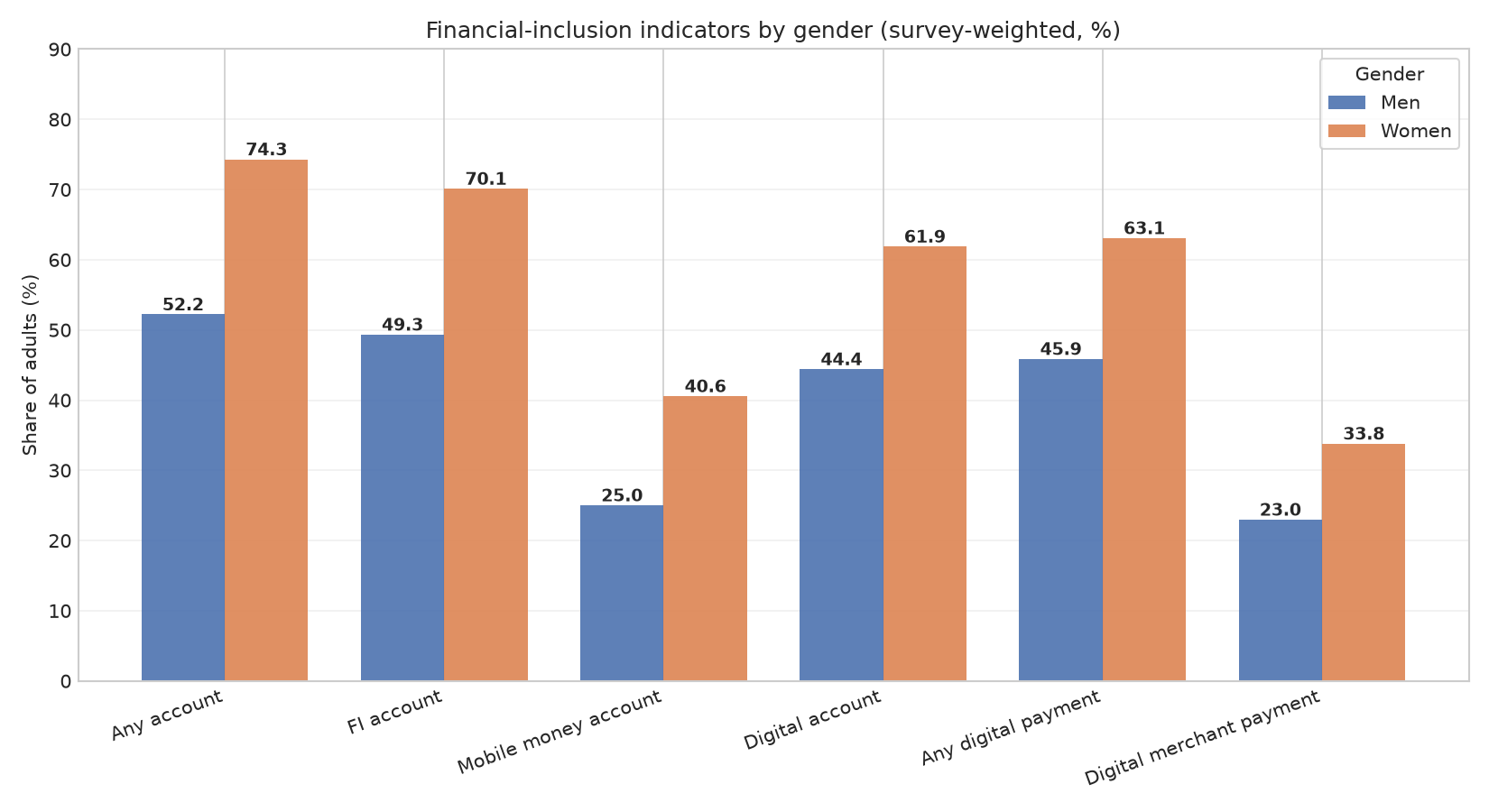
Figure 2: Financial-inclusion indicators by gender (survey-weighted, %)
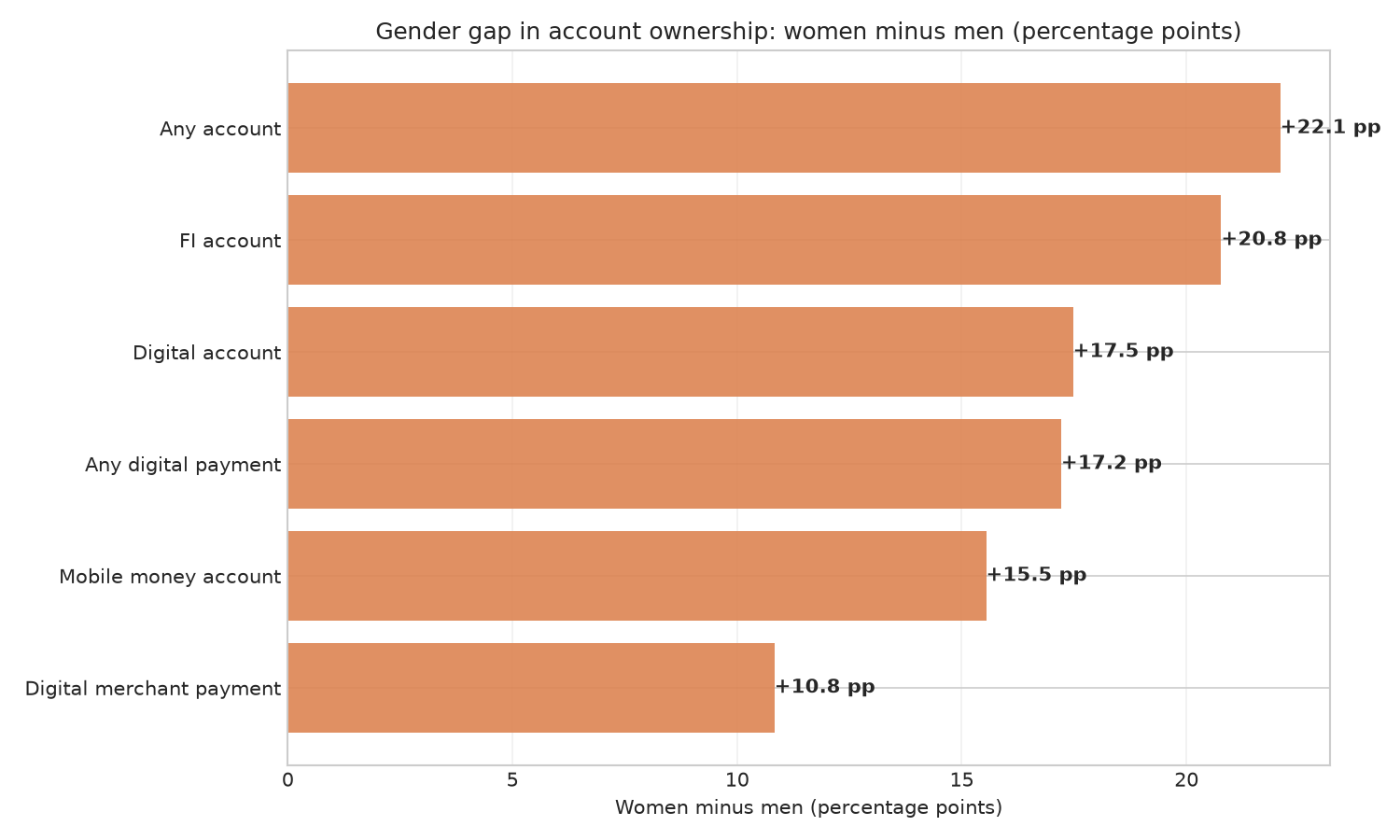
Figure 3: Gender gap in account ownership: women minus men (percentage points)
The headline result reverses the conventional global gender gap. Nigerian women lead men on every indicator, and the female advantage is proportionally largest on mobile money, at 15.5 percentage points. This pattern is consistent with an agent-led, tiered-KYC channel engineered as the low-friction entry point for the unbanked. The raw gap still requires the compositional controls that follow, because it attenuates sharply once education and connectivity enter the model.
Working women adopt mobile money at a higher rate than non-working women, 43.6% against 28.7%. The same gradient holds among men, 32.5% against 11.2%. Economically active traders are therefore more, not less, likely to hold a mobile-money account, which reinforces the reading of mobile money as the inclusion channel for the informal economy.
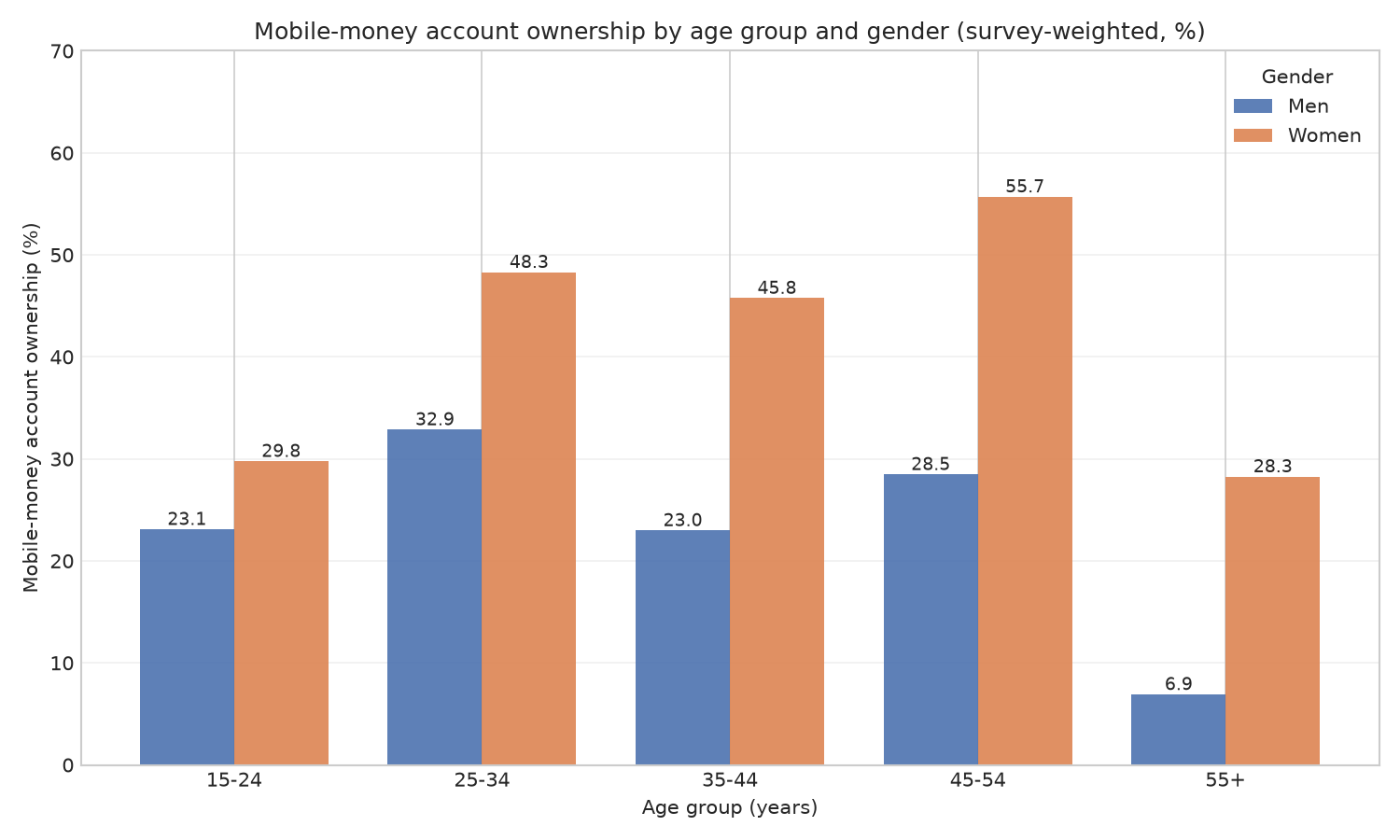
Figure 4: Mobile-money account ownership by age group and gender (survey-weighted, %)
The age profile shows women leading men in every band. The female advantage peaks in the middle working-age groups: 45 to 54 at 55.7% against 28.5%, and 35 to 44 at 45.8% against 23.0%. The oldest band carries small cell counts and should be read cautiously.
Adoption follows a strong socio-economic gradient among women. By education, ownership rises from 23.9% for primary-or-less to 49.8% for secondary and 59.7% for tertiary. By income quintile, it runs 24.2% in the poorest quintile, 38.9% in the second, 29.3% in the third, 57.6% in the fourth, and 44.4% in the richest. The path is broadly upward with a peak at Q4 and a modest dip at Q5, consistent with the richest women also holding formal accounts and facing a weaker marginal need for mobile money.
The internet divide is the sharpest split in the data. Among women, ownership stands at 61.4% for internet users and 23.7% for non-users, a ratio of roughly 2.6 to 1; the same divide appears, steeper still, among men. Connectivity, not geography, is the operative axis. This divide echoes the regulator's own diagnosis, which names device cost, data cost, literacy, and two-factor authentication as exclusionary burdens, with USSD as the inclusive fallback. The absence of a conventional urban-rural gap (28.5% urban against 37.6% rural, weighted) is a separate structural finding, consistent with agent banking working as last-mile infrastructure.
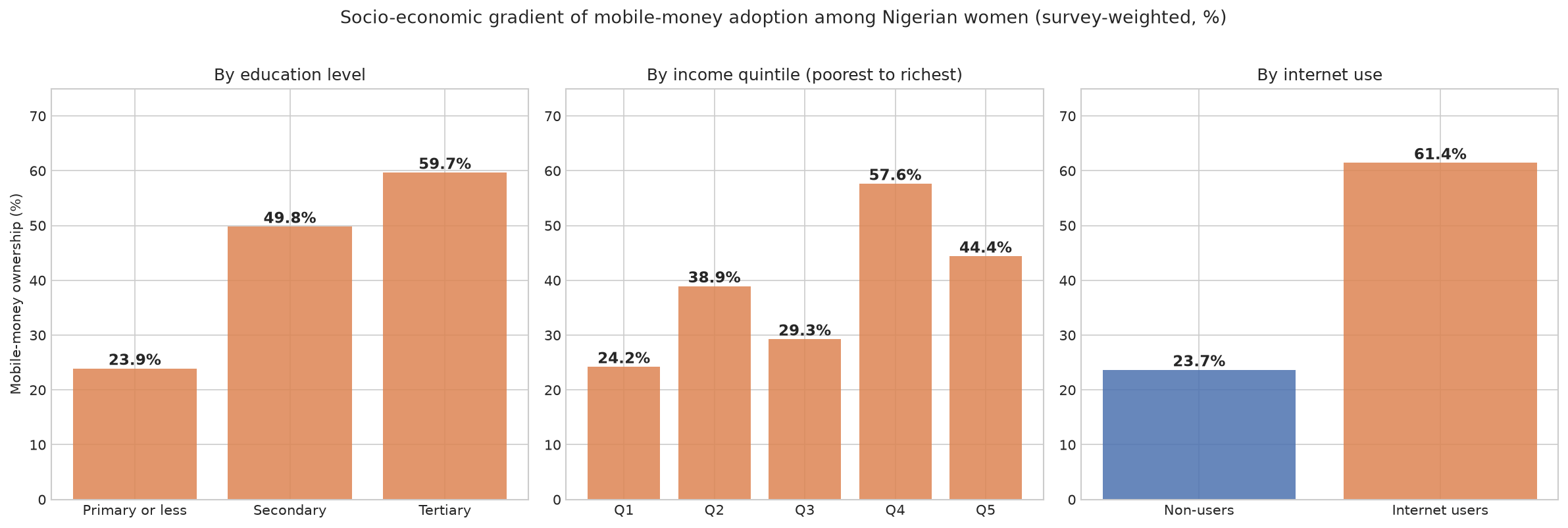
Figure 5: Socio-economic gradient of mobile-money adoption among Nigerian women
The correlation matrix situates mobile money within the wider inclusion system. Ownership correlates most strongly with any digital payment (0.62), digital account (0.61), and any account (0.50), then internet use (0.42), digital merchant payment (0.41), and financial-institution account (0.41). Socio-economic markers are moderate (education 0.26; income quintile 0.25), and the raw female association is weak at 0.13, foreshadowing the compositional result in the regression.
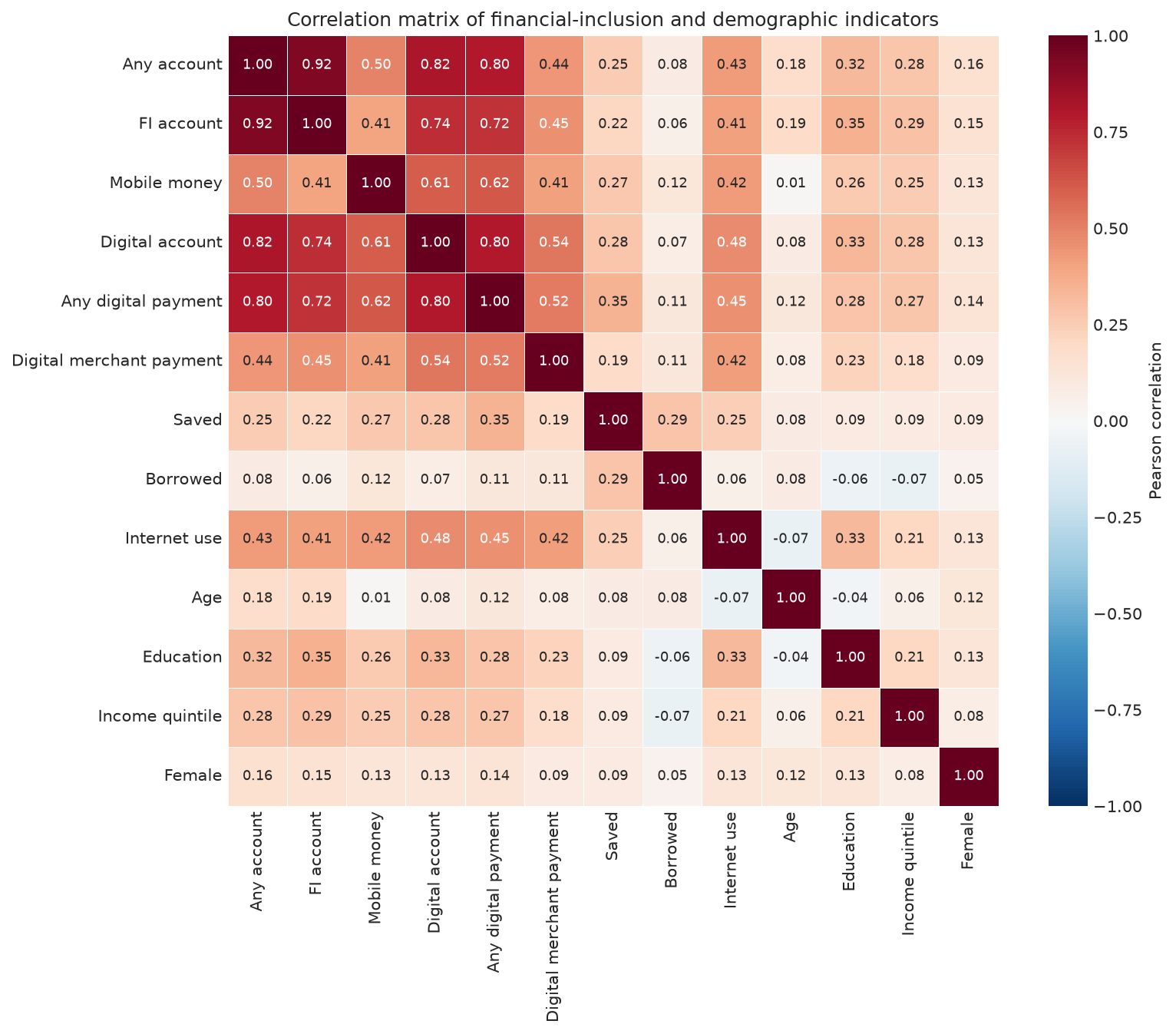
Figure 6: Correlation matrix of financial-inclusion and demographic indicators
A final reconciliation governs interpretation. Table 4.5 compares weighted and unweighted estimates of mobile-money ownership.
| Estimate | Men | Women | Gap (W−M) |
|---|---|---|---|
| Weighted (authoritative) | 25.0 | 40.6 | +15.5 |
| Unweighted (raw sample) | 39.8 | 53.0 | +13.2 |
Both estimates agree that women lead on mobile money; weighting changes the magnitude, not the direction. The raw sample over-represents higher-adoption groups, notably women, who are over-sampled and more educated and internet-connected than the population of men. Correcting for this pulls both point estimates down, men more than women, which widens the weighted gap to 15.5 percentage points. Weighted figures are authoritative because they represent the adult population distribution.
Logistic Regression Results
A multivariate logistic regression of mobile-money account ownership on gender, age, education, income quintile, location, internet use, financial-institution account ownership, and labour-force status (n = 998) isolates the independent contribution of each factor. Table 4.3 reports the odds ratios.
| Predictor | OR | 95% CI | p |
|---|---|---|---|
| Female (vs male) | 1.29 | 0.95–1.75 | 0.099 |
| Age (years) | 0.99 | 0.97–1.00 | 0.133 |
| Education (per level) | 1.64 | 1.07–2.51 | 0.023 |
| Income quintile (per step) | 1.25 | 1.11–1.39 | <0.001 |
| Urban (vs rural) | 0.95 | 0.70–1.29 | 0.733 |
| Internet use | 3.65 | 2.50–4.69 | <0.001 |
| Financial-institution account | 4.88 | 3.02–7.88 | <0.001 |
| In labour force | 1.79 | 1.20–2.68 | 0.005 |
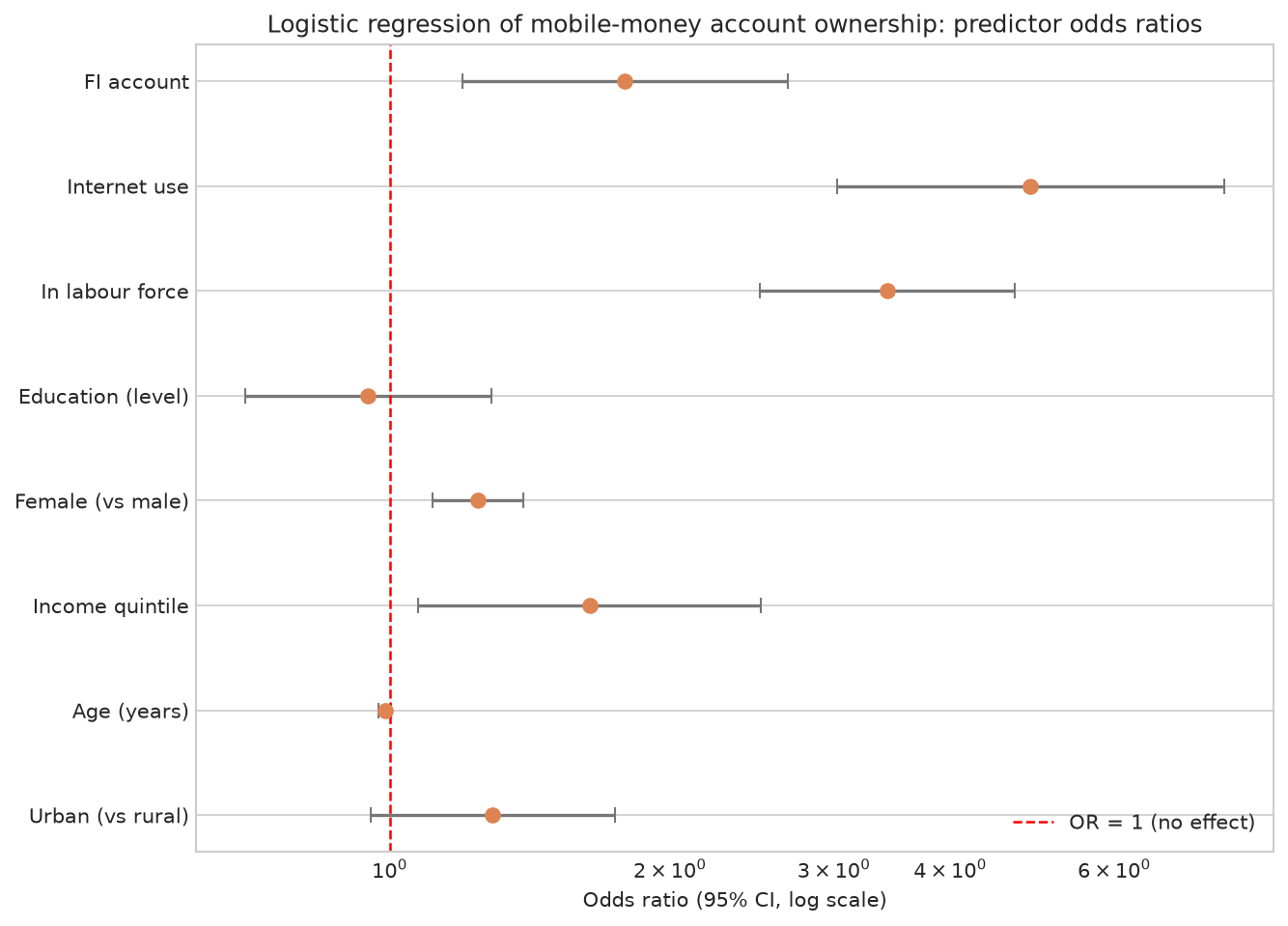
Figure 7: Logistic regression of mobile-money account ownership: predictor odds ratios
Two predictors dominate. Internet use raises the odds of mobile-money ownership by a factor of 3.65, and holding a financial-institution account raises them by a factor of 4.88, both significant at p < 0.001; the text and the figure report the internet-use estimate consistently at 3.65. Once these and the other covariates are held constant, the raw gender gap shrinks to marginal significance (OR = 1.29, p = 0.099). Women's higher raw adoption is therefore largely compositional, carried by their higher education and internet use rather than an intrinsic gender effect. Education (OR = 1.64, p = 0.023), income (OR = 1.25, p < 0.001), and labour-force participation (OR = 1.79, p = 0.005) also raise adoption independently; age and location do not. The model leaves substantial variation unexplained, and the unobserved determinants, agent proximity, product design, liquidity, and intra-household bargaining, are precisely the factors the qualitative strand examines in the regulatory corpus.
Two conclusions follow. Connectivity is the binding lever, and mobile money functions partly as a complement to formal accounts: being already banked raises the odds of holding mobile money nearly fivefold. The complementarity result deserves emphasis because it complicates a substitution story. If mobile money primarily extended access to the unbanked, prior account ownership should be irrelevant or negative; the large positive odds ratio instead indicates that mobile money currently deepens engagement among those already banked, which matters for interpreting the access-versus-use distinction that structures this thesis. Mobile money is not, in this sample, a standalone substitute for the unbanked; it extends digitally mediated finance to those already inside the formal perimeter. The implication for the access-versus-use distinction is direct: the binding constraint on market women is not account opening, which tiered KYC has made cheap, but the connectivity and prior banking that intensive use presupposes.
Gendered Barriers to Account Ownership
Among the 216 unbanked adults (129 men, 87 women), the reasons for not holding an account are sharply gendered. Table 4.4 reports the profile.
| Barrier | Men | Women | Difference |
|---|---|---|---|
| Too far away | 46.8 | 46.7 | −0.1 |
| Too expensive | 23.7 | 18.3 | −5.4 |
| Lack of documentation | 38.3 | 44.6 | +6.3 |
| Lack of trust | 71.1 | 53.1 | −18.0 |
| Family member already has an account | 42.7 | 49.8 | +7.1 |
| Religious reasons | 24.4 | 25.1 | +0.7 |
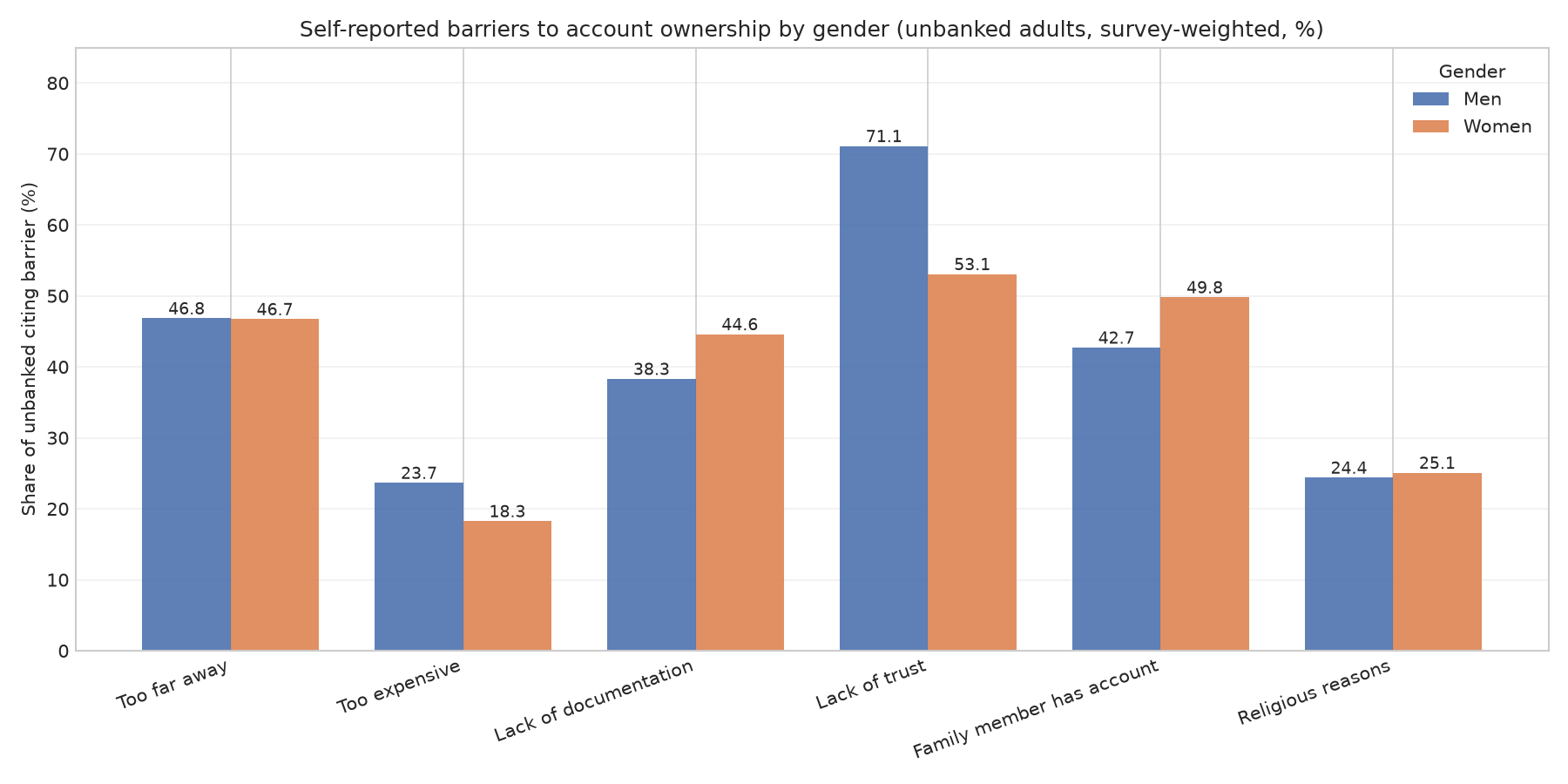
Figure 8: Self-reported barriers to account ownership by gender (unbanked adults, survey-weighted, %)
Men cite lack of trust far more than women, 71.1% against 53.1%. Women disproportionately cite lack of documentation, 44.6% against 38.3%, and the presence of a family member's account, 49.8% against 42.7%, the latter echoing women's documented financial dependence on male relatives and proxy use of others' accounts (Lundberg & Pollak, 1996). The documentation barrier connects directly to tiered-KYC design: the lowest tier admits a name and phone number, but fuller functionality demands documents that informally documented women are less likely to hold. The family-member barrier is the empirical trace of intra-household dependence identified in the bargaining literature, and it is invisible to a framework that never disaggregates its subjects. Distance is cited almost equally by both groups, 46.7% and 46.8%, matching the urban-rural parity in adoption and agent banking's success in neutralising physical distance. Expense is a relatively minor barrier for women (18.3%), consistent with the low-cost design of tiered accounts, and religious reasons are evenly low (25.1% against 24.4%), so neither cost nor religious norms is the binding constraint for women. This gendered barrier profile connects directly to the consumer-protection and digital-identity themes in the qualitative strand.
Taken together, the quantitative strand answers the first three research questions. On RQ1, women, and working women in particular, hold mobile money at high rates, with adoption concentrated among prime-age, educated, internet-using, and higher-income women. On RQ2, connectivity and prior banked status are the dominant predictors of adoption. On RQ3, the unbanked barrier profile is gendered, with documentation and intra-household dependence binding women and trust binding men. The strand complicates a simple exclusion narrative: market women's constraint appears to be less the floor of access and more the determinants of intensive, connected, sustained use.
Thematic Analysis of the CBN Regulatory Corpus
The qualitative strand analysed nine CBN documents totalling approximately 44,700 words. Close reading yields three orienting observations that frame the themes. The corpus is aspirational and directive, written in the imperative register of shall, ensure, and must, and every document registers positive sentiment. It is mechanism-heavy and segment-light, specifying KYC tiers, transaction limits, agent due diligence, and settlement cycles while devoting little text to who the excluded are. And it never names women. These observations recur through the themes below.
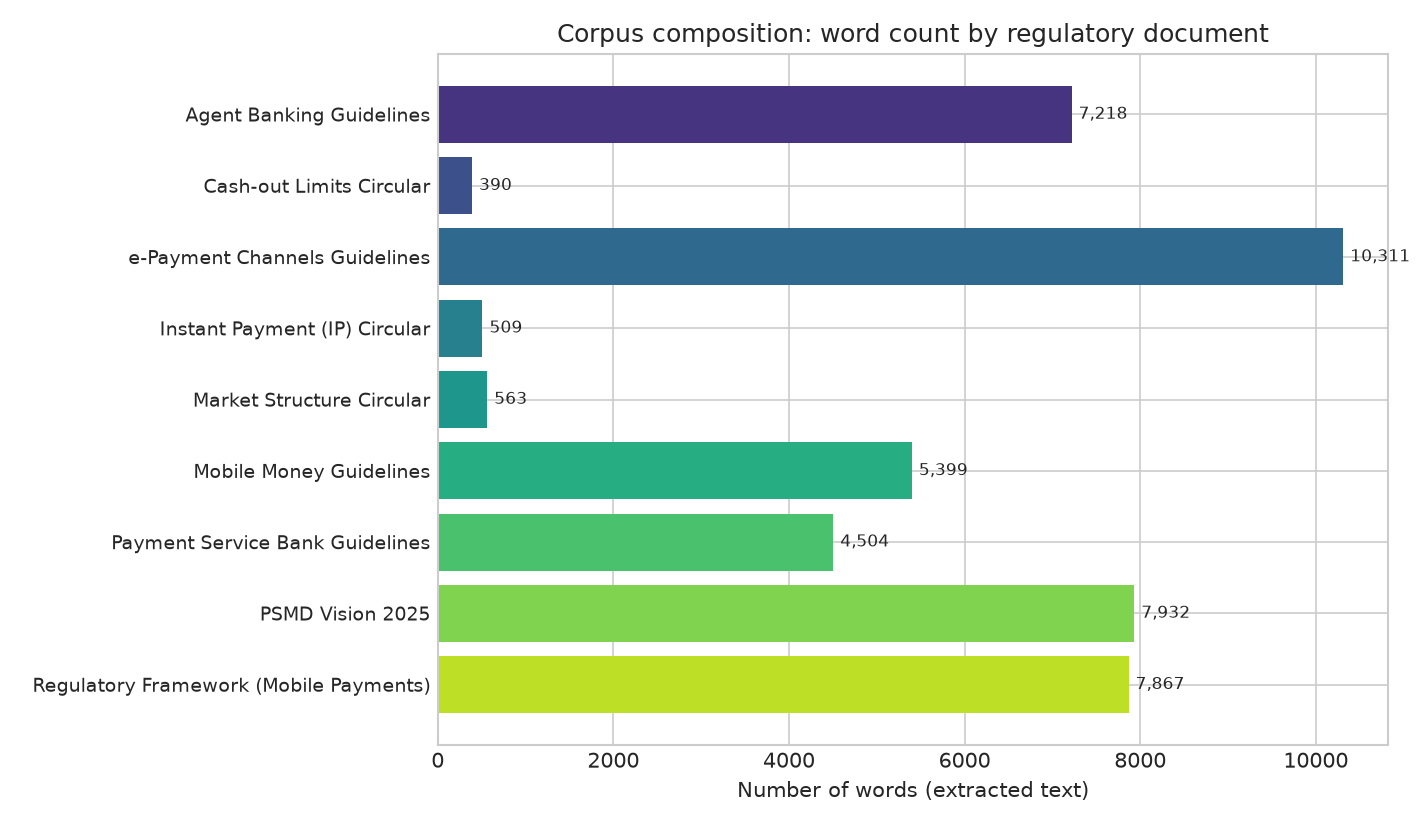
Figure 9: Corpus composition: word count by regulatory document
Eight substantive themes emerged, plus one cross-cutting interpretive finding.
[Image Placeholder: Thematic Map of the CBN Regulatory Corpus: Nine Qualitative Themes]
Figure 10: Thematic Map of the CBN Regulatory Corpus: Nine Qualitative Themes
Theme 1: Financial inclusion as the central policy logic. The corpus is unified by a single rationale: mobile payments exist to draw the unbanked into formal finance. The regulatory framework declares that the CBN identified "person to person payments (over the mobile phone infrastructure) as a practical strategy for financial inclusion of the un-banked." The Payment Service Bank guidelines state the objective of enhancing access for low income earners and unbanked segments and envisage banks that stimulate economic activities at the grassroots. They also concede that "the inclusion rate remains below expectation" despite successive initiatives. This admission is analytically important: the framework is a response to persistent exclusion, not a settled achievement. The logic is not gender-specific but is implicitly gendered in its target population, since the grassroots, low-income, informal-economy space is precisely where market women operate.
Theme 2: Tiered KYC and transaction limits. The gateway mechanism is the three-tier KYC matrix, framed as proportionate: "A hierarchical approach towards the implementation of KYC/CDD is required to make a success of financial inclusion strategy of mobile banking." At the lowest tier, entry is frictionless, with customers requiring "name and phone number as identification requirements." Proportionality cuts both ways, however: the same matrix caps the lowest tier at a "Maximum transaction limit of N3,000 and Daily limit of N30,000." Full functionality, up to N100,000 per transaction, is reserved for the fully-banked tier, so the gateway that admits the least-documented user is also the one that cannot carry her trade at scale. For a trader whose daily stock purchase runs to tens of thousands of naira, the low-tier account is a gateway that cannot hold her commerce.
Theme 3: Agent banking as last-mile infrastructure. The corpus positions agents as the delivery channel for inclusion, stating the objective to "Enhance Agent banking as a delivery channel for offering financial services to drive financial inclusion." The Vision 2025 explains why: agent services "facilitate access by sections of the community that lack the knowledge or devices to access digital services." Eligible non-individual agents include "sale of confectionery and Fast-Moving Consumer Goods (FMCG), petrol stations, restaurants/bars, parks and recreation centres, fashion and beauty outlets," sectors in which women traders are heavily represented. The same guidelines mandate agent training that includes diversity and inclusion concepts and basic financial literacy for customers and agents, the closest the corpus comes to a gender-aware and literacy-aware provision. The agent is thus the human interface that substitutes for digital capability, and the market woman is implicitly imagined as a potential agent even while never being named.
Theme 4: Cash, liquidity, and the cashless tension. A persistent tension runs between the cashless ambition and the cash dependence of informal trade. The cash-out limits circular frames its interventions as part of the Central Bank of Nigeria's ongoing efforts to advance a cash-less economy, yet the same instruments impose hard ceilings on cash: issuers "shall set a cash withdrawal limit (cash-out) per customer (regardless of channel) to N500,000.00 per week," while agents must "maintain a till not exceeding N100,000.00 at any time." For market women, three implications follow: cash-out ceilings bind traders transacting above the weekly value; agent till limits cap how much cash any single point can dispense; and timely settlement is the single pro-trader provision. On that last point, the e-Payment Guidelines require "settlement for domestic POS transactions ... on T+1 basis," next-day credit that directly serves a working-capital cycle.
Theme 5: Consumer protection and trust-building. Trust is treated as the linchpin. The Vision 2025 states that "Creating consumer confidence is of paramount importance, particularly when offering services to first-time users," and the Mobile Money Guidelines require design to "Factor in the vulnerability of the lower end of the society in product and services design." The apparatus includes consumer education, complaint timelines ("Resolve customer complaints ... not later than 48 hours"), and language accessibility ("in a language understood by customers"). These provisions are adoption-enabling but generic; none is tailored to women's specific vulnerabilities such as low literacy, shared phones, or the risk of PIN compromise by intermediaries. The complaint timeline and language accessibility provisions are the trust infrastructure that first-time adopters require, yet their reach depends on awareness and agency that the corpus does not gender.
Theme 6: The digital divide. The corpus is candid about demand-side barriers. The Vision 2025 lists the most cited barriers, headed by "Cost of devices (handsets and POS)," "Cost of data (internet connectivity)," and "Education and digital literacy." It concedes that "Many of the financially excluded are not digitally educated and 2FA can become a burden." USSD is celebrated as the inclusive workhorse: "Nigeria has built a ubiquitous and robust payments service using USSD codes ... at a relatively low cost." QR and smartphone solutions carry an explicit caveat, requiring "a mobile device that supports a QR code reader which implies acquiring a smartphone." The policy gap is that these are named as observed barriers rather than targeted interventions: the USSD path is the realistic adoption route for market women, while the smartphone and two-factor path is structurally tilted toward more resourced users.
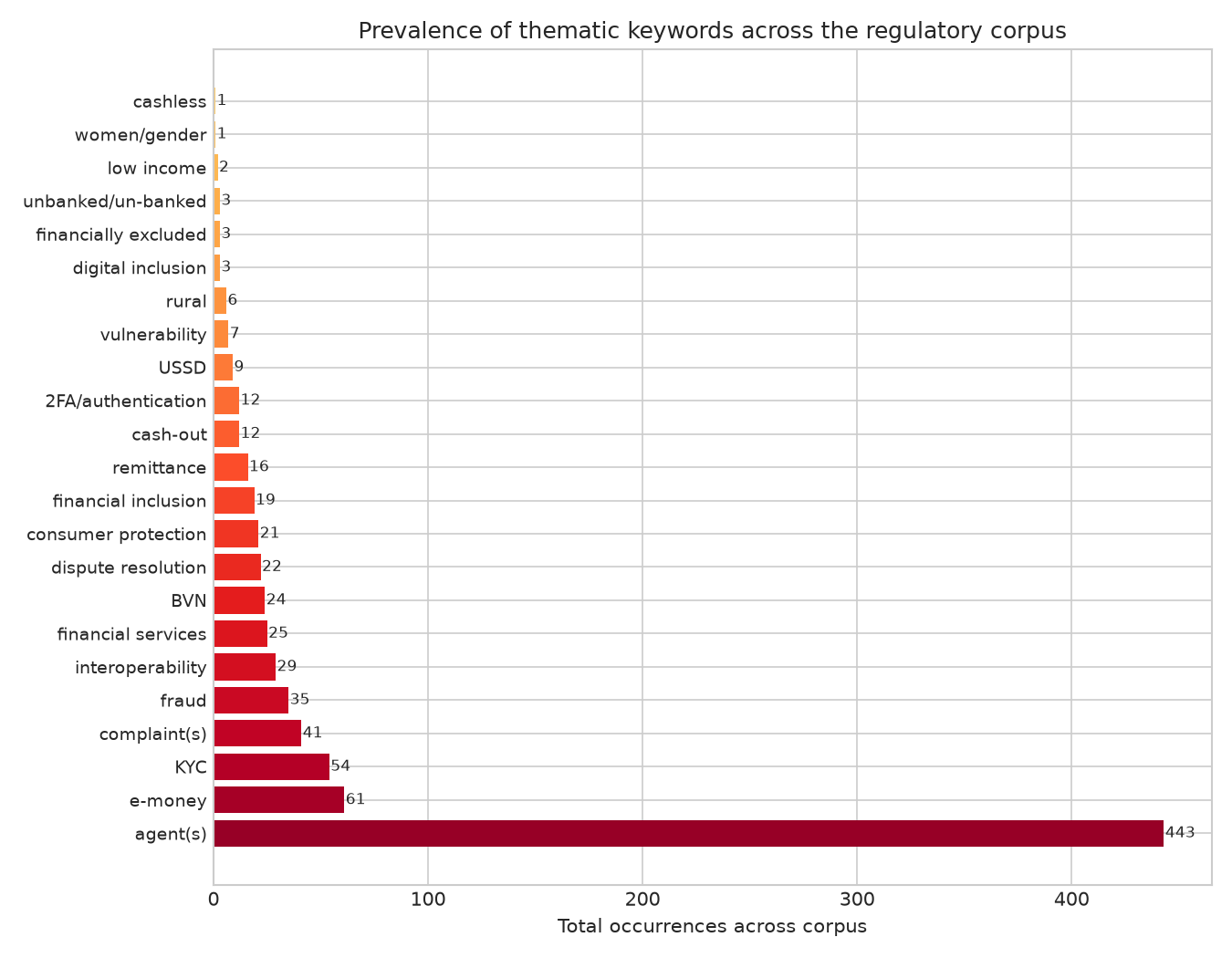
Figure 11: Prevalence of thematic keywords across the regulatory corpus
Theme 7: Security, fraud, and digital identity. Biometric identity and fraud controls underpin trust while adding authentication burden. The corpus cites "a world-class solution with Bank Verification Number (BVN)" and notes that biometrics could further enable access to sectors of the society with less formal education. It mandates enterprise fraud monitoring, device binding ("Mobile financial services applications (apps) shall only be enabled on one device at a time"), and transaction limits on newly activated apps. Security is thus double-edged: biometric identity and fraud monitoring underpin trust, while device binding and two-factor authentication can exclude the very users they are meant to protect. For a woman sharing a phone or transacting through an agent, device binding can become an operational obstacle.
Theme 8: Interoperability and market governance. Supply-side rules keep the ecosystem open: "Interoperability shall continue to be a core principle of payments system in Nigeria," and principals must be card-neutral. The 2026 Market Structure Circular adds concentration limits, beneficial-ownership disclosure, and "the localisation of payments transaction data within Nigeria." For a trader, interoperability means being paid by any scheme's customer at any terminal; competition disciplines the fees she pays. This theme is the least gender-salient but the most structurally important for keeping the last-mile channels accessible.
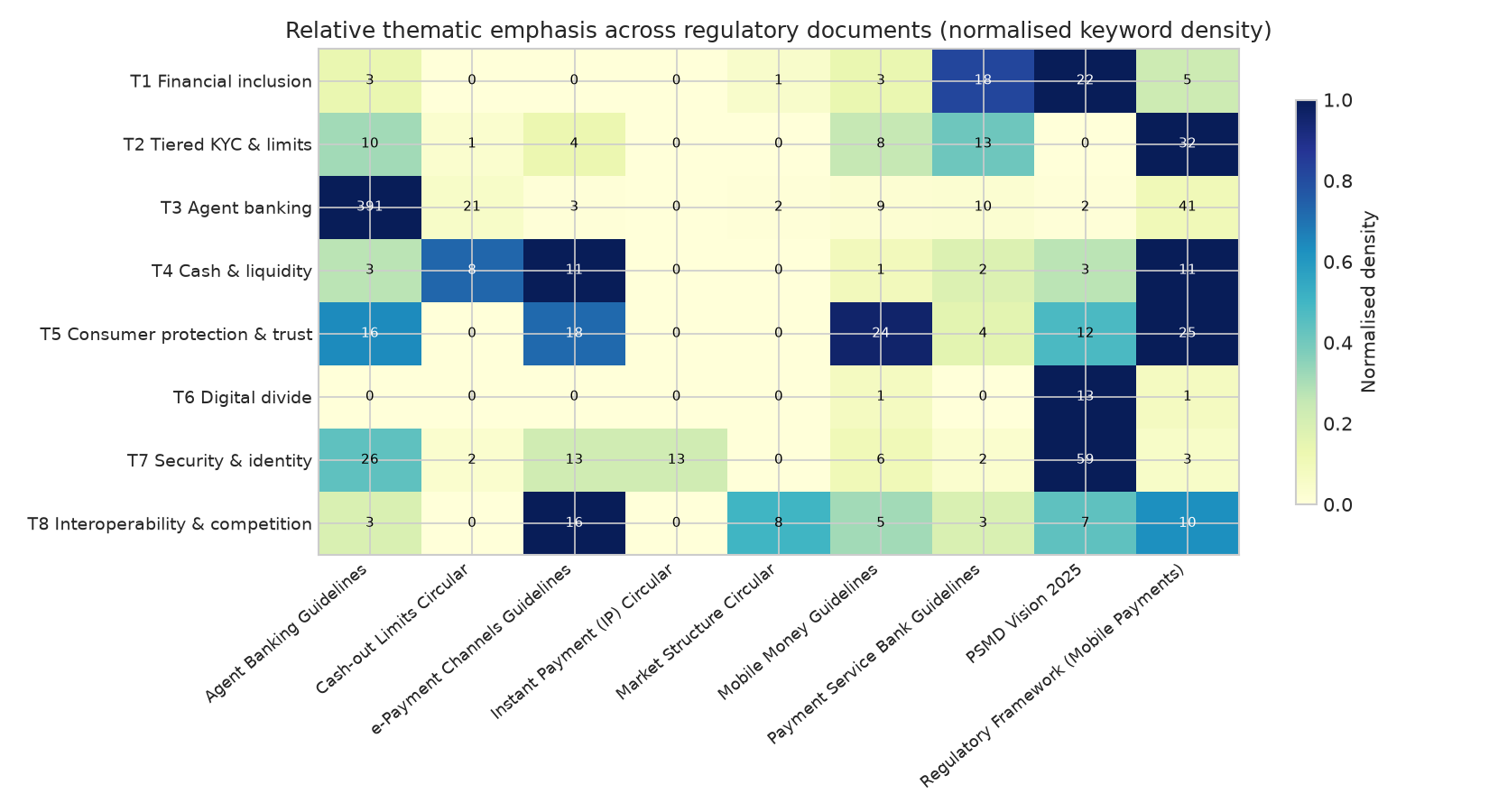
Figure 12: Relative thematic emphasis across regulatory documents (normalised keyword density)
The computational supplement reinforces the reading. Keyword prevalence is dominated by agent, e-money, KYC, complaints, fraud, and interoperability; gender terms are effectively absent. The word cloud shows the corpus written from the provider and regulator perspective. Sentiment scores are uniformly positive, reflecting the aspirational, imperative register rather than a critical engagement with failure. The co-occurrence network binds USSD and mobile to e-money and wallet, with agent banking tied to KYC and cash, and financial inclusion linked to rural and grassroots.
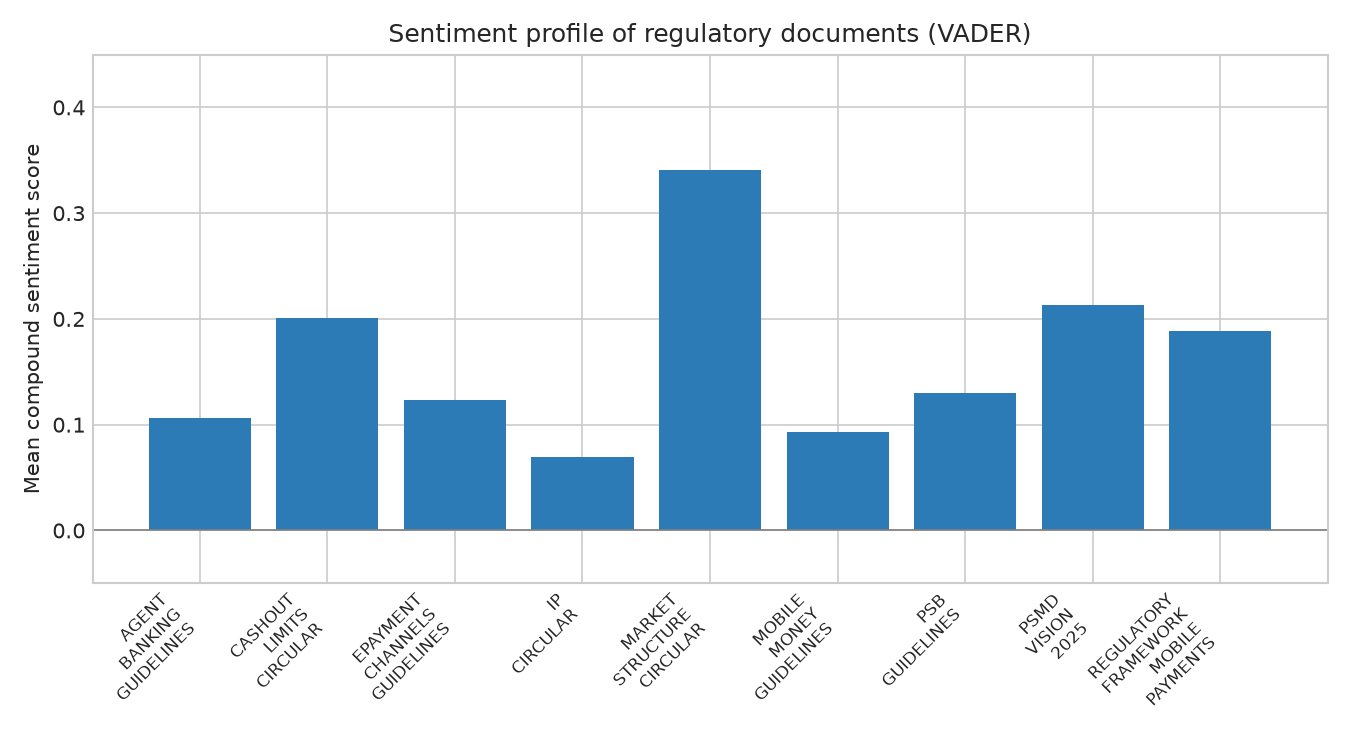
Figure 13: Sentiment profile of regulatory documents (VADER)
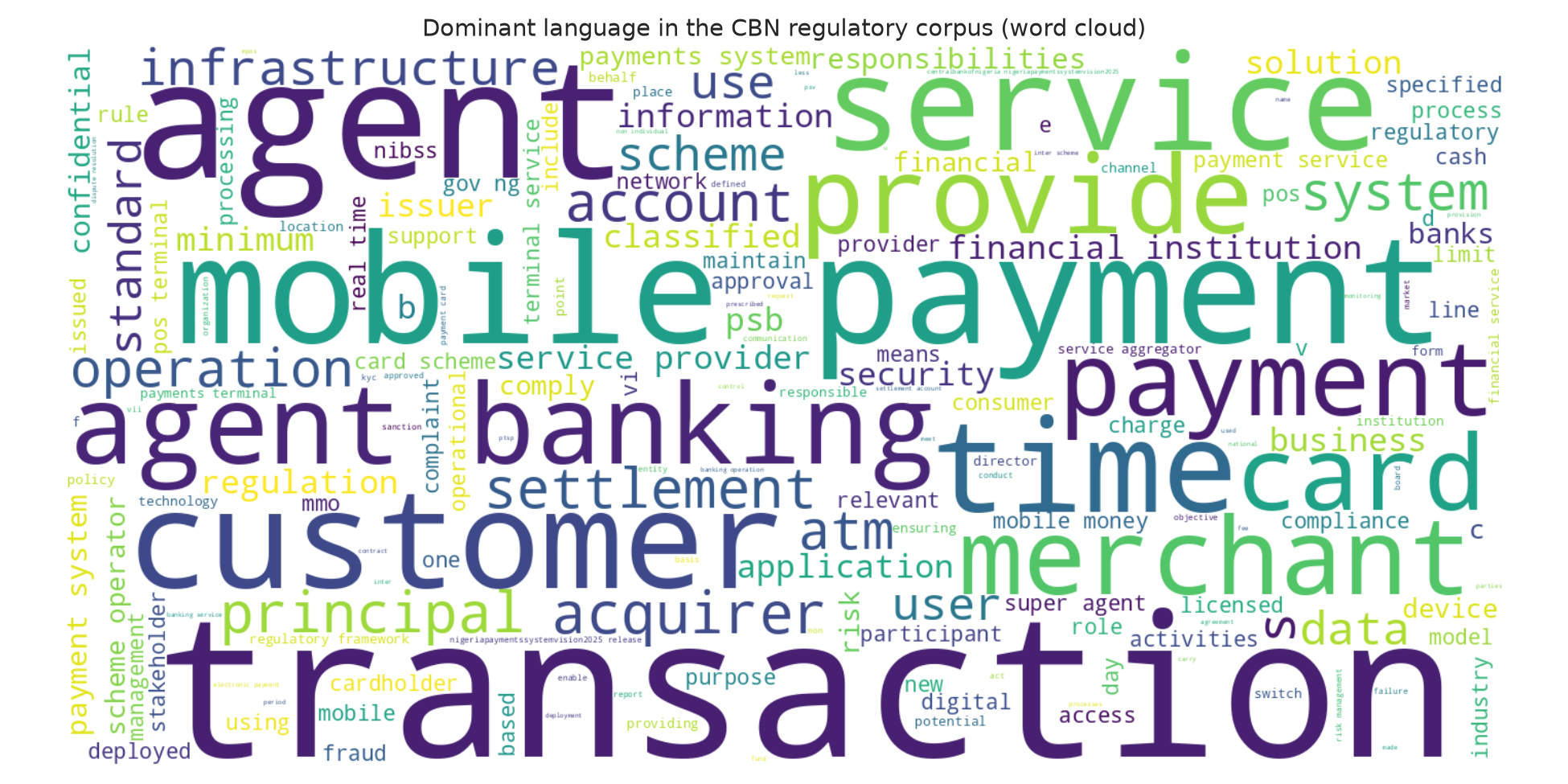
Figure 14: Dominant language in the CBN regulatory corpus (word cloud)
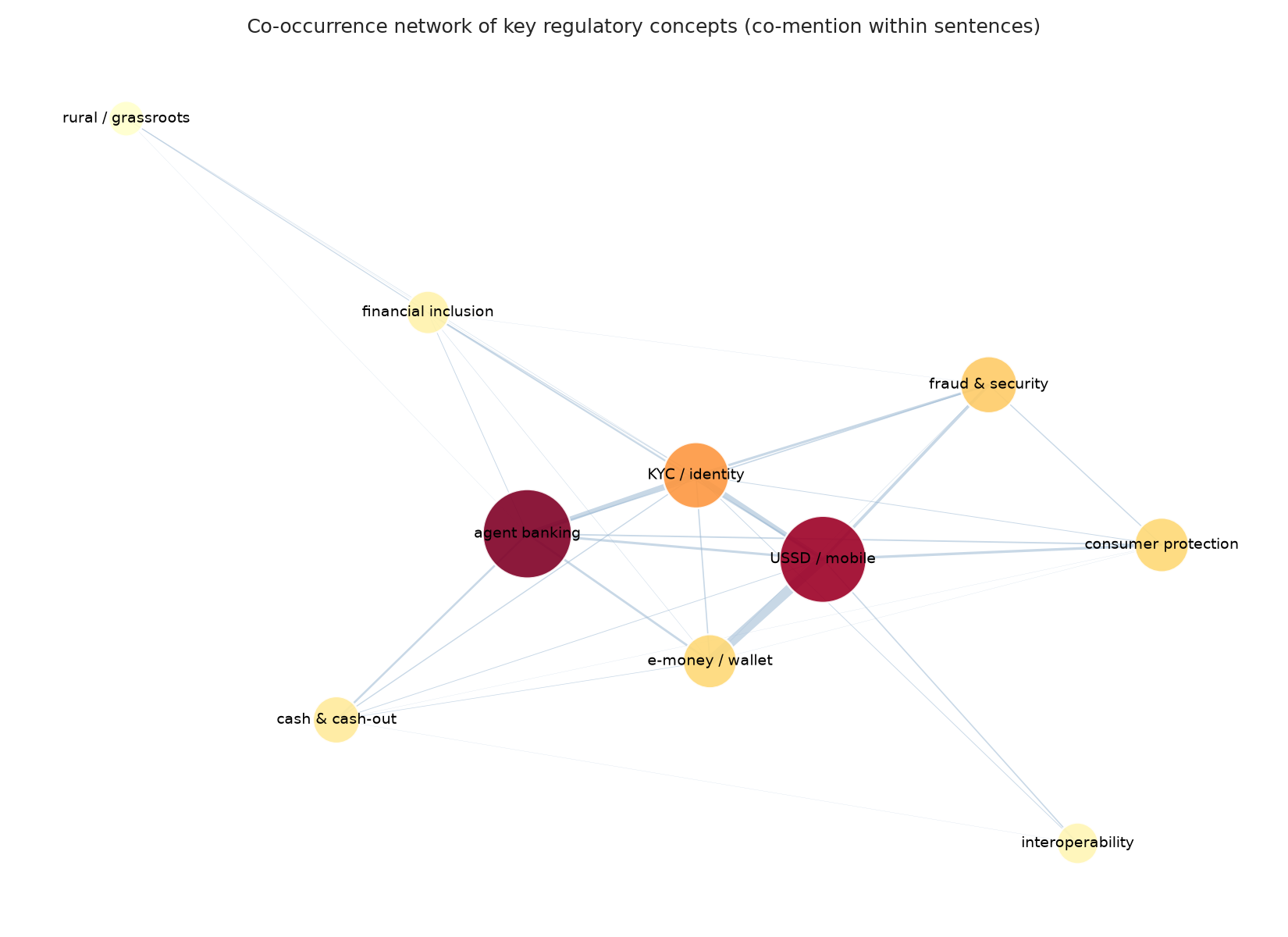
Figure 15: Co-occurrence network of key regulatory concepts
Three of these themes converge directly with the quantitative strand. The digital divide theme matches the internet split, where internet users adopt at 2.6 times the rate of non-users. The agent banking theme matches the absent urban-rural gap, which indicates the agent network is neutralising distance. The trust and documentation theme matches the gendered barrier profile, where women cite documentation and dependence while men cite trust. Two further themes qualify the quantitative story: the tiered KYC and cash-ceiling themes show the regulatory apparatus enabling entry while bounding the capacity for trade at scale, the precise distinction the access-versus-use framework predicts. A further convergence deserves note: the corpus's own admission of an inclusion shortfall matches the microdata's pattern of high access without corresponding depth in merchant payment and formal saving.
Cross-Cutting Finding: Gender-Blindness of the Regulatory Framework
The most consequential finding is an absence. A full-corpus search found zero occurrences of women, woman, gender, market women, or traders; the single token of female is the definitional phrase "a natural person, male or female." The corpus constructs the inclusion subject in gender-neutral terms: "the unbanked," "low income earners," "the lower end of the society," "financially excluded persons." The closest the regulator comes to gender awareness is the agent-training requirement on diversity and inclusion concepts and the broad vulnerability clause. The finding can be stated precisely: the regulatory environment is gender-neutral in design but gendered in likely effect, because identical rules meet different endowments and constraints. The regulator names the constraints that bite women traders hardest (cost, literacy, device access, authentication burden, cash ceilings) yet never connects them to gender. The absence is not merely lexical; it is structural, because the corpus's generic categories cannot carry gender-specific interventions. A rule written for the unbanked cannot distinguish a woman routed through a male relative's account from a man who lacks trust in providers, even though the microdata show these are different populations with different barriers. This finding is the hinge on which the integrated interpretation in Chapter 5 turns.
Read together, the two strands converge on a single, somewhat paradoxical picture. Nigerian women, and working women in particular, are already adopting mobile money at high rates, a reversal of the conventional gender gap. The regulatory apparatus that surrounds that adoption is sophisticated but gender-blind, and its tiered limits and authentication burdens are calibrated for entry rather than for the scale of informal commerce. Whether the high adoption is evidence of successful inclusion or of a floor beneath which the determinants of sustained use remain gendered is the question Chapter 5 takes up. The proxy caveat applies throughout: these are occupation-proximate findings, and the market-specific dynamics of turnover, cash intensity, and association membership await occupation-exact data.
Chapter 5: Discussion
Answering the Research Questions
RQ1 asked about the levels and socio-economic patterns of mobile money adoption and financial inclusion among Nigerian women. The weighted evidence answers decisively: 40.6% of adult women hold a mobile money account, against 25.0% of men, and working women adopt at 43.6%. Women lead on every access and digital indicator, while saving and borrowing are statistically indistinguishable by gender. Adoption follows a steep socio-economic gradient, with the sharpest splits on internet use (61.4% against 23.7%) and education (23.9% primary against 59.7% tertiary), and an inverted-U age pattern peaking at ages 45 to 54. The absence of an urban-rural gap is a consequential null result, and it is best read as evidence that agent banking has neutralised distance, consistent with the last-mile function the regulatory framework assigns to agents (Pénicaud & Katakam, 2019).
RQ2 asked which factors predict women's adoption net of covariates. Internet use and financial-institution account ownership dominate, with odds ratios of 3.65 and 4.89 respectively. Education, location, labour-force status, and age lose significance once these are controlled. Income retains a modest positive effect. The answer is that connectivity and prior banked status, not demography, are the binding levers, and mobile money operates as a complement to formal accounts rather than a pure substitute for the unbanked. This complementarity pattern matches the access-versus-use literature, which warns against reading account opening as inclusion (Barajas et al., 2020).
RQ3 asked how barriers differ by gender. The unbanked profile is gendered: men cite lack of trust far more (71.1% against 53.1%), while women disproportionately cite documentation (44.6% against 38.3%) and a family member's account (49.8% against 42.7%). Distance is equally cited, matching the absent urban-rural gap. The dependence barrier is the single most important gender finding in the quantitative strand, because it is the survey-level trace of intra-household bargaining that no amount of account provision resolves on its own (Lundberg & Pollak, 1996).
RQ4 asked how the CBN corpus constructs the inclusion subject. The answer is that it constructs a generic, gender-neutral subject: the unbanked, the low-income earner, the lower end of society. Market women are never named, and gender appears only in a definitional phrase. The framework is gender-blind in design. The four hypotheses are adjudicated as follows: H1 is supported (working women out-adopt non-working women); H2 is supported (internet use and banked status dominate); H3 is supported (barriers are gendered in the predicted direction); H4 is supported (the corpus is gender-blind). The four answers are not separate findings; they are the four faces of a single condition in which entry has been democratised and use has not.
Read together, the four answers converge on a single proposition: the binding constraint for market women is not the floor of access but the determinants of intensive, connected, sustained use. The weighting reconciliation reinforces this interpretation. Because the weighted estimates are authoritative, the apparent gender reversal is real at the population level, yet it is compositional, carried by capability covariates that are themselves unevenly distributed. The methodological lesson is that unweighted cross-tabulations of a non-representative sample can invert the policy conclusion, which is why the weighting decision is reported explicitly rather than buried. The contribution to the literature gap identified in Chapter 2 is therefore twofold: occupation-proximate evidence on Nigerian women, and a linked reading of that evidence against the regulatory corpus. Neither the microdata alone nor the documents alone could produce the central claim; only their combination reveals that the architecture lowers access while leaving use gendered.
Joint Display of Integrated Findings
Table 5 integrates the strands question by question.
| Research question | Quantitative finding | Qualitative finding | Meta-inference |
|---|---|---|---|
| RQ1: Levels and patterns | Women lead on all access and digital indicators; working women adopt at 43.6% | Corpus aims at the unbanked and grassroots, not at women specifically | Confirmation of access; gender gap reversed at the level of holding |
| RQ2: Predictors | Internet use and banked status dominate | Regulator names cost, data, and literacy as the cited digital-inclusion barriers | Convergence: connectivity is the shared binding constraint |
| RQ3: Barriers | Documentation and dependence bind women; trust binds men | Trust and tiered documentation are the regulatory focus | Convergence with a gap: dependence is invisible to the corpus |
| RQ4: Subject construction | No occupation variable; women as proxy | Gender-blind categories; zero gender tokens | Dissonance: high female adoption sits inside a framework that does not see women |
The meta-inferences are not uniform. Where the strands converge, they triangulate the same mechanism from two evidentiary registers: the regulator names data cost and literacy as barriers, and the microdata show internet use as the sharpest predictor. Where they diverge, the divergence is itself the finding. The dissonance in RQ4 is the thesis's core: a gender-blind framework produces gendered outcomes because identical rules meet different endowments. The dependence barrier in RQ3 illustrates the cost of that blindness, since the framework's generic categories cannot register, let alone target, a woman routed through a male relative's account. The three meta-inference types operate as follows: confirmation appears where both strands independently reach the same conclusion, as with connectivity; complementarity appears where each strand supplies what the other lacks, the microdata supplying prevalence and the corpus supplying mechanism; and dissonance appears where the strands conflict, locating the exact point at which design and outcome part company. The joint display is thus not a summary device but an analytical instrument; it converts the two strands into a single, testable proposition about where inclusion stalls. That proposition, that entry is gendered by design while use is gendered by default, is restated and defended throughout the remainder of this chapter.
Mobile Money: Inclusion Engine or Exclusion Mechanism?
The results speak directly to the central debate in the literature. One body treats mobile money as an unambiguous inclusion engine; a critical counter-literature documents a dark side of fraud, indebtedness, and exclusion of the least literate (Mogaji & Nguyen, 2022). IMF work formalises the tension, finding fintech correlates more strongly with digital than traditional inclusion (Tok & Heng, 2022). Our evidence occupies the middle ground, and it does so with precision.
On the inclusion side, the weighted data show a reversal of the conventional gender gap in account holding, and working women adopt at rates above the national average. Agent banking appears to have neutralised distance, since the urban-rural gap is absent. This corroborates the agent-led reversal documented in World Bank assessments (Hess et al., 2021) and the agent as last-mile infrastructure in industry evidence (Pénicaud & Katakam, 2019). The result also aligns with the comparative finding that education, income, and internet use are the strongest predictors of inclusion across sub-Saharan Africa (Eshun & Kočenda, 2024). The Nigerian result is institutionally specific. Unlike Kenya's operator-led M-Pesa, Nigeria's bank-led model placed agents and tiered KYC at the centre of the design, a configuration the IMF credits with onboarding successes (Wezel & Ree, 2023). The reversal we observe is therefore a property of this regulatory choice, not a generic property of mobile money, and it should be read as evidence about the Nigerian model rather than a prediction for operator-led regimes.
On the exclusion side, the access advantage does not diffuse into behaviour. Merchant payment among women (33.8%) runs below mobile money holding (40.6%), and saving and borrowing are flat across gender. The sharpest predictor of adoption is internet use, which means the digitally disconnected are left behind even as headline adoption rises, exactly the exclusion the IMF identifies (Tok & Heng, 2022). The access-without-use pattern echoes the experimental finding that subsidised account opening produced limited sustained use among the unbanked (Dupas et al., 2018) and the review finding that dormant accounts and cash-out dependence persist among low-income users (Barajas et al., 2020).
The gender reversal itself requires disciplined interpretation. It is not evidence that Nigerian women face no gendered constraints; it is evidence that a bank-led, agent-distributed, tiered-KYC model can clear the entry barrier for women at scale, a result consistent with the World Bank's finding that well-designed digital channels close gaps (Hess et al., 2021). Reversal at the holding stage coexists with a gendered barrier profile beneath it. The two facts are compatible only if we distinguish the floor of access from the determinants of use.
The stakes of this debate are not merely academic. If mobile money is read as an unambiguous engine, then high female adoption is sufficient evidence of success, and policy attention moves on. If it is read critically, then adoption aggregates conceal stratification. Our data support the critical reading without endorsing its strongest form: the channel does include, and it excludes in a specific, remediable way. The remedy is not to abandon the architecture but to gender its use stage, beginning with connectivity and the dependence barrier. The conclusion is that mobile money in Nigeria is an inclusion engine for access and a potential exclusion mechanism for use. The two are not contradictory; they are sequential stages of the same architecture, and this sequential reading reconciles the celebratory and critical literatures, which are each right about a different stage of the process.
The Gendered Determinants of Adoption
The compositional-versus-structural question is settled by the regression results, with a caveat. Gender is strongly associated with adoption in bivariate terms but attenuates to marginal significance (p = 0.097) once internet use, banked status, education, and income are held constant. At the level of account holding, the gender difference is compositional: it is carried by women's higher education and connectivity in this sample. This finding complicates the aggregate SSA evidence of durable gender disadvantage (Bashiru et al., 2023) and supports the conditional-reversal account, in which agent-led, tiered-KYC channels compress gaps where they operate (Hess et al., 2021).
The caveat is that composition is not neutral. The covariates through which gender operates are themselves gendered endowments shaped by the digital divide and intra-household bargaining (Antonio & Tuffley, 2014; Lundberg & Pollak, 1996). To say the gap is compositional is not to say it is ungendered; it is to locate the gender effect in connectivity, documentation, and dependence rather than in an irreducible female coefficient. The connectivity finding has a device-access dimension: mobile phone ownership in Nigeria is stratified by income, urban residence, and education (Forenbacher et al., 2019), so internet use is an endowment rather than a free choice. The age pattern adds a life-cycle reading: adoption peaks at ages 45 to 54, the band of established traders, and falls among older women, who face compounding digital and documentary barriers. Digital financial literacy conditions women entrepreneurs' inclusion more than men's (Hasan et al., 2022), and mobile money adoption is associated with empowerment through improved financial management where women retain control (Dorfleitner & Nguyen, 2022).
The barrier profile makes the point concrete: half of unbanked women are routed through a male relative's account, a dependence pattern that a gender-blind framework cannot see. This finding extends the Tanzania evidence that gender operates partly independently of endowments (Were et al., 2021), while specifying that in Nigeria's 2024 sample the independence appears at the barrier and use stage rather than at the holding stage. The empowerment literature supplies the normative frame: account ownership overstates empowerment when a woman holds the benefit without the control, and the dependence indicator is the corrective that a gender-disaggregated survey can capture. Measurement matters here: because the Findex captures ownership and a subset of uses, the dependence and connectivity channels are recoverable only through the barrier items and the internet indicator. A richer instrument would add control over the account and frequency of use, the two variables the framework most needs to monitor.
The policy implication is that gender-disaggregated monitoring of use, not just access, is the diagnostic that matters. A headline adoption rate conceals the dependence barrier and the connectivity gradient; only disaggregation exposes them.
Regulatory Frameworks as Necessary but Insufficient
The qualitative strand's conclusion is that the regulatory environment is a necessary but insufficient condition for market women's inclusion. The quantitative strand confirms and sharpens that judgement. The framework is necessary because it built the infrastructure that produced high female adoption: tiered KYC, agent networks, and USSD delivery. The absent urban-rural gap is a regulatory achievement, not an accident. The IMF's characterisation of Nigeria's strategy as achieving undeniable successes in onboarding while exclusion persists is consistent with our result (Wezel & Ree, 2023).
The framework is insufficient because its rules are calibrated for entry rather than for trade at scale. The lowest KYC tier admits a user with a name and phone number but caps daily transactions at N30,000, a ceiling that cannot carry a trader's stock purchases. Cash-out limits and agent till ceilings bound liquidity. Authentication and device-binding rules assume individual smartphone ownership, which many market women do not have. Consumer-protection provisions are adoption-enabling but generic, and the literature warns that digital delivery creates new risks of fraud and opaque pricing that regulators must address for gains to be durable (Garz et al., 2021). The corpus names the constraints as barriers but does not target them, and it never connects them to gender.
The uniformly positive sentiment of the corpus deserves comment. The aspirational, imperative register of policy documents produces positive sentiment scores even as the same texts enumerate binding barriers. This is not evidence of successful inclusion; it is a register effect that can mask the gap between policy intent and lived outcome. The regulator asserts a positive trajectory while describing persistent constraints, and the mixed-methods design exposes that tension. The CBN's own admission that inclusion remains below expectation is the clearest statement of insufficiency in the corpus itself. The regulator knows the shortfall; what it lacks is a gendered account of where the shortfall concentrates. Our results supply that account: the shortfall concentrates at the use stage, among the digitally disconnected and the intra-household dependent. The agent is the pivotal figure the corpus itself designates, and our results confirm the designation: agents bridge those without devices or skills, and the eligible-agent list overlaps directly with women's retail sectors. Realising that dual role requires agent liquidity, training, and float management to be treated as gender-relevant infrastructure rather than operational detail.
This is the thesis's central claim, and it is supported by both strands. The high female adoption is not evidence that gender no longer matters; it is evidence that the entry barrier has fallen while the use barrier remains. A gender-blind framework cannot see the difference because it never disaggregates its subjects. The tiered KYC mechanism is the clearest embodiment of the double-edged design: it lowers the floor of access while imposing a ceiling on capacity, so the least-documented trader is admitted to a gateway that cannot hold her commerce.
Implications for Theory, Policy and Practice
Theoretically, the study contributes four refinements. First, UTAUT's facilitating conditions and effort expectancy gain empirical weight: connectivity and prior banked status, not attitude, drive adoption, and the agent functions as a facilitating condition that substitutes for digital capability (Mugambe, 2017). Second, digital divide theory is confirmed with a twist: the divide now operates through material access (internet, data cost) rather than physical access, matching the migration documented in the literature (Deursen & Dijk, 2018). Third, bargaining theory gains a measurable trace: the family-member barrier is the survey-level signature of intra-household dependence (Lundberg & Pollak, 1996). Fourth, critical financial inclusion scholarship gains empirical specificity: the dark side in Nigeria is not fraud alone but the sequential exclusion of the digitally disconnected from the use stage (Mogaji & Nguyen, 2022; Tok & Heng, 2022).
At a higher level of abstraction, the study refines the access-versus-use framework by demonstrating that it is gendered in a specific way: the access stage has been successfully gendered by design, while the use stage remains gendered by default. This distinction extends the finding that ownership and use diverge (Demirgüç‐Kunt & Klapper, 2013) and the critical finding that adoption can reproduce inequality (Mogaji & Nguyen, 2022). The contribution is to specify the mechanism: inclusion stalls not at onboarding but at the transition to intensive use, and the stall is concentrated among the digitally disconnected and the intra-household dependent. The gendered access-versus-use distinction is the study's principal conceptual export, and it is generalisable to any context where entry barriers have been lowered by design while use barriers remain unaddressed. The study also demonstrates a methodological contribution: survey weights and policy text can be read together productively, and the weighting decision must be reported as part of the finding rather than as technical noise.
For policy, six levers follow. First, gender-disaggregated data should be mandatory in the CBN's inclusion monitoring; a framework that cannot see women cannot target them. Second, connectivity is the highest-leverage intervention, given the internet odds ratio of 3.65 and the regulator's own acknowledgement of data cost; USSD must remain the inclusive floor while data costs fall. Third, the KYC and cash ceilings should be re-examined for trade-scale use, possibly through graduated tiers keyed to transaction history rather than documentation alone. Fourth, agent liquidity and consumer protection require sustained attention, since trust binds men and dependence binds women (Garz et al., 2021). Fifth, the agent-training mandate on diversity and inclusion should be converted from a compliance item into a substantive gender-literacy curriculum. Sixth, the cashless ambition should be sequenced against liquidity reality: cash-out and till ceilings bound the cash that market commerce requires, and a trader who cannot convert value to cash at the point of need will exit the formal channel.
For practice, operators should treat the market woman as both customer and potential agent, a role the corpus already enables through its FMCG and fashion agent categories. The single most under-exploited lever in the corpus is the agent training mandate on diversity and inclusion; it is the one place where gender-aware capacity could be built without new regulation. Market associations are the natural delivery partners for that training, since they aggregate the very traders the framework does not name. Operationally, this means training agents to recognise the documentation and dependence barriers identified here and to route women toward tiered upgrades and individual accounts. The findings are bounded by the proxy limitation, and we do not claim occupation-exact effects; nevertheless, the direction and structure of the results are robust across the adult-women and working-women specifications. Transferability beyond Nigeria's bank-led regime requires caution, since the reversal observed here is conditional on the specific combination of tiered KYC, agent density, and USSD delivery that Nigeria assembled. Future work with occupation-exact data and longitudinal or field-based designs, carrying a gender-disaggregated use indicator as a core outcome, would test whether the access-use stall identified here generalises.
Chapter 6: Conclusion and Recommendations
Summary of Findings
This thesis asked whether mobile money adoption translates into financial inclusion for Nigerian market women, and it answered the question by pairing the Global Findex 2024 Nigeria microdata with a reflexive thematic analysis of nine Central Bank of Nigeria regulatory documents. The quantitative strand, using adult women and working women as the disclosed proxy for market women, found that women lead men on every access and digital indicator. Weighted mobile money adoption stands at 40.6% for women against 25.0% for men, and working women adopt at 43.6%. Adoption is concentrated among prime-age, educated, internet-using women, and the absent urban-rural gap indicates agent banking has neutralised distance. The merchant-payment rate among women (33.8%) trails their holding rate (40.6%), the first sign of the access-versus-use gap. The gender reversal is compositional: once internet use, financial-account ownership, education, and income are held constant, the female coefficient attenuates to marginal significance (p = 0.097). Internet use and financial-institution account ownership dominate the logistic model, with odds ratios of 3.65 and 4.89. The unbanked barrier profile is gendered in structure, with women citing lack of documentation at 44.6% and a family member's account at 49.8%, while men cite lack of trust at 71.1%.
The qualitative strand found a sophisticated, mechanism-rich inclusion apparatus built on tiered KYC, agent banking, and USSD delivery, and found it gender-blind in design. The analysis produced eight substantive themes, ranging from the inclusion rationale and tiered KYC to cash limits, consumer protection, the digital divide, security, and interoperability, plus a cross-cutting finding of gender-blindness. The corpus never names women, gender, or market women, constructing the inclusion subject as the generic unbanked. The regulator names the demand-side barriers of device cost, data cost, and literacy but treats them as observed constraints rather than targeted interventions, and its transaction, cash, and authentication rules are calibrated for entry rather than for trade at scale.
The integration of the two strands produced the thesis's central claim. The regulatory environment is a necessary but insufficient condition for market women's inclusion. It has lowered the floor of access, which is why female adoption is high and the urban-rural gap has vanished. It has left the determinants of sustained use unaddressed, which is why the access advantage does not diffuse into merchant payment, saving, or borrowing, and why dependence and connectivity remain the binding gendered constraints. The claim is supported on both sides: the microdata show the floor of access has risen, and the documents show the ceiling on use remains. The weighting resolution is part of the finding: design-weighted estimates are treated as authoritative, and the unweighted discrepancy reflects a non-representative raw sample rather than a competing estimate of the truth.
Contribution to Knowledge
Four contributions follow. First, the study supplies occupation-proximate evidence on a population the literature has proxied with broad categories, showing that working women adopt mobile money at 43.6% and that the binding constraints are connectivity and intra-household dependence rather than a simple access deficit; the constraints are therefore remediable through connectivity and control rather than through account provision alone (Peter & Orser, 2024). Second, it links regulatory analysis to microdata, a connection the field has left unbuilt, and demonstrates that survey weights and policy text can be read together (Wezel & Ree, 2023). Third, it documents and names the gender-blindness of the CBN corpus, converting an absence into an analytic finding; the finding matters because gender-blind rules meet gendered endowments and therefore produce gendered outcomes. Fourth, it refines the access-versus-use framework into a gendered form: entry is gendered by design, while use is gendered by default, and inclusion stalls at the transition between the two, a distinction generalisable beyond Nigeria (Barajas et al., 2020; Tok & Heng, 2022). Fifth, it adjudicates the inclusion-versus-exclusion debate with empirical specificity, locating inclusion at the access stage and exclusion at the use stage rather than treating the two as rival verdicts on the same channel; this placement resolves the apparent contradiction between the celebratory and critical literatures.
The methodological contribution is inseparable from these substantive claims. The weighting resolution, in which design-weighted estimates are treated as authoritative and the unweighted discrepancy is explained rather than suppressed, is reported as part of the finding, and it models a reporting standard for Findex-based work where raw samples diverge from population composition. The convergent mixed-methods design shows that dissonance between strands is not error but the empirical trace of the gap between regulatory design and lived outcome.
Policy Recommendations
We offer seven recommendations, ordered from the highest leverage to the most operational.
First, the CBN should make gender-disaggregated data mandatory in its inclusion monitoring. A framework that cannot see women cannot target them, and the dependence barrier identified here is invisible to gender-neutral indicators.
Second, connectivity is the highest-leverage intervention. Given the internet odds ratio of 3.65 and the regulator's own acknowledgement of data cost, USSD must remain the inclusive floor while device and data costs fall through spectrum, taxation, device-financing policy, and public access points that lower the device threshold (Mothobi & Kebotsamang, 2024).
Third, tiered KYC and cash ceilings should be re-examined for trade-scale use. Graduated tiers keyed to transaction history, rather than documentation alone, would let the least-documented trader grow her capacity without losing her access, resolving the double-edged design identified in Chapter 4.
Fourth, agent liquidity and consumer protection require sustained investment. Trust binds men and dependence binds women, and both demand an agent network that is solvent, trained, and accountable (Garz et al., 2021).
Fifth, the agent-training mandate on diversity and inclusion should become a substantive gender-literacy curriculum, delivered through market associations, teaching agents to recognise documentation and dependence barriers and to route women toward individual accounts.
Sixth, the cashless transition should be sequenced against the liquidity cycle of market trade. Cash-out and till ceilings that bind a trader's stock purchases will push her out of the formal channel, undoing the access gains the framework has achieved.
Seventh, operators and development partners should treat the market woman as both customer and potential agent, a dual role the corpus already enables through its fast-moving consumer goods and fashion agent categories. Realising it requires float, training, and supervision treated as gender-relevant infrastructure, and it would convert the agent network from a service point into an earnings channel for women traders.
Recommendations for Future Research
Four research directions follow from the study's limitations. First, occupation-exact data are the priority. A survey that identifies market traders directly, and records turnover, cash intensity, and market-association membership, would test whether the access-use stall identified here is specific to trading or generalises across women's economic activity.
Second, longitudinal designs are needed to move from association to causation. Panel data tracking women's adoption and use over time would identify whether connectivity precedes adoption, whether adoption precedes use, and whether the dependence barrier recedes as women gain individual accounts.
Third, primary fieldwork with market women would supply the lived-experience register that a document-based qualitative strand cannot reach, and it would generate the occupation-exact voice that surveys cannot capture. Interviews or ethnographic observation of traders, agents, and market associations would test the regulatory themes against practice and recover the implementation gap the corpus conceals.
Fourth, comparative work across bank-led and operator-led regimes would test the institutional-specificity claim advanced here. The reversal we observe is a property of Nigeria's bank-led, tiered-KYC, agent-dense model, and comparing it with Kenya, Ghana, or Tanzania would isolate the design features that drive the access-versus-use divergence. A design that exploits variation in agent density and data pricing would strengthen the causal case, and replicating the mixed-methods design with a gender-disaggregated use indicator as the core outcome would test whether the sequential inclusion reading generalises. Together, these directions would complete the evidentiary chain this thesis has begun.
Concluding Remarks
Mobile money has cleared the entry barrier for Nigerian women, and market women are adopting it at rates that reverse the conventional gender gap. That achievement is real, and it is attributable to a regulatory model that placed agents and tiered KYC at the centre of the design. The achievement is also incomplete. High adoption coexists with a gendered barrier profile in which half of unbanked women are routed through a male relative's account, and with a connectivity gradient that leaves the digitally disconnected behind. The regulator built a floor of access and left the determinants of sustained use ungendered and unaddressed.
The thesis's central claim is therefore not a dismissal of the Nigerian model but a specification of its unfinished work. Inclusion for market women stalls at the transition from holding to using, and the stall is concentrated where gender, connectivity, and documentation intersect. Closing that gap requires the framework to see women, to monitor their use rather than only their access, and to recalibrate its limits and training around the liquidity and control that market commerce actually requires. The next step is therefore not more access but gendered use. That is the work the framework, the operators, and the markets themselves have yet to complete. Until then, mobile money in Nigeria is an inclusion engine for access and an unfinished promise for use.
References
Abrahão, R. de S., Moriguchi, S. N., & Andrade, D. F. (2016). Intention of adoption of mobile payment: An analysis in the light of the Unified Theory of Acceptance and Use of Technology (UTAUT). RAI Revista De Administração E Inovação, 13(3). https://doi.org/10.1016/j.rai.2016.06.003
Ahmad, A. H., Green, C., & Jiang, F. (2020). MOBILE MONEY, FINANCIAL INCLUSION AND DEVELOPMENT: A REVIEW WITH REFERENCE TO AFRICAN EXPERIENCE. Journal of Economic Surveys, 34(4). https://doi.org/10.1111/joes.12372
Aladejebi, O. (2020). 21st Century Challenges Confronting Women Entrepreneurs in Southwest Nigeria. Archives of Business Research, 8(3). https://doi.org/10.14738/abr.83.8018
Andriamahery, A., & Qamruzzaman, M. (2022). Do Access to Finance, Technical Know-How, and Financial Literacy Offer Women Empowerment Through Women’s Entrepreneurial Development?. Frontiers in Psychology, 12. https://doi.org/10.3389/fpsyg.2021.776844
Antonio, A., & Tuffley, D. (2014). The Gender Digital Divide in Developing Countries. Future Internet, 6(4). https://doi.org/10.3390/fi6040673
Barajas, A., Beck, T., Belhaj, M., & Naceur, S. B. (2020). Financial Inclusion: What Have We Learned So Far? What Do We Have to Learn?. IMF Working Paper, 2020(157). https://doi.org/10.5089/9781513553009.001
Bashiru, S., Bunyaminu, A., Yakubu, I. N., & Al‐Faryan, M. A. S. (2023). Drivers of Financial Inclusion: Insights from Sub-Saharan Africa. Economies, 11(5). https://doi.org/10.3390/economies11050146
Brown, C., & Czerniewicz, L. (2010). Debunking the ‘digital native’: beyond digital apartheid, towards digital democracy. Journal of Computer Assisted Learning, 26(5). https://doi.org/10.1111/j.1365-2729.2010.00369.x
Chant, S., & Pedwell, C. (2008). Women, gender and the informal economy:An assessment of ILO research and suggested ways forward. London School of Economics and Political Science Research Online (London School of Economics and Political Science). https://openalex.org/W1570541632
Chinoda, T., & Kwenda, F. (2019). Do mobile phones, economic growth, bank competition and stability matter for financial inclusion in Africa?. Cogent Economics & Finance, 7(1). https://doi.org/10.1080/23322039.2019.1622180
David‐West, O., Iheanachor, N., & Umukoro, I. O. (2019). Sustainable business models for the creation of mobile financial services in Nigeria. Journal of Innovation & Knowledge, 5(2). https://doi.org/10.1016/j.jik.2019.03.001
Demir, A., Pesqué‐Cela, V., Altunbaş, Y., & Murinde, V. (2020). Fintech, financial inclusion and income inequality: a quantile regression approach. European Journal of Finance, 28(1). https://doi.org/10.1080/1351847x.2020.1772335
Demirgüç-Kunt, A., & Klapper, L. (2012). Financial Inclusion in Africa: An Overview. World Bank, Washington, DC Ebooks. https://doi.org/10.1596/1813-9450-6088
Demirgüç‐Kunt, A., & Klapper, L. (2013). Measuring Financial Inclusion: Explaining Variation in Use of Financial Services across and within Countries. Brookings Papers on Economic Activity, 2013(1). https://doi.org/10.1353/eca.2013.0002
Demirgüç‐Kunt, A., Klapper, L., Singer, D., Ansar, S., & Hess, J. (2019). The Global Findex Database 2017: Measuring Financial Inclusion and Opportunities to Expand Access to and Use of Financial Services*. The World Bank Economic Review, 34(Supplement_1). https://doi.org/10.1093/wber/lhz013
Deursen, A. J. A. M. van, & Dijk, J. A. G. M. van. (2018). The first-level digital divide shifts from inequalities in physical access to inequalities in material access. New Media & Society, 21(2). https://doi.org/10.1177/1461444818797082
Dorfleitner, G., & Nguyen, Q. A. (2022). Mobile money for women’s economic empowerment: the mediating role of financial management practices. Review of Managerial Science, 18(7). https://doi.org/10.1007/s11846-022-00564-2
Dupas, P., Karlan, D., Robinson, J., & Ubfal, D. (2018). Banking the Unbanked? Evidence from Three Countries. American Economic Journal Applied Economics, 10(2). https://doi.org/10.1257/app.20160597
Efobi, U., Beecroft, I., & Osabuohien, E. (2014). Access to and use of bank services in Nigeria: Micro-econometric evidence. Review of Development Finance, 4(2). https://doi.org/10.1016/j.rdf.2014.05.002
Eshun, S. F., & Kočenda, E. (2024). Determinants of financial inclusion in sub-Saharan Africa and OECD countries. Borsa Istanbul Review, 25(1). https://doi.org/10.1016/j.bir.2024.11.004
Falaiye, T., Elufioye, O. A., Awonuga, K. F., Ibeh, C. V., Olatoye, F. O., & Mhlongo, N. Z. (2024). FINANCIAL INCLUSION THROUGH TECHNOLOGY: A REVIEW OF TRENDS IN EMERGING MARKETS. International Journal of Management & Entrepreneurship Research, 6(2). https://doi.org/10.51594/ijmer.v6i2.776
Forenbacher, I., Husnjak, S., Cvitić, I., & Jovović, I. (2019). Determinants of mobile phone ownership in Nigeria. Telecommunications Policy, 43(7). https://doi.org/10.1016/j.telpol.2019.03.001
Gallego-Losada, M.-J., Montero, A., García-Abajo, E., & Losada, R. G. (2022). Digital financial inclusion. Visualizing the academic literature. Research in International Business and Finance, 64. https://doi.org/10.1016/j.ribaf.2022.101862
Garz, S., Giné, X., Karlan, D., Mazer, R., Sanford, C., & Zinman, J. (2021). Consumer Protection for Financial Inclusion in Low- and Middle-Income Countries: Bridging Regulator and Academic Perspectives. Annual Review of Financial Economics, 13(1). https://doi.org/10.1146/annurev-financial-071020-012008
Gyamerah, K. K., & Tetteh, F. K. (2024). Examining the impact of mobile money on financial inclusion in Sub-Saharan Africa: the role of institutions and governance. SAM Advanced Management Journal, 89(4). https://doi.org/10.1108/samamj-08-2024-0048
Harrison, R., Leitch, C., & McAdam, M. (2019). Woman’s entrepreneurship as a gendered niche: the implications for regional development policy. Journal of Economic Geography, 20(4). https://doi.org/10.1093/jeg/lbz035
Hasan, M., Le, T., & Hoque, A. (2021). How does financial literacy impact on inclusive finance?. Financial Innovation, 7(1). https://doi.org/10.1186/s40854-021-00259-9
Hasan, R., Ashfaq, M., Parveen, T., & Gunardi, A. (2022). Financial inclusion – does digital financial literacy matter for women entrepreneurs?. International Journal of Social Economics, 50(8). https://doi.org/10.1108/ijse-04-2022-0277
Hess, J., Klapper, L., & Beegle, K. (2021). Financial Inclusion, Women, and Building Back Better. World Bank, Washington, DC Ebooks. https://doi.org/10.1596/35870
Hilal, A., & Neira, C. V. (2022). Understanding Consumer Adoption of Mobile Banking: Extending the UTAUT2 Model with Proactive Personality. Sustainability, 14(22). https://doi.org/10.3390/su142214708
Hornuf, L., Safari, K., & Voshaar, J. (2024). Mobile fintech adoption in Sub-Saharan Africa: A systematic literature review and meta-analysis. Research in International Business and Finance, 73. https://doi.org/10.1016/j.ribaf.2024.102529
Jiang, J., Ma, J., Huang, X., Zhou, J., & Chen, T. (2024). Extend UTAUT2 Model to Analyze User Behavior of China Construction Bank Mobile App. SAGE Open, 14(4). https://doi.org/10.1177/21582440241287070
Kabeer, N. (2008). Paid work, women's empowerment and gender justice: critical pathways of social change. London School of Economics and Political Science Research Online (London School of Economics and Political Science). https://openalex.org/W22191719
Kim, M., Zoo, H., Lee, H., & Kang, J. (2018). Mobile financial services, financial inclusion, and development: A systematic review of academic literature. The Electronic Journal of Information Systems in Developing Countries, 84(5). https://doi.org/10.1002/isd2.12044
Kinyanjui, M. N. (2013). ASR FORUM: ENGAGING WITH AFRICAN INFORMAL ECONOMIES. African Studies Review, 56(3). https://doi.org/10.1017/asr.2013.83
Konté, M., & Tetteh, G. K. (2022). Mobile money, traditional financial services and firm productivity in Africa. Small Business Economics, 60(2). https://doi.org/10.1007/s11187-022-00613-w
Lannquist, A., & Tan, B. (2023). Central Bank Digital Currency's Role in Promoting Financial Inclusion. Fintech Notes, 2023(11). https://doi.org/10.5089/9798400253331.063
Lottu, O. A., Abdul, A. A., Daraojimba, D. O., Alabi, A., John-Ladega, A. A., & Daraojimba, C. (2023). DIGITAL TRANSFORMATION IN BANKING: A REVIEW OF NIGERIA'S JOURNEY TO ECONOMIC PROSPERITY. International Journal of Advanced Economics, 5(8). https://doi.org/10.51594/ijae.v5i8.572
Lundberg, S., & Pollak, R. A. (1996). Bargaining and Distribution in Marriage. The Journal of Economic Perspectives, 10(4). https://doi.org/10.1257/jep.10.4.139
Mader, P. (2024). What are the Enablers and Impacts of Digital Financial Services? An Updated Evidence Gap Map. https://doi.org/10.19088/ictd.2024.064
Mader, P., Duvendack, M., Lees, A., Larquemin, A., & Macdonald, K. (2022). Enablers, Barriers and Impacts of Digital Financial Services: Insights from an Evidence Gap Map and Implications for Taxation. https://doi.org/10.19088/ictd.2022.008
Mago, S., & Chitokwindo, S. (2014). The Impact of Mobile Banking on Financial Inclusion In Zimbabwe: A Case for Masvingo Province. Mediterranean Journal of Social Sciences. https://doi.org/10.5901/mjss.2014.v5n9p221
Malinga, R. B., & Maiga, G. (2019). A model for mobile money services adoption by traders in Uganda. The Electronic Journal of Information Systems in Developing Countries, 86(2). https://doi.org/10.1002/isd2.12117
Mbiti, I., & Weil, D. (2011). Mobile Banking: The Impact of M-Pesa in Kenya. National Bureau of Economic Research. https://doi.org/10.3386/w17129
Mhlanga, D. (2020). Industry 4.0 in Finance: The Impact of Artificial Intelligence (AI) on Digital Financial Inclusion. International Journal of Financial Studies, 8(3). https://doi.org/10.3390/ijfs8030045
Mishra, D. K., Kandpal, V., Agarwal, N., & Srivastava, B. (2024). Financial Inclusion and Its Ripple Effects on Socio-Economic Development: A Comprehensive Review. Journal of Risk and Financial Management, 17(3). https://doi.org/10.3390/jrfm17030105
Mogaji, E., & Nguyen, N. P. (2022). The dark side of mobile money: Perspectives from an emerging economy. Technological Forecasting and Social Change, 185. https://doi.org/10.1016/j.techfore.2022.122045
Mothobi, O., & Kebotsamang, K. (2024). The impact of network coverage on adoption of Fintech and financial inclusion in sub-Saharan Africa. Journal of Economic Structures, 13(1). https://doi.org/10.1186/s40008-023-00326-7
Mugambe, P. (2017). UTAUT Model in Explaining the Adoption of Mobile Money Usage by MSMEs' Customers in Uganda. Advances in Economics and Business, 5(3). https://doi.org/10.13189/aeb.2017.050302
Nelms, T. C., & Rea, S. (2017). Mobile Money: The First Decade. Escholarship (California Digital Library). https://openalex.org/W2779972522
Nguyen, T. T. H. (2020). Measuring financial inclusion: a composite FI index for the developing countries. Journal of Economics and Development, 23(1). https://doi.org/10.1108/jed-03-2020-0027
Nwankwo, O., & Eze, O. R. (2012). Electronic Payment in Cashless Economy of Nigeria: Problems and Prospect. Journal of Management Research, 5(1). https://doi.org/10.5296/jmr.v5i1.2650
Olohunlana, A. O., Shittu, A. I., Adeosun, O. T., Popogbe, O. O., & Olohunlana, D. S. (2023). Women entrepreneurship and microfinance: implications on the mental well-being of informal traders in Lagos, Nigeria. Journal of Humanities and Applied Social Sciences, 6(3). https://doi.org/10.1108/jhass-06-2023-0065
Peter, W., & Orser, B. (2024). Women entrepreneurs in rural Nigeria: formal versus informal credit schemes. International Journal of Gender and Entrepreneurship, 16(4). https://doi.org/10.1108/ijge-03-2023-0053
Porta, R. L., & Shleifer, A. (2014). Informality and Development. The Journal of Economic Perspectives, 28(3). https://doi.org/10.1257/jep.28.3.109
Pénicaud, C., & Katakam, A. (2019). State of the industry 2013: mobile financial services for the unbanked. https://doi.org/10.21955/gatesopenres.1116339.1
Raimi, L., Panait, M., & Hysa, E. (2021). Financial Inclusion in ASEAN Countries – A Gender Gap Perspective and Policy Prescriptions. Lumen Proceedings, 15. https://doi.org/10.18662/lumproc/gekos2021/4
Saeed, M. M., & Donkoh, E. (2024). Mobile banking services and financial inclusion among customers of commercial banks: Evidence from an emerging economy. Business Strategy & Development, 7(4). https://doi.org/10.1002/bsd2.70035
Sahay, R., Allmen, U. von, Lahrèche, A., Khera, P., Ogawa, S., Bazarbash, M., & Beaton, K. (2020). The Promise of Fintech. Departmental Paper, 2020(9). https://doi.org/10.5089/9781513512242.087
Sahay, R., Čihák, M., N’Diaye, P., Barajas, A., Mitra, S., Kyobe, A., Mooi, Y., & Yousefi, R. (2015). Financial Inclusion. IMF Staff Discussion Note, 2015(17). https://doi.org/10.5089/9781513585154.006
Selase, A. M., Selase, A. E., Ayishetu, A.-R., Comfort, A. D., Stanley, A., & Ebenezer, G.-A. (2019). Impact of Technology Adoption and Its Utilization on SMEs in Ghana. International Journal of Small and Medium Enterprises, 2(2). https://doi.org/10.46281/ijsmes.v2i2.382
Shaikh, A. A., Alamoudi, H., Alharthi, M., & Glavee-Geo, R. (2022). Advances in mobile financial services: a review of the literature and future research directions. International Journal of Bank Marketing, 41(1). https://doi.org/10.1108/ijbm-06-2021-0230
Sherwani, F. K., Shaikh, S. Z., Behal, S., & Siddiqui, M. S. (2023). Determinants of financial inclusion among women-owned enterprises: a case study of the informal sector. Arab Gulf Journal of Scientific Research, 42(4). https://doi.org/10.1108/agjsr-05-2023-0193
Siano, A., Raimi, L., Palazzo, M., & Panait, M. (2020). Mobile Banking: An Innovative Solution for Increasing Financial Inclusion in Sub-Saharan African Countries: Evidence from Nigeria. Sustainability, 12(23). https://doi.org/10.3390/su122310130
Tok, Y. W., & Heng, D. (2022). Fintech: Financial Inclusion or Exclusion?. IMF Working Paper, 2022(80). https://doi.org/10.5089/9798400208645.001
Ugulumu, E., Maguja, N., & Mpasa, O. (2024). Determinants of Financial Inclusion among Women Petty Trader's in Dodoma City. Rural Planning Journal/rural Planning Journal, 25(2). https://doi.org/10.59557/rpj.25.2.2023.37
Ulwodi, D. W., & Muriu, P. (2017). Barriers of Financial Inclusion in Sub-Saharan Africa. Journals & Books Hosting (International Knowledge Sharing Platform), 8(14). https://openalex.org/W2742914776
Vasile, V., Panait, M., & Apostu, S. A. (2021). Financial Inclusion Paradigm Shift in the Postpandemic Period. Digital-Divide and Gender Gap. International Journal of Environmental Research and Public Health, 18(20). https://doi.org/10.3390/ijerph182010938
Were, M., Odongo, M., & Israel, C. (2021). Gender disparities in financial inclusion in Tanzania. Working Paper Series. https://doi.org/10.35188/unu-wider/2021/037-5
Wezel, T., & Ree, J. (2023). Nigeria—Fostering Financial Inclusion through Digital Financial Services. Selected Issues Papers, 2023(20). https://doi.org/10.5089/9798400237195.018
Yang, J., Wu, Y., & Huang, B. (2023). Digital finance and financial literacy: Evidence from Chinese households. Journal of Banking & Finance, 156. https://doi.org/10.1016/j.jbankfin.2023.107005
Zins, A., & Weill, L. (2016). The determinants of financial inclusion in Africa. Review of Development Finance, 6(1). https://doi.org/10.1016/j.rdf.2016.05.001
Research Metadata (Audited by Solaa)
- Rendered Style: APA
- Total Sources in Pool: 193
- Unique Sources Cited: 72
- Figures Generated: 15
Appendix: Qualitative Codebook
The following codebook was developed by Dr. Doubra (the Qualitative Analyst) during this research session. It catalogues every code used in the thematic analysis, its definition, and verbatim excerpt(s) from the transcripts that exemplify it.
1. Financial inclusion as policy rationale
Definition: Mobile money/payments is framed primarily as a strategy to bring the unbanked into the formal financial system, with regulation cast as the enabling environment for that goal.
After identifying person to person payments (over the mobile phone infrastructure) as a practical strategy for financial inclusion of the un-banked, the Central Bank of Nigeria opted for the creation of an enabling regulatory environment the identification of person to person payments as a practical strategy for financial inclusion, has made it imperative to adopt the mobile channel as a means of driving financial inclusion of the unbanked
Parent code: T1 Financial Inclusion as the Central Policy Logic
2. Low-income and unbanked targeting
Definition: Explicit identification of low-income earners, unbanked segments and small businesses as the intended beneficiaries of digital financial services.
the need to enhance access to financial services for low income earners and unbanked segments of the society
Parent code: T1 Financial Inclusion as the Central Policy Logic
3. Grassroots economic stimulation
Definition: Digital financial services positioned as a lever to stimulate grassroots economic activity.
PSBs are expected to leverage on mobile and digital channels to enhance financial inclusion and stimulate economic activities at the grassroots through the provision of financial services
Parent code: T1 Financial Inclusion as the Central Policy Logic
4. Inclusion shortfall acknowledged
Definition: The regulator's own admission that financial-inclusion progress remains below the 2020 target despite successive initiatives.
the inclusion rate remains below expectation
Parent code: T1 Financial Inclusion as the Central Policy Logic
5. Proportionate (tiered) KYC
Definition: A hierarchical KYC/CDD approach deliberately designed to lower entry barriers for low-income and low-documentation users.
A hierarchical approach towards the implementation of KYC/CDD is required to make a success of financial inclusion strategy of mobile banking
Parent code: T2 Tiered KYC and Transaction Limits
6. Transaction limits by KYC tier
Definition: Monetary ceilings attached to each KYC tier that bound the value of mobile money transactions available to low-tier users.
Maximum transaction limit of N3,000 and Daily limit of N30,000
Parent code: T2 Tiered KYC and Transaction Limits
7. Simplified identity requirements
Definition: Minimum identification requirement (name and phone number) for lowest-tier accounts, easing enrolment for the informally documented.
customers under the Tier 1 account category shall require name and phone number as identification requirements
Parent code: T2 Tiered KYC and Transaction Limits
8. Agent banking as inclusion channel
Definition: Agent banking explicitly positioned as the delivery channel that drives financial inclusion to the underbanked and remote areas.
Enhance Agent banking as a delivery channel for offering financial services to drive financial inclusion
Parent code: T3 Agent Banking as Last-Mile Inclusion Infrastructure
9. Market businesses as eligible agents
Definition: Non-individual agents drawn from retail/FMCG/market-adjacent businesses, creating service points inside market ecosystems frequented by women traders.
sale of confectionery and Fast-Moving Consumer Goods (FMCG), petrol stations, restaurants/bars, parks and recreation centres, fashion and beauty outlets
Parent code: T3 Agent Banking as Last-Mile Inclusion Infrastructure
10. Agents as bridge for those without devices/knowledge
Definition: Agent services are framed as mitigating digital exclusion for people who lack devices, connectivity or digital knowledge.
This is mitigated in part by using agent services to facilitate access by sections of the community that lack the knowledge or devices to access digital services.
Parent code: T3 Agent Banking as Last-Mile Inclusion Infrastructure
11. Cashless policy objective
Definition: Reducing cash dominance and advancing a cash-less economy as a stated policy driver of mobile payments and agent banking.
In line with the Central Bank of Nigeria's ongoing efforts to advance a cash-less economy
Parent code: T4 Cash, Liquidity and the Cashless Tension
12. Cash-out limits
Definition: Regulatory ceilings on cash withdrawals that shape how much cash traders can access per day/week.
Issuers shall set a cash withdrawal limit (cash-out) per customer (regardless of channel) to N500,000.00 per week
Parent code: T4 Cash, Liquidity and the Cashless Tension
13. Agent till/float constraints
Definition: Limits on agent cash holdings that determine liquidity availability at the point of service.
maintain a till not exceeding N100,000.00 at any time
Parent code: T4 Cash, Liquidity and the Cashless Tension
14. Timely merchant settlement
Definition: Requirement for next-day (T+1) settlement to merchant accounts, supporting traders' liquidity needs.
The settlement for domestic POS transactions must be done to the merchant account on T+1 basis
Parent code: T4 Cash, Liquidity and the Cashless Tension
15. Vulnerability of the lower end of society
Definition: Requirement that product and service design account for the vulnerability of lower-income users.
Factor in the vulnerability of the lower end of the society in product and services design.
Parent code: T5 Consumer Protection and Trust-Building
16. Confidence of first-time users
Definition: Emphasis on building consumer confidence, especially for first-time adopters of digital financial services.
Creating consumer confidence is of paramount importance, particularly when offering services to first-time users.
Parent code: T5 Consumer Protection and Trust-Building
17. Consumer education and awareness
Definition: Mandated consumer education and sensitization activities to support safe adoption and use.
There should be adequate consumer education activities to ensure that consumers are sensitized on the services.
Parent code: T5 Consumer Protection and Trust-Building
18. Complaint resolution timelines
Definition: Binding, short timelines for resolving customer complaints as a trust-building mechanism.
Resolve customer complaints within a reasonable time and not later than 48 hours from the date of reporting or lodging the complaint with the MMO.
Parent code: T5 Consumer Protection and Trust-Building
19. Language accessibility
Definition: Communication channels must be available in a language customers understand, acknowledging linguistic diversity.
Ensure that a channel of communication is in place 24/7 to entertain enquiries and complaints in a language understood by customers.
Parent code: T5 Consumer Protection and Trust-Building
20. Cited digital-inclusion barriers
Definition: Regulator-identified barriers to digital inclusion: device cost, data cost, digital literacy and network coverage.
The most cited barriers to digital inclusion are Cost of devices (handsets and POS)
Parent code: T6 The Digital Divide: Literacy, Affordability and Access
21. 2FA as burden for the digitally uneducated
Definition: Recognition that authentication requirements can exclude or overburden the digitally uneducated.
Many of the financially excluded are not digitally educated and 2FA can become a burden
Parent code: T6 The Digital Divide: Literacy, Affordability and Access
22. USSD as low-cost inclusive channel
Definition: USSD recognised as a low-cost, ubiquitous channel that broadens access across simple handsets.
Nigeria has built a ubiquitous and robust payments service using USSD codes. This has proved to be extremely popular due to the capability of deploying the solution across mobile devices at a relatively low cost.
Parent code: T6 The Digital Divide: Literacy, Affordability and Access
23. Smartphone-dependent divide
Definition: QR and smartphone-based solutions risk excluding users who do not own smartphones.
one envisaged limitation in the local market is the need for a mobile device that supports a QR code reader which implies acquiring a smartphone
Parent code: T6 The Digital Divide: Literacy, Affordability and Access
24. Fraud protection gap
Definition: Inadequate fraud protection identified as one barrier to digital inclusion.
Inadequate fraud protection
Parent code: T7 Security, Fraud and Digital Identity
25. Biometric digital identity (BVN/NIN)
Definition: BVN/NIN biometric identity framed as the foundation of digital identity and fraud reduction.
Nigeria has a world-class solution with Bank Verification Number (BVN)
Parent code: T7 Security, Fraud and Digital Identity
26. Enterprise fraud monitoring
Definition: Mandated real-time fraud monitoring for instant payments to detect and restrict suspicious transactions.
Enterprise Fraud Monitoring functionality: All Fls shall implement and activate Enterprise Fraud Monitoring for both inflows and outflows to facilitate fraud detection and restriction of suspicious transactions.
Parent code: T7 Security, Fraud and Digital Identity
27. Device binding and liveliness controls
Definition: Security controls (device binding, liveliness checks, multi-factor authentication) applied to mobile apps and online account opening.
Mandatory device binding: Mobile financial services applications (apps) shall only be enabled on one device at a time, and customers cannot operate the apps concurrently on multiple devices.
Parent code: T7 Security, Fraud and Digital Identity
28. Interoperability as core principle
Definition: Interoperability across schemes, channels and networks upheld as a foundational design principle.
Interoperability shall continue to be a core principle of payments system in Nigeria.
Parent code: T8 Interoperability, Competition and Market Governance
29. Card neutrality and anti-exclusivity
Definition: Prohibitions on exclusivity and requirement of card-neutral, non-discriminatory service to protect users and merchants.
Principals shall be card-neutral entities and shall not promote or favour any specific card brand over another.
Parent code: T8 Interoperability, Competition and Market Governance
30. Market concentration and transparency
Definition: Measures addressing concentration risk, beneficial-ownership transparency and data localisation in the payments ecosystem.
address concentration risk, promote a fair, competitive, and resilient payments ecosystem ensure the localisation of payments transaction data within Nigeria
Parent code: T8 Interoperability, Competition and Market Governance
31. Gender-blind framing
Definition: The regulatory corpus contains no explicit reference to women, gender, or market women; female traders are subsumed under generic categories (unbanked, low-income, rural, vulnerable).
the need to enhance access to financial services for low income earners and unbanked segments of the society
Parent code: T9 Cross-cutting interpretive finding